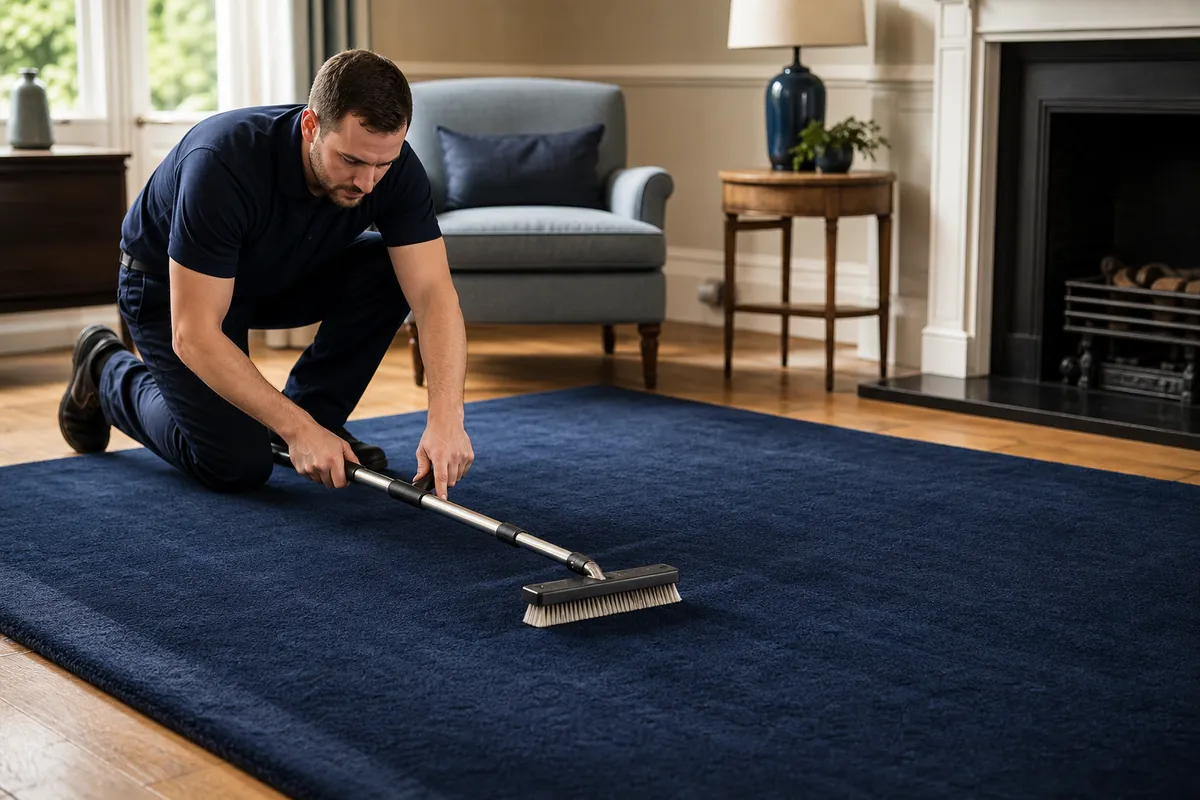
We provide steam rug cleaning in Notting Hill by hot-water extraction at your property with portable machines. The pile, backing and current condition are assessed together before preparation, selected treatment and recovery. We explain the useful work available and the practical conditions needed while the rug dries after the moisture-based process.
Mobile service in Notting Hill · Cleaning method agreed after inspection
The surface and backing considered as one current item
A rug’s face may look familiar while its backing has been altered or added later. We include the supporting materials in the assessment before agreeing extraction at your Notting Hill property. The service uses portable equipment on site, with selected solution helping loosen dirt and the machine taking it away with used liquid. Moisture is introduced, followed by drying at home. We explain the method and suitability before the work is agreed.
The quotation discussion starts with approximate dimensions, photographs and the areas needing attention. Any known backing information, earlier treatment or spills help us prepare. Furniture movement and access are agreed so the included area is clear. At the appointment, the current construction guides suitable vacuum preparation, local attention and the main clean. We finish by reviewing the original concerns and broader response, leaving the household a practical account of the work and relevant conditions before ordinary pressure and traffic return to the rug.
We inspect the pile and the materials supporting it
We examine the face fibres, backing, edges and visible repairs and consider present strength. Relevant colour-response checks help choose suitable products where appropriate. A surface description is useful, while the actual backing and connections also influence the proposed work. We explain their practical significance for application, action and handling, giving the extraction plan a basis in the complete item now present. This is particularly useful where later work has changed the way the rug is supported or finished.
The aim is useful dirt removal within the current condition. Delicate or weakened construction may make extraction inappropriate, which we explain before treatment. Wear, altered dye and damaged fibres may continue to affect appearance after cleaning. For suitable rugs, the assessment gives preparation, local products and the broader clean a shared purpose. The final review can then refer to the same findings, making useful improvement and lasting differences understandable when the household considers how the textile has responded.
Known additions help us clarify the work being agreed
We discuss any information about a later backing or other attached material and locate it within the whole item. The current connection and surrounding textile are considered together. This is a cleaning assessment: added materials are included in deciding suitability and handling rather than treated as something automatically removed during the visit. We identify any relevant restriction and explain how it affects the proposed extraction, keeping the quotation connected to the actual rug and the useful work available at the property.
Access is considered alongside the material findings. Furniture movement and responsibilities are agreed before treatment, with remaining covered sections identified as inaccessible. We confirm the reachable area so preparation and recovery follow the same practical boundaries. The supporting floor and nearby finishes are checked when arranging suitable protection before wet stages. This setup makes the textile and its room part of one workable plan, allowing the selected process to progress through the actual item without assumptions about separating attached components or moving furniture that remains in place.
What informs cleaning of the current rug
Detail
Our assessment
What it guides
Pile and support
Materials, connections and strength
Extraction suitability
Later additions
Known work and present condition
Suitable handling
Priority marks
Deposit and earlier applications
Selected local treatment
Room arrangement
Agreed movement and accessible sections
Clear working coverage
Vacuum preparation removes loose material before solution
We take accessible dust, grit and everyday debris out of the pile using suitable vacuum action. The handling accounts for fibres, edges and weaker details identified at inspection. Particles may be held across the design without an obvious separate mark, so preparation covers the included area deliberately. Early removal reduces what would otherwise mix into the wet clean and gives the later products a better-prepared surface on which to work. This first physical task already contributes to soil removal from the rug.
The clearer pile helps us assess remaining deposits and texture changes. A compressed section may still show its use history because of the fibres, while attached dirt needs the following release and recovery work. We use those observations to select useful further attention. Preparation has a distinct job within the service, addressing loose matter first and supporting the local products and main clean. The construction findings continue to guide handling as the work progresses into the moisture-based extraction stages.
Illustrative image of assessment before extraction is agreed.
Specific marks receive selected local products
We ask about known incidents and earlier applications and assess the affected fibres against the material checks. Where suitable, treatment is applied locally in a controlled manner and relevant time is allowed. Appropriate action can assist release if the textile permits, keeping nearby colours and pile part of the decision. The aim is a deposit prepared for recovery, with its position clear enough to revisit when the broader extraction is complete and explain the response alongside the whole cleaned area.
A local treatment may remove a deposit yet leave a colour trace beneath it. We show you that distinction if it becomes apparent, including any effect of products previously used. The stain work is part of the appointment rather than the entire clean: soil elsewhere in the accessible field is also treated and recovered. This matters when an old patch has become permanent. You can see the attention given to it and still assess the useful removal achieved over the rest of the rug, with both described at completion.
Hot-water extraction loosens dirt for machine recovery
The steam service we provide uses hot-water extraction. After confirming suitability, we introduce cleaning solution in a manageable part of the rug so it can help free dirt around the fibres. The backing and its current connections remain in mind when choosing how to work that section. We then remove the liquid through the equipment with the material released into it. The process takes place at your property and leaves moisture requiring drying. We explain those actions as the actual service, rather than suggesting the familiar name means vapour alone.
We give the applied treatment an appropriate opportunity to work, then use suitable action where it assists release. Contact is adapted when a border, repair or supporting material changes what the rug can accept. We watch the surface as the job develops. A persistent darker part is assessed before receiving more work, because its shade may reflect the yarn’s direction or wear. Local attention and the broader clean meet at recovery: both prepare material to leave, with the inspected construction continuing to guide decisions through the machine stage.
Illustrative image of hot-water extraction at a property.
The extraction tool collects the used liquid and released soil
We organise recovery passes across the agreed rug, considering its shape and coverage. Portable equipment takes away solution and dirt loosened during treatment on site. Recovery completes the purpose of vacuum preparation, selected local attention and the main clean, giving them their removal result. The room arrangement is already understood before wet work so the machine can follow an orderly sequence through the accessible area. The process takes material away after suitable release rather than leaving products applied within the pile as the completed service.
We may continue suitable recovery to remove more liquid without putting solution back in. Before finishing, we consider remaining patches against the condition found at the start and explain what is visible now. The textile is not fully dry when the tool work ends. We make that point clear and discuss what the room needs next, including any delay to pressure or regular traffic over the damp area. This gives you an understandable change from active cleaning to drying, with the result and the temporary arrangement considered together.
We review the response against the original concerns
We revisit the locations agreed at the enquiry and look across the surrounding rug. Where the material allows it, the pile is settled to make the finish easier to assess. We explain the effect of local work as well as the general clean, noting any supporting detail that restricted treatment. Damp yarn and its direction can influence the shade you see immediately after extraction. We put that appearance in context instead of leaving you to judge a final dry result from the textile while it still contains moisture.
The review is specific enough for someone who did not make the booking to understand it. We point out the treated locations and describe their response, so any later discussion can refer to the same parts of the rug. A worn patch or an area of changed dye remains part of the current item even when dirt has been removed. We explain those features alongside the improvement achieved. You are left with useful context for looking at the textile as it dries, rather than only a broad statement that the rug has been cleaned.
The extraction service at your property
Stage
Our work
Purpose
Preparation
Vacuum accessible particles
Removes loose dirt
Treatment
Selected solution and suitable action
Loosens attached soil
Recovery
Collect used liquid and released material
Completes removal
Review
Explain response and room conditions
Clarifies drying and contact
The property plan includes access and drying information
We settle the practical route before bringing the equipment into the room. Parking, floor level and access by stairs or lift are discussed during booking, along with which furniture is to move. The accessible surface is identified around anything that will stay. This makes the quotation a description of work that can actually be performed. At the property we consider the underlying floor and surrounding finishes with the rug, so the selected wet process starts in an agreed setting instead of an improvised space.
At the end we explain how the room should be used while moisture remains. The discussion includes relevant air movement and the return of furniture, with the textile’s construction and treatment informing what is appropriate. If other rugs or carpeted areas are requested, each has its own assessment and a sensible place in the appointment order. We close by connecting the cleaned result, any remaining feature and the immediate needs of the space. The household knows what to do next before putting the treated area back into ordinary use.
Steam Rug Cleaning price reference
Use these starting prices as a guide. Share the item size, condition and access details so the work and final quote can be confirmed.
Service
Published starting price
What is included
Timing
Carpet cleaning
From £25 per room
Inspect, pre-treat, clean
Room dependent
Rug cleaning
From £20 per rug
Inspect, assess spots, clean
Size dependent
Steam rug cleaning
From £25 per rug
Check suitability, extract
Varies
Oriental rug cleaning
From £35 per rug
Fibre, dye and condition checks
Varies
Luxury rug cleaning
From £40 per rug
Assess and select method
Varies
Mattress cleaning
From £30 per mattress
Inspect and clean fabric
Varies
Upholstery cleaning
From £12 per seat
Check fabric and clean
Varies
Sofa cleaning
From £35 per sofa
Assess fabric and clean
Varies
Arranging steam rug cleaning in Notting Hill
We confirm the item, address and equipment route before the appointment. Photographs, known backing details and furniture arrangements help us organise an assessment and suitable on-site work.
Local postcode districts: W11. We confirm the visit against your full address.
Our service is on-site hot-water machine extraction. Selected solution helps loosen dirt and the machine collects it with used liquid. The rug then continues drying at the property.
Should an added backing be mentioned when booking?
Yes. Information and photographs help us prepare the assessment. We inspect the current connection and supporting materials alongside the pile before agreeing suitable extraction and handling.
Is backing removal part of the cleaning service?
We assess the current item for cleaning rather than assume attached components will be removed. Relevant limits are explained before treatment so the proposed work remains clear.
Do you work at Notting Hill properties?
Yes. Portable equipment comes to your address and the agreed preparation, local treatment and extraction take place there, followed by a review and practical drying information.
Can every mark disappear completely?
Earlier products or permanent dye and fibre changes may limit improvement. We select suitable attention and explain realistic expectations for the concern rather than guarantee complete removal.
How is drying explained?
We discuss relevant airflow, traffic and furniture-contact conditions for the actual room. Construction and treatment affect timing, so the practical information fits the rug cleaned and its setting.
Discuss extraction for your Notting Hill rug
Send photographs, approximate size and any information about later backing work. We will discuss suitability, practical access and a quotation for on-site hot-water extraction.