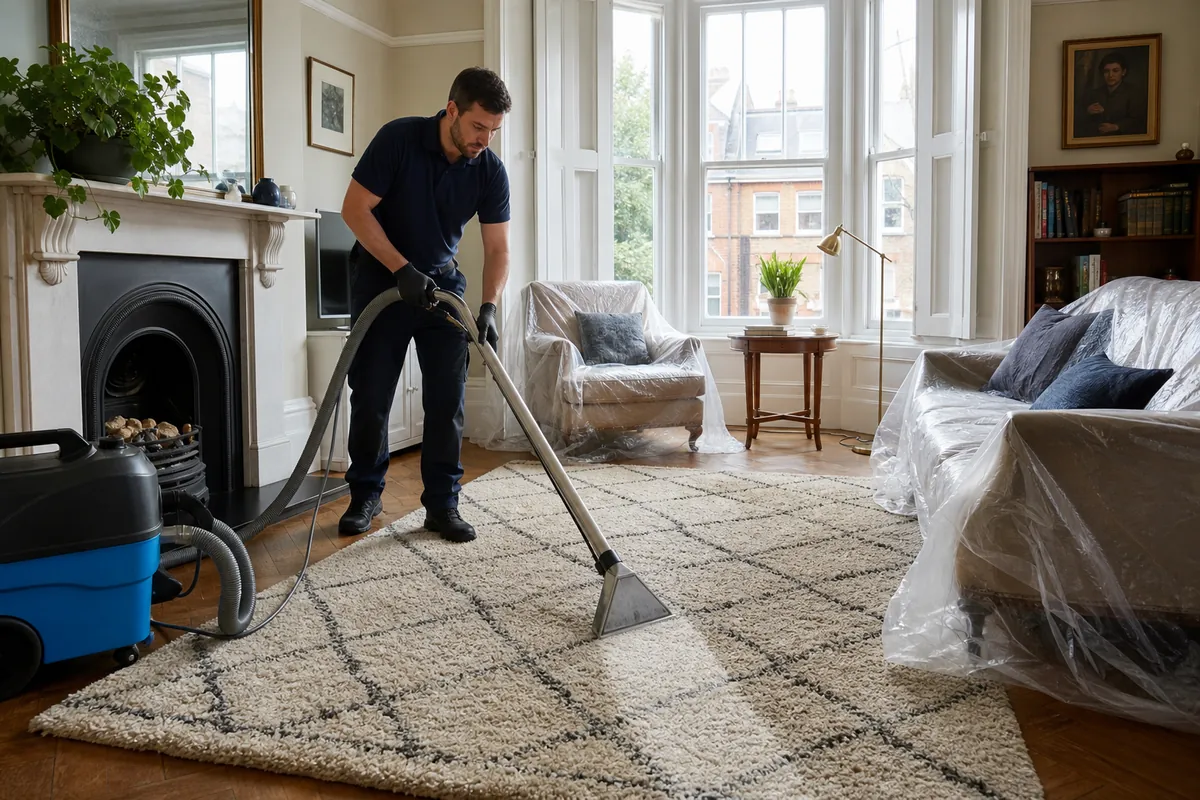
We provide steam rug cleaning in St John’s Wood using on-site hot-water extraction. We inspect the rug, prepare its pile and assess local marks before applying and recovering cleaning liquid with portable equipment. The service includes an explanation of the result and arrangements for drying, with the whole construction considered before treatment is agreed.
Mobile service in St John's Wood · Cleaning method agreed after inspection
We explain the treatment before the machine starts
Our steam rug service is hot-water extraction: cleaning liquid works on the soil and is recovered through the tool. We do not present it as a vapour sterilisation treatment or a method that leaves the rug immediately dry. The process begins with examination of the textile and the concern you want improved. We explain what can be attempted, then organise preparation, local attention and machine cleaning around the actual rug and the space available at your property.
A mark where the border meets the central field may need more than a quick decision based on its position. We consider both sections, their construction and any visible weakness, then assess the unwanted material. The same complete-rug approach applies when the concern is general dirt rather than one patch. We bring portable equipment, agree furniture and access arrangements and recover used liquid during the clean. Afterwards, we discuss the result and drying so the service is clear in terms of what we do for your rug and how the room can be used.
We locate the concern before proposing the clean
We ask you to show the rug as a whole and identify the area needing attention. A wider photograph helps us see the scale, pattern and setting; a detail can show the mark itself. If the concern is near the border, we locate it with enough surrounding design to understand both sections. We ask about known incidents and earlier treatment without assuming the position proves a particular cause. These details support the quotation discussion and prepare the assessment at your property.
Your request may be a general clean, a spill assessment or both. We establish that aim and consider the rug’s current position, approximate size and access for portable machinery. Reliable label information can help, while missing history remains uncertain. The treatment decision comes after examination, not from a small image alone. You receive a proposal connected to the actual cleaning concern and the method available, so expectations about extraction and drying are understood before a visit is arranged on the wrong basis.
We inspect the pile, colours and supporting structure
We examine the fibres and visible foundation, looking for differences across the rug. Suitable response checks guide our assessment of colours and the proposed treatment. We consider existing wear, altered areas and repairs because they can change how the textile should be handled. Findings that affect the plan are explained before the main application. The decision to undertake hot-water extraction follows the actual piece and its present condition rather than a broad promise that every rug described as suitable for steam will respond alike.
At a border-to-field junction, the visible concern may involve soil, colour change or a connection that needs considered handling. We explain what can be observed without guessing a complete diagnosis from appearance alone. If the evidence does not justify the proposed clean, we say why we cannot proceed. Where treatment is appropriate, the inspection informs the local attention and machine work to follow. This gives you a clear reason for the approach and keeps the entire construction part of the service rather than focusing only on its strongest section.
What informs the proposed extraction clean
Detail
Our assessment
Purpose
Pile and foundation
Material and strength
Treatment suitability
Colours
Suitable response checks
Application decision
Border junction
Condition of both sections
Handling and local attention
Known history
Incidents and earlier products
Realistic expectations
We check the ends and agree the workspace
We inspect fringes, borders and any weakened connections before positioning the rug for treatment. An end can require different handling from the central pile, and missing or altered strands remain relevant even when the main stain is elsewhere. We explain which attention is appropriate and any limit that affects the scope. Cleaning can address suitable dirt, but it will not replace material or secure a failing join. That distinction is made before work begins rather than left to the final result discussion.
We then agree the working position, considering the floor beneath and any furniture on the rug. Movement is discussed with you before it happens. Items staying in place can restrict access, and those sections are identified clearly. We also plan the portable equipment route and where the rug will remain while drying. These practical arrangements support both the cleaning and the period afterwards, allowing the service to fit the actual home instead of leaving a damp textile in an arrangement nobody has discussed.
Illustrative checks before extraction treatment is agreed.
We remove loose soil before liquid treatment
We vacuum prepare the accessible rug using handling suited to its assessed condition. Dust and grit can sit within the pile beyond what the decorative face reveals from a distance. Gathering material dry reduces what remains for the wet stage and provides a better starting point for extraction. Edges and ends are considered according to their strength rather than receiving the same automatic action as the main field. Preparation is part of the work we carry out before applying solution.
This stage also lets us observe the rug closely as we progress. A deposit, texture change or previously obscured detail may affect the next step, and we address it before continuing in that section. We do not use preparation to force a weak area flat or treat wear as though it were loose dirt. The purpose is removal of accessible particles and readiness for suitable local attention. It supports a considered extraction clean while keeping the original assessment active throughout the practical work at your property.
We give suitable marks controlled attention
We assess priority stains in their surrounding fibres and colours, considering known spills and earlier products. Targeted treatment is selected where the rug and response support it. The amount applied and the working action are managed together, particularly where a mark crosses between sections of different construction. You do not need to choose a chemical or decide how much working force the rug can tolerate. Those judgements form part of our service and are explained in relation to the actual concern.
We judge progress while treating and explain when further application would not be useful. A mark can involve permanent discolouration or an earlier treatment effect that another pass cannot simply undo. There is no complete-removal promise based on the name of a spill. Suitable stains receive individual attention within the broader clean, and we revisit the result afterwards. This gives the original concern a clear response from the company carrying out the work, without either overlooking it or pushing treatment beyond what the textile supports.
Illustrative on-site rug cleaning and liquid recovery.
We clean by hot-water extraction and recovery
The machine stage applies cleaning solution and recovers liquid with released soil through the portable tool. We organise the passes over the agreed accessible rug, using the construction and observed response to guide handling. This is the actual hot-water extraction behind the steam service, rather than a claim that vapour alone cleans or sterilises. Preparation and local attention support the main work, while any limit established for a vulnerable section remains part of the plan until the clean is complete.
We consider recovery alongside application and can use further recovery passes without additional solution where appropriate. The objective is useful soil removal with controlled moisture, not the wettest possible textile. Some dampness remains and the rug needs drying afterwards. We explain that practical requirement as part of the method from the beginning. You understand the process as treatment, soil release and removal in used liquid, followed by drying at home, rather than an unexplained machine action expected to leave every rug ready for immediate normal use.
We review the response at the areas discussed
The final review is our opportunity to show what happened to the concern that brought us to the property. We look at its location and the surrounding rug, explaining a response that may differ between the border and central field. Any pile finishing suited to the textile is completed as part of leaving it orderly. You can ask questions directly beside the piece, so the result is linked to this rug and this treatment rather than a general statement that the steam service has ended.
Wear, fading, repairs or another existing physical change may remain after cleanable dirt is removed. We explain relevant observations without claiming certainty about every historic cause. Dampness and pile direction can also affect the immediate view, so some details are better considered once dry. Where that applies, we identify it during the review. You receive a specific account of the rug’s response and continuing condition, recognising useful improvement while avoiding an unrestricted promise that extraction recreates every original colour, texture or connection.
The work carried out at your property
Stage
Our action
Practical result
Preparation
Gather loose particles
Ready the pile
Stain attention
Treat suitable marks
Address specific concerns
Hot-water extraction
Apply and recover solution
Remove released dirt
Completion
Review and explain drying
Clear next steps at home
We explain drying and complete the visit
We discuss the rug’s position, ventilation and use of the surrounding room while the textile dries. Construction, moisture retained and indoor conditions influence the time required, so we do not apply one guaranteed deadline to all rugs. Furniture arrangements that should continue are explained for the actual space. If the treated piece affects an essential route, we include that practical point. The household can then manage the area with a clear understanding of why some time is needed after the extraction equipment has finished.
For a St John’s Wood booking, approximate dimensions, photographs and details of the concern support the quotation conversation. We ask about equipment access and furniture affecting the working area. The on-site inspection confirms suitability and practical arrangements before treatment. At completion, we explain the included work, response and drying plan. The visit brings assessment, preparation, appropriate stain attention, hot-water extraction and review together in one planned service at your property, with the technical choices made and explained by the company carrying out the work.
Steam Rug Cleaning price reference
Use these starting prices as a guide. Share the item size, condition and access details so the work and final quote can be confirmed.
Service
Published starting price
What is included
Timing
Carpet cleaning
From £25 per room
Inspect, pre-treat, clean
Room dependent
Rug cleaning
From £20 per rug
Inspect, assess spots, clean
Size dependent
Steam rug cleaning
From £25 per rug
Check suitability, extract
Varies
Oriental rug cleaning
From £35 per rug
Fibre, dye and condition checks
Varies
Luxury rug cleaning
From £40 per rug
Assess and select method
Varies
Mattress cleaning
From £30 per mattress
Inspect and clean fabric
Varies
Upholstery cleaning
From £12 per seat
Check fabric and clean
Varies
Sofa cleaning
From £35 per sofa
Assess fabric and clean
Varies
Arrange steam rug cleaning in St John’s Wood
We discuss the actual extraction method, rug size and concern to assess, with photographs and reliable history where available. Access information helps plan the equipment route. On-site examination confirms treatment and the arrangement for cleaning and drying the rug at home.
Local postcode districts: NW8. We confirm the visit against your full address.
It uses hot-water extraction. Cleaning liquid is applied and recovered with released soil through portable equipment. The rug remains damp and needs drying; the service is not a vapour sterilisation promise.
Can you assess a mark between the border and field?
Yes. We examine both sections and the surrounding construction, considering known incidents and suitable response checks. The position alone does not establish a cause or prove identical treatment requirements.
Do you clean at my St John’s Wood property?
Yes. We agree the working area and access, then carry out the accepted extraction on site. Drying arrangements are discussed for your home.
Can every rug be treated?
No. Suitability depends on the construction, colours, current condition and response. We explain why we cannot proceed if the assessment does not justify the proposed extraction.
Will local stain treatment remove everything?
Complete removal cannot be guaranteed. We give suitable marks individual attention and explain their response, including any lasting discolouration or previous change that remains.
What do you explain after cleaning?
We review the rug, discuss remaining concerns and explain drying, ventilation and furniture or room-use arrangements. The guidance relates to the actual textile and the conditions at your property.
Discuss your St John’s Wood rug cleaning
Tell us about the rug and the area needing attention. We will discuss assessment, access and a quotation for on-site hot-water extraction.