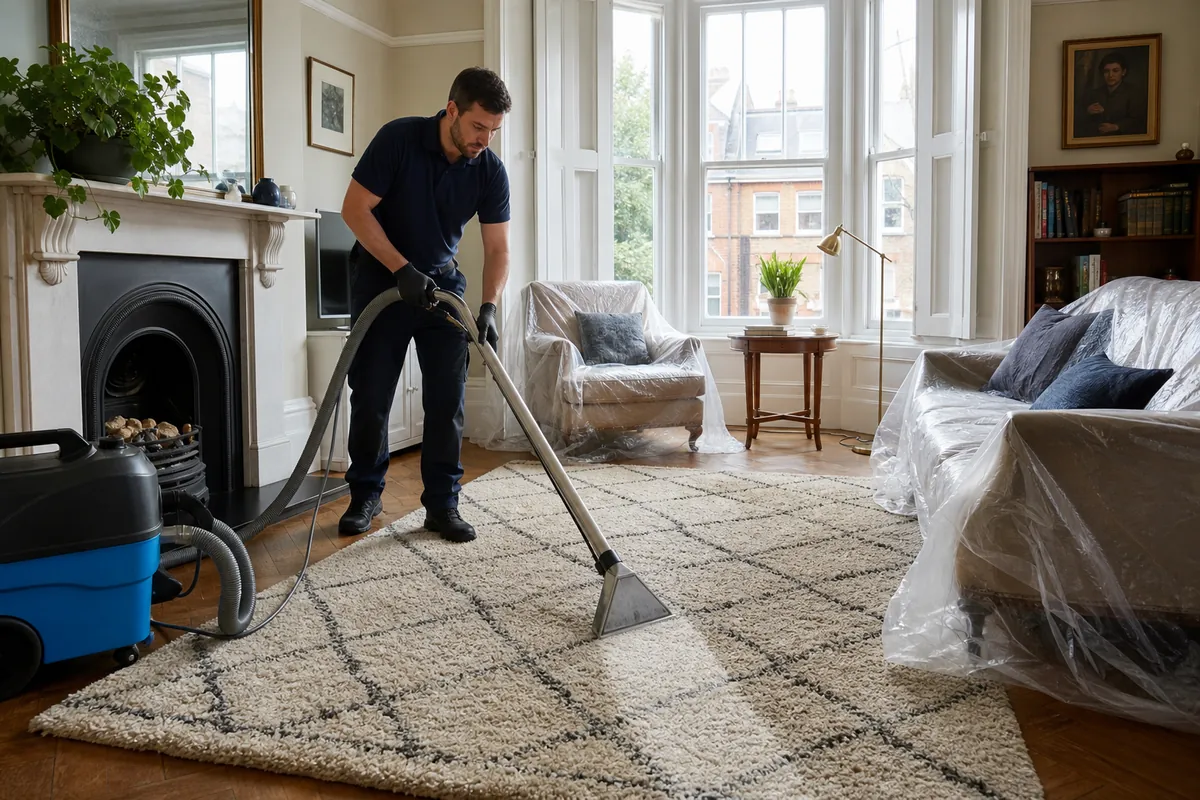
We clean rugs on site across Hackney, using portable machines and treatment selected after inspecting the material. From particles caught in the pile to suitable local stain work, we explain each part of the service and remove released soil through controlled recovery. The visit includes practical arrangements for drying at home.
Mobile service in Hackney · Cleaning method agreed after inspection
Dealing with the soil that everyday use leaves behind
A rug can lose its freshness gradually. Fine grit collects between fibres, the central area becomes dull and marks start to merge into the pattern. Our Hackney service addresses that overall build-up as well as the individual concerns you point out. We come to your property with cleaning equipment, assess the item and carry out the agreed treatment there. You do not need to identify a particular machine or product before asking us to help.
We make the work understandable by explaining what each stage achieves. Dry preparation tackles loose particles; compatible cleaning releases attached soil; recovery takes away the used solution and contamination. Marks receive separate assessment where needed. We also look at the backing, borders and current strength of the rug, because a useful result depends on matching the work to the complete textile. The room arrangements and drying conditions are included in that service, from the first discussion through to completion.
Mobile serviceLondon and the surrounding M25 area
Material checksFibres and dyes assessed before treatment
Clear pricingPublished starting prices with a confirmed quote
Open dailyMonday–Sunday, 07:00–19:00
We turn your observations into a defined cleaning request
When you contact us, we ask what has changed about the rug and which parts concern you most. General dullness is a valid reason for an assessment even when there is no single stain. We establish the approximate dimensions, number of items and any known material information. Photographs of the whole rug and closer views of particular marks help us prepare the quotation, while leaving room for the checks that can only be made at the property.
We also ask about products previously applied and whether particles or marks have appeared repeatedly in one location. That history can influence the assessment, but we do not ask you to experiment with the textile to identify a cause. The intention is to arrive with a clear brief and then inspect the item ourselves. We explain the intended scope and any uncertainty affecting the proposed treatment before you commit to work that may not suit the rug.
We check the rug as a complete construction
The pile is only one part of a rug. Backing materials, joins, repaired areas and edges can determine how the textile tolerates moisture and mechanical action. We examine those details before selecting the cleaning process and consider relevant colour checks where appropriate. We look at the present condition rather than relying on a material description alone. This allows us to explain what machine treatment is suitable and whether any sections require a more limited approach.
A loose fibre or unfamiliar material on the surface is not automatically evidence that stronger cleaning is needed. We inspect what we can see and distinguish loose contamination from signs of wear or construction weakness. If a delicate rug cannot safely receive the proposed machine treatment, we explain that finding before agreeing to proceed. You receive an assessment tied to your actual item, including realistic limits, instead of a universal claim that the same process is right for every rug.
What our inspection considers
Part of the rug
What we examine
How it informs the service
Pile
Fibres, soil and wear
Suitable working action
Colours
Response where checks are appropriate
Compatible treatment selection
Backing and edges
Construction and present strength
Moisture and handling decisions
Existing marks
Appearance and known history
Local treatment and realistic limits
The room is prepared around the agreed cleaning area
We plan equipment access from the property entrance to the room, including any stairs, lift or narrow passage. Within the room, we establish enough space for controlled work and consider the floor beneath the rug. Nearby surfaces are included when planning suitable protection. These arrangements are practical parts of an on-site service: the machine has to reach the item, the working area has to be clear enough and the surrounding room still needs an understandable plan.
Furniture movement is agreed beforehand. If a rug sits beneath a heavy piece that will remain in place, we define the reachable area and make the limitation clear. We do not pull the textile while furniture bears on it or assume an unplanned move will be possible on arrival. We also identify cables and small objects around the work area so the cleaning can progress in an organised sequence. You know which parts are included before the first treatment begins.
Illustrative image of an on-site rug cleaning setup.
Dry preparation takes loose particles out of the pile
We start by removing accessible loose soil using an action appropriate to the rug. Fine dust, grit and everyday debris are easier to address as a preparation stage than after they have been mixed with solution. We work across the included area, with care around fringes and weaker details. A busy strip may need particular attention, but the work is not limited to whichever patch appears darkest. We prepare the wider textile for a consistent, compatible clean.
As the surface clears, we can inspect the pile more closely and identify differences that need context. A flattened section may reflect regular foot traffic, while another patch may contain an attached deposit. We keep those observations separate instead of increasing the intensity of dry working until everything appears the same. Preparation has a specific task: taking away loose material and giving the next stage a suitable starting point. It does not replace the material checks or the local assessment of marks.
We treat the marks that need more than general cleaning
Local treatment is selected after considering the material and any known spill history. We look at whether a mark sits on the fibres as a deposit or appears to involve a lasting colour change. Suitable products and working action are used to help release compatible contamination, allowing appropriate contact time rather than relying on force. This focused work supports the overall clean and gives individual concerns attention without applying the same treatment indiscriminately across every part of the rug.
We explain the likely limits where a mark is old, has received previous products or affects damaged fibres. Complete stain removal cannot be guaranteed simply because a machine is being used. We still work on suitable marks, but we distinguish that aim from reversing wear, fading or dye loss. This helps you understand the result in practical terms: what we are trying to remove, what may improve and which existing differences are likely to remain even after the contamination has been cleaned.
Illustrative image of machine recovery during rug cleaning.
Controlled extraction removes the loosened contamination
For suitable rugs, the machine stage combines compatible solution application with recovery. We work to loosen soil attached to the fibres, then extract the used solution and released material. The pattern and intensity of the passes take account of the pile and construction, including borders and any areas identified during inspection. All of this takes place at your Hackney property. We bring the equipment for the agreed work and keep the cleaning connected to the room conditions we assessed.
We pay attention to recovery as its own part of the process. Suitable extra passes can collect more moisture, helping leave the rug ready for drying in the agreed conditions. We do not treat a continually darker patch as automatic evidence that it needs repeated wetting; it may involve wear or pile direction already identified. By responding to the textile as we work, we can complete purposeful soil removal without turning an existing appearance difference into an excuse for unnecessary treatment.
The final review connects the result to the original request
Before finishing, we return to the observations you raised at the start. We explain the response of local marks and the condition of the generally soiled areas, identifying any lasting difference that remains. Where suitable, we settle the pile so the surface is left orderly. The appearance can still change as fibres dry, so we discuss the immediate result in that context. You receive an account of the work completed rather than an unsupported claim that every part is restored.
We also explain what the rug needs next in the room. Drying depends on its thickness, the treatment used and airflow, with no exact timetable that fits every item. We discuss ventilation, access and furniture contact for the actual visit. If the household needs a particular route through the room, that practical issue is considered when planning and again at completion. This makes the transition from machine cleaning to normal room use clear for the person who will manage it.
How the cleaning stages work together
Stage
Our action
Purpose
Preparation
Remove accessible loose material
Reduces particles before solution
Mark treatment
Apply selected local products
Targets suitable deposits
Extraction
Recover released soil and solution
Takes contamination out
Completion
Review and explain drying
Connects the result with room use
Additional items are assessed without losing the detail
If your request includes several rugs or fitted carpet, we establish the full list during the quotation. Different items can need different decisions even when they occupy the same property. We assess their constructions and conditions separately and agree a workable order for the visit. This also lets us account for furniture and equipment access across the rooms, instead of finishing one item and discovering that another part of the agreed job cannot be reached as expected.
Our explanation remains available to the person present even if someone else arranged the booking. We make sure the scope, remaining limitations and drying conditions are understood before the room is restored. If something looks different after the rug has dried, you can identify the specific area to us and describe what you see. A useful follow-up starts with the actual item and work completed, so we leave you with enough information to ask a focused question if one is needed.
Price guide
Starting prices for Hackney
Published starting prices; the final quote reflects the rug and access.
For a booking in Hackney, include your full postcode and property access information. The map shows the service area.
Local postcode districts: E8, E9. We confirm the visit against your full address.
Organising your Hackney appointment
We confirm the property address, parking and equipment route when booking. Floor level, lift access and any restricted entrance help us organise the visit. We also discuss the items and rooms involved so that the quotation and appointment reflect the cleaning you actually want completed.
Published customer feedback
Reviews shown to Hackney customers
“I booked a last-minute clean before guests arrived, and they delivered beyond expectations. The rug looks brand new!”
“Highly professional and efficient service. They cleaned two rugs at my flat and even gave advice on long-term care. Great value for money and a friendly team.”
Clear reasons for the selected method
We explain how the rug’s construction and condition influence the work. You understand the role of preparation, local treatment and machine recovery without needing to select products or settings yourself.
Practical completion information
The final discussion includes the response of the priority areas and the room arrangements while drying continues. We keep that information tied to the textile we have treated and the work carried out.
Yes. Our equipment comes to your property and the agreed cleaning is carried out there. Inspection, preparation, treatment, recovery and the final explanation are all part of the on-site visit.
Can you help with a rug that is dull but not stained?
Yes. We assess general soiling as well as isolated marks. Dry preparation and compatible cleaning can address accumulated particles and attached contamination, with the expected improvement discussed against the rug’s condition.
Does stronger machine action give a better result?
The appropriate action depends on the textile. We choose the work around its construction, strength and colour response. More force is not a substitute for assessment, preparation or suitable treatment.
What if there is a fringe or repaired edge?
We inspect those details before cleaning and account for them in the working method. Weak or repaired areas can affect what treatment is appropriate, and we explain any resulting limit before proceeding.
Will furniture have to be moved?
We agree movement and responsibilities in advance. If an item remains on the rug, we define the accessible area and explain the effect on the proposed clean and quotation.
When can the rug be used normally?
We give practical information after the treatment about drying, traffic and furniture contact. The conditions depend on the individual rug and room, so we do not promise one exact drying time for every visit.
Next step in Hackney
Arrange on-site rug cleaning in Hackney
Contact us with the approximate rug size, a photograph and the main concerns you want assessed. We will discuss access, the proposed scope and a quotation for cleaning at your property.