
Polypropylene Rugs and Heat: Practical Limits
Polypropylene is common in practical household rugs, but its synthetic origin does not make it immune to heat. A heater placed too close, a hot appliance set briefly on the pile or an unsuitable cleaning process can leave fibres flattened or unusually glossy. Once the yarn itself has changed shape, washing away surface soil will not rebuild its original texture. The first job is to distinguish a heat effect from ordinary matting, pile direction or a stain.
This article explains everyday heat sources and the questions to ask before steam or hot-water cleaning. It does not offer one safe temperature for every rug. A finished rug includes yarn, dyes, backing, adhesives and edging that can each have different limits. The manufacturer's care instructions and the rug's condition should guide the actual treatment.
What polypropylene contributes to a rug
Polypropylene, also called olefin in carpet descriptions, is one of the main synthetic pile fibres identified by the Carpet and Rug Institute. It can be spun and finished in many styles, from dense short pile to textured loops. A label naming polypropylene may describe only the face yarn. A different material may form the foundation, backing cloth or binding, so the fibre label alone is not a cleaning method.
Polypropylene is a thermoplastic: sufficient heat can soften or melt it. Florida State University's microscopy material on polypropylene fibres notes limited thermal stability among the fibre's characteristics. That material property explains why direct heat matters, but it does not let us calculate the safe setting of a particular steam cleaner or radiator from a photograph. Contact time, pressure, pile geometry and the rest of the rug also affect outcomes.
Some products are marketed as “easy clean”, “indoor-outdoor” or “stain resistant”. Those phrases refer to selected use properties, not permission to iron, steam or dry the rug with a heater. Keep the care label or product sheet. If it lists a maximum cleaning temperature or forbids steam, follow that instruction rather than a generic claim about synthetic rugs.
Heat sources worth checking at home
A portable heater can warm one edge for many hours. A hairdryer held close to a spill concentrates hot air on a small patch. An iron, curling tool or hot cooking item can contact the pile suddenly. Sunlight through a window can raise the surface temperature and contribute to colour change or ageing, though a patch of direct-contact heat damage has a different pattern from gradual light exposure. Underfloor heating adds another steady source that may affect a rug or backing differently from room air.
Move portable appliances away from rugs and follow their clearance instructions. Do not place an electrical device directly on the pile. If an object has left a warm, flattened patch, photograph it before moving furniture back over it. Make sure the surface has cooled before touching it closely. Do not test the mark with more heat to see whether it will “pop back”.
The effect of heat may be local to the pile, or it may involve a backing or underlay. Turn a manageable section carefully and check for changes in texture, colour or odour underneath. If the floor finish is affected, document that separately. A rug can still lie flat while its face yarn has become smoother, so lack of curling does not rule out damage.
Heat damage, dirt or pile shading?
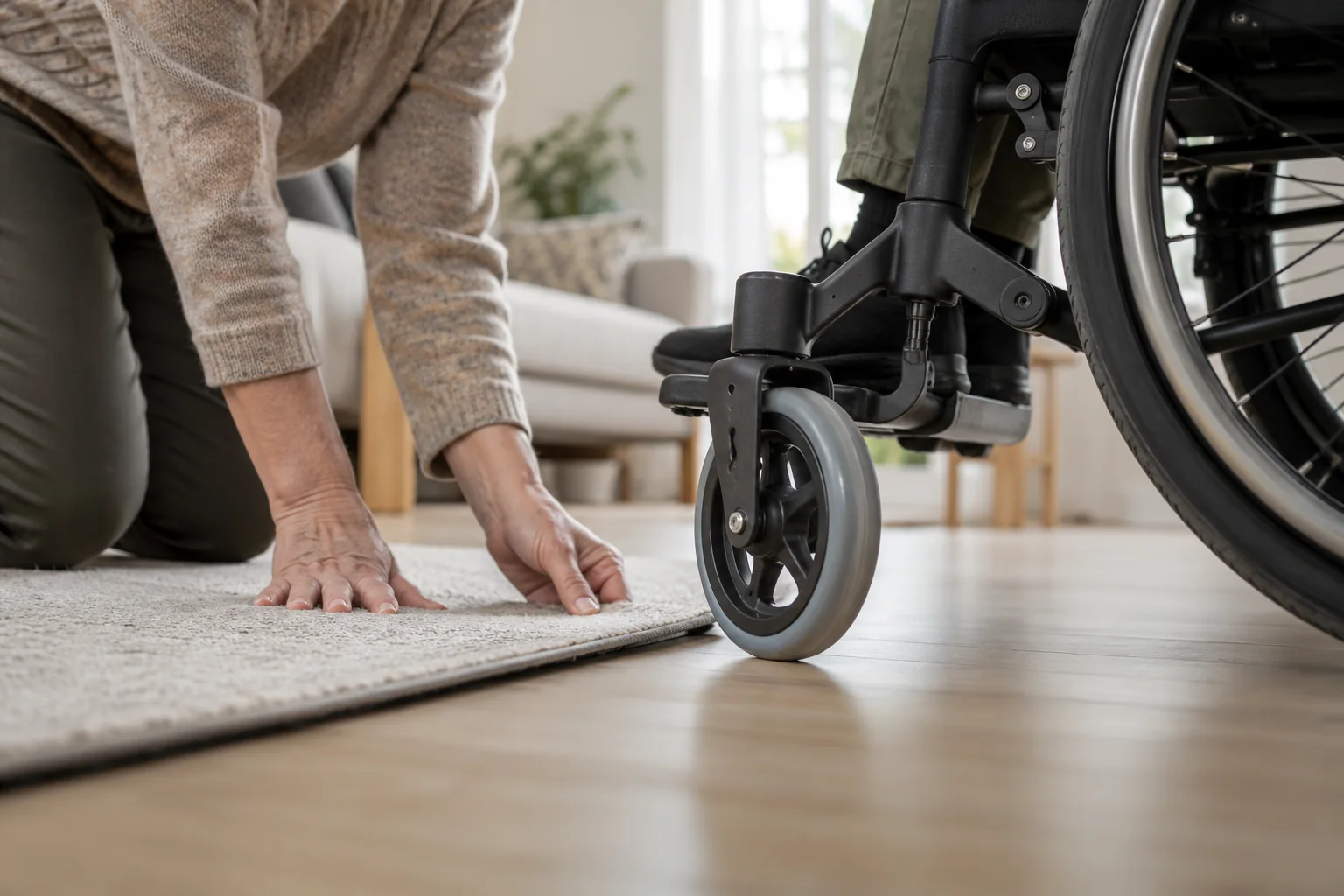
Look from two directions in even daylight. Directional pile often changes shade as you move, while a stain or permanent surface change may keep a defined boundary. Feel a clean adjacent area lightly and compare it with the mark: is the patch harder, smoother, fused or shorter? Avoid rubbing the affected area repeatedly, which can create extra wear and confuse the comparison.
A dark traffic lane may be embedded dirt, worn yarn or flattened pile. Heat damage may have a sharply defined shape matching the object that touched the rug, but not always. A small heater can create a broader gradient. There may be no charring or dramatic burn at all. The useful information is what the yarn now looks and feels like and where the possible heat source stood.
Take a close-up with a ruler and a wider photograph showing the room. Record the date you noticed the mark, any appliance used and whether the rug was damp at the time. If you are unsure of the fibre, do not infer it from the glossy patch; many materials can become shiny when compressed. The existing synthetic rug care guide gives broader context, but inspection of this rug remains essential.
Steam is a method name, not a safety certificate
People use “steam cleaning” to describe several processes, including hot-water extraction. They differ in actual water temperature at the pile, amount of liquid, agitation and extraction. A cleaner should explain which process is proposed for this specific rug. A household steam mop designed for hard flooring should not be assumed suitable for a polypropylene rug merely because its pile is synthetic.
The heat risk is not only theoretical. High temperature and pressure can affect pile shape; excessive water can still cause problems in a backing or floor even where polypropylene yarn absorbs little liquid. A rug with adhesive, colour instability or a weak edge may need a more limited approach. Ask how the cleaner will test the construction and control both heat and drying. The answer should cover more than the face fibre.
The Canadian Conservation Institute's basic rug guidance favours conservative vacuuming and professional advice for important rugs. It does not set a steam temperature for polypropylene. That is a useful boundary: a published care principle can encourage assessment without pretending to approve a specific machine setting. If a service page mentions steam rug cleaning, discuss whether that method is appropriate rather than requesting it by name alone.

What to do if the pile has changed
Stop the heat exposure, let the area cool naturally and record its appearance. Do not iron, brush hard, apply a flame or add another hot-water treatment to even out the patch. If a substance was spilled as well, blot only when appropriate for the rug and avoid working an unknown product into the affected yarn. Keep any cleaning product packaging and the appliance details for a specialist.
If the yarn has physically softened or fused, cleaning can remove surrounding soil but cannot recreate the original filament shape. A skilled cleaner may improve the appearance of a matting or shading problem that only resembles heat damage. The difference matters when setting expectations. Ask for an honest diagnosis before paying for a treatment sold as restoration.
Check the reverse and floor if a hot object remained in place for a while. A backing may be affected even if the top mark looks small. If there is smoke odour, electrical damage or scorching, treat the room and appliance safety issue first. Do not keep using a faulty heater while focusing only on the rug's appearance.
Reduce future risk without giving up cleaning
Keep portable heaters and hot tools on appropriate stable surfaces with clear space around them. Dry a damp rug through ordinary ventilation or a professional controlled process, not intense direct heat. Before putting furniture back, confirm the pile, backing and underlay are dry. A rug that feels dry on top may still conceal moisture beneath.
For routine care, remove loose dirt with a vacuum setting suited to the pile, paying attention to loops and fringe. Soil can make a rug look dull or flat, so maintaining it helps make genuine changes easier to notice. Do not mistake this for a claim that vacuuming repairs heat damage. Our guide to DIY rug-cleaning mistakes covers the wider risk of selecting equipment before knowing the material and construction.
If you are booking a professional clean, send the label, photographs of the entire rug, the suspected heat mark and the reverse. Explain whether you want general soil removal or advice on a specific glossy patch. Use the contact page to ask what the cleaner would check and whether any visible change is realistically possible.
Respect the finished rug, not just its face fibre
Polypropylene's everyday practicality can coexist with a real heat limit. The way a finished rug behaves depends on more than the polymer in its pile. Keep hot appliances at a safe distance, follow the manufacturer's instructions and ask for a process explained in terms of the entire construction. If a mark is structural, an accurate assessment is more valuable than repeated cleaning that cannot put the yarn back as it was.
Related Rug Cleaning Services
Explore professional cleaning options selected around the fibre, construction and condition of each textile.
Rug Cleaning Near You
View local rug cleaning information, appointment guidance and coverage across popular London districts.
Continue Reading
Read more practical guidance about fibres, stains, cleaning methods, drying and routine rug care.
Send us rug photographs and a few details.
Include the approximate dimensions, material if known, stain information and your London postcode.