
Removing Candle Soot from Rug Fibres
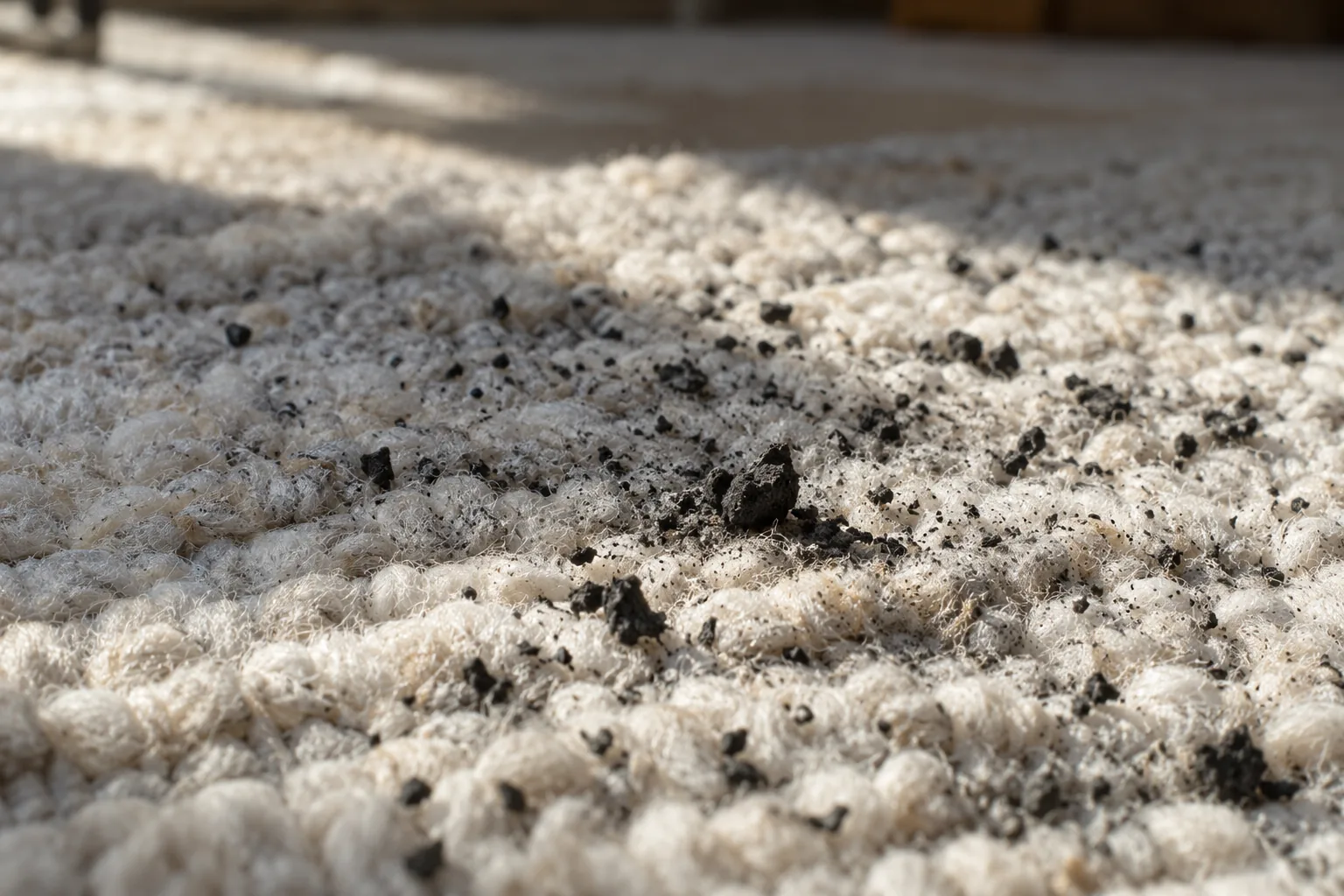
A small black deposit beneath a candle is best treated as loose particulate soil until you know what has landed on the rug. Keep feet and cleaning cloths off the area, check that the candle is fully extinguished, and photograph the mark. On a sound rug, some dry material may lift with a carefully controlled vacuum. Rubbing or wetting the mark first can drive dark particles farther into the pile and make the eventual clean more difficult.

This advice concerns a local candle deposit, not a rug exposed to a house fire. A fire can leave widespread soot, residues from other materials, heat damage and odour. If that is your situation, follow the appropriate safety advice for the property and arrange an assessment rather than trying to treat the rug as a small spot. Our guide to smoke on a rug explains that broader problem.
Make the source safe and identify the deposit
An unstable flame, a long wick or a candle placed in a draught can produce visible dark smoke. Extinguish and move the source only when it is safe to do so; allow the vessel and any dripped wax to cool. Keep the rug out of the path of further fallout. If the mark is directly beneath a candle, examine it in good light without touching it. Powdery black dust on the tips of yarns differs from a shiny wax drop or a scorched fibre. A rug can have more than one of these at once.
If you find a hardened lump, do not automatically scrape it as though it were soot. Wax may be holding particles against the yarn; pulling it away could remove pile. A dark, brittle or melted patch may indicate heat damage, which cleaning cannot reverse. Document what you see and what caused it. A photograph taken before treatment is useful if later advice is needed.
The Canadian Conservation Institute's guidance on textiles warns that handling and surface cleaning must be balanced against the risk of further fibre damage. That principle is particularly useful for delicate, antique, loosely woven or fraying rugs. The goal of the first response is limited: prevent the deposit from spreading and remove only loose material that the construction can tolerate.
Keep dry particles from being pressed in
Avoid walking over the spot, folding it into the rug or dragging furniture across it. Soot is fine enough to transfer to a shoe, cloth or nearby pale yarn. If the rug must be moved, support it rather than grabbing the soiled pile. Do not shake a valuable rug indoors; the particles may settle elsewhere and repeated flexing may strain weak sections.
Consider the surrounding area as well. A black mark on the floor or a candle holder may continue to soil the rug if the object is put back. Clean those hard surfaces with a method suitable for them, and let them dry before replacing anything. If the rug lies under a low table, check whether the underside of that table or a decorative tray is carrying soot.
Decide whether gentle dry lifting is appropriate
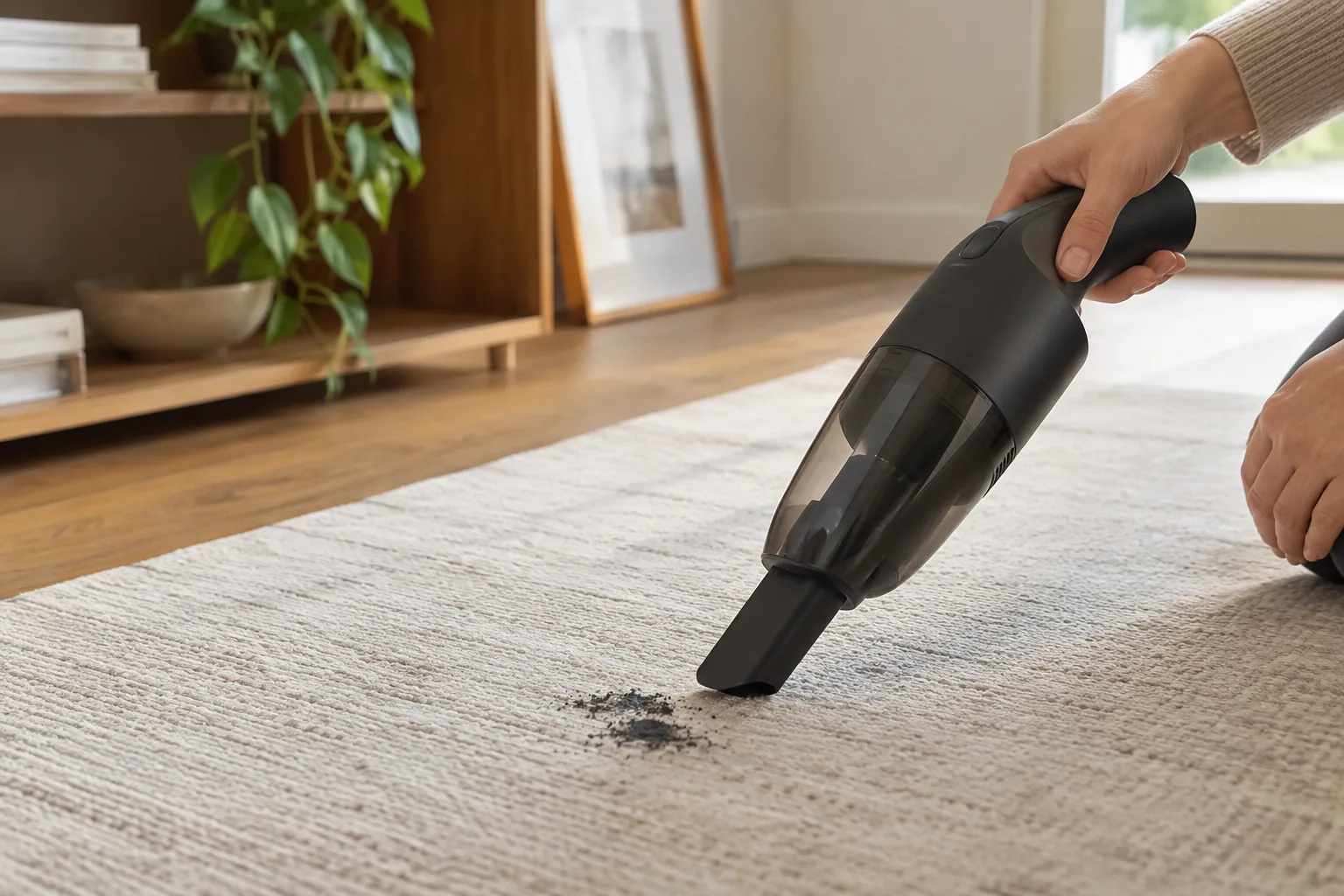
On a stable, modern rug, a low-suction vacuum without a rotating brush may lift loose particles. Work from the clean edge towards the mark, keeping the nozzle from grinding against the pile. Stop if yarns lift, fringe catches or the dark area begins to spread. On a delicate textile, even ordinary vacuuming can be too aggressive. Conservators use low suction and protective screens for vulnerable textiles, but those techniques require judgement about the particular object. A household power head or beater bar is not a suitable substitute.
Do not use a stiff brush to chase black particles deeper into the foundation. Likewise, do not rub with a white towel to see whether colour transfers: that test itself can create a grey halo. If you can remove only a little loose soil without pressure, that is a reasonable point to stop. The appearance after a careful dry lift tells a specialist more than a mark altered by repeated experiments.
Where soot seems embedded, or the backing is dark too, a surface vacuum will not necessarily address the whole deposit. Soot can lodge at different depths and around the yarn. The Canadian Conservation Institute specifically notes that its routine mechanical-cleaning advice does not cover soot treatment; that is a useful reminder not to turn a general vacuuming instruction into a guaranteed soot-removal method.
Why water and household products often complicate matters
Do not spray a detergent, carpet foam or water over the mark as the first move. Adding liquid to a fine dark deposit can carry it into adjacent yarns and the backing. A cleaner might also leave its own residue, making the area attract new soil or dry with a visible outline. The right treatment depends on the fibre, dye, construction and what else the candle left behind.
Commercial soot sponges and solvent products are not universal rug tools. A product effective on a wall or unfinished wood may abrade a textile, transfer colour or leave material in the pile. Solvents also need assessment around adhesives, dyes and backing. If wax is present, the familiar advice to apply an iron and paper can transfer melted wax farther through the rug or damage heat-sensitive fibres. Do not apply heat until the rug and deposit have been assessed.
Distinguish a removable deposit from a changed fibre. If heat has singed the yarn, a wash will not restore its original length, lustre or colour. If the blackening is partly a dye or oily residue, an apparently dry treatment may do very little. For a valuable rug, the potential loss from an improvised clean can exceed the cosmetic benefit of a faint mark.
When the problem is more than a small candle mark
Widespread smoke exposure deserves a different plan. Smoke can leave particles over a broad area, including the reverse, and its odour may come from materials beyond the rug. The Canadian Conservation Institute describes smoke and soot as potentially serious damage after fire, and notes that soot becomes harder to remove over time. This does not justify hurried scrubbing; it supports prompt documentation and professional triage.
If the rug is wet from firefighting, separate moisture management from stain treatment. Do not seal a damp, sooty rug in plastic or pile it on a wet floor. If the property is unsafe, personal safety and the instructions of emergency services come first. When access is safe, record the extent of visible damage and any cleaning already attempted. A specialist can then determine which parts are surface soil, which are embedded contamination and which are irreversible heat change.
Prepare useful details for a rug cleaner
Note the rug's approximate age, fibre if known, care label, and whether the mark is fresh, waxy, oily or dry. Include an overall photograph and a close view with a ruler for scale. Say whether you have vacuumed it or applied a product. This information lets a rug cleaning specialist discuss the likely options and limits before an on-site decision.
You may also find our advice on DIY rug cleaning mistakes useful before trying another home method. If the deposit remains, contact us with the photographs and the story of the candle. A small, dry mark can sometimes be assessed simply; a scorched or heavily smoke-exposed rug needs a more cautious conversation about achievable results.
Related Rug Cleaning Services
Explore professional cleaning options selected around the fibre, construction and condition of each textile.
Rug Cleaning Near You
View local rug cleaning information, appointment guidance and coverage across popular London districts.
Continue Reading
Read more practical guidance about fibres, stains, cleaning methods, drying and routine rug care.
Send us rug photographs and a few details.
Include the approximate dimensions, material if known, stain information and your London postcode.