
Make-up on a Rug: Safe First Steps
First identify whether the make-up is a loose powder, a cream, or a wet liquid. Keep feet off the spill and remove the source without dragging it over the pile. Dry powder can sometimes be lifted gently before any liquid is introduced. A fresh liquid deposit is better contained with light blotting using a clean white absorbent cloth. Do not scrub either kind: pigment and binders can be worked through the pile into the rug's foundation.
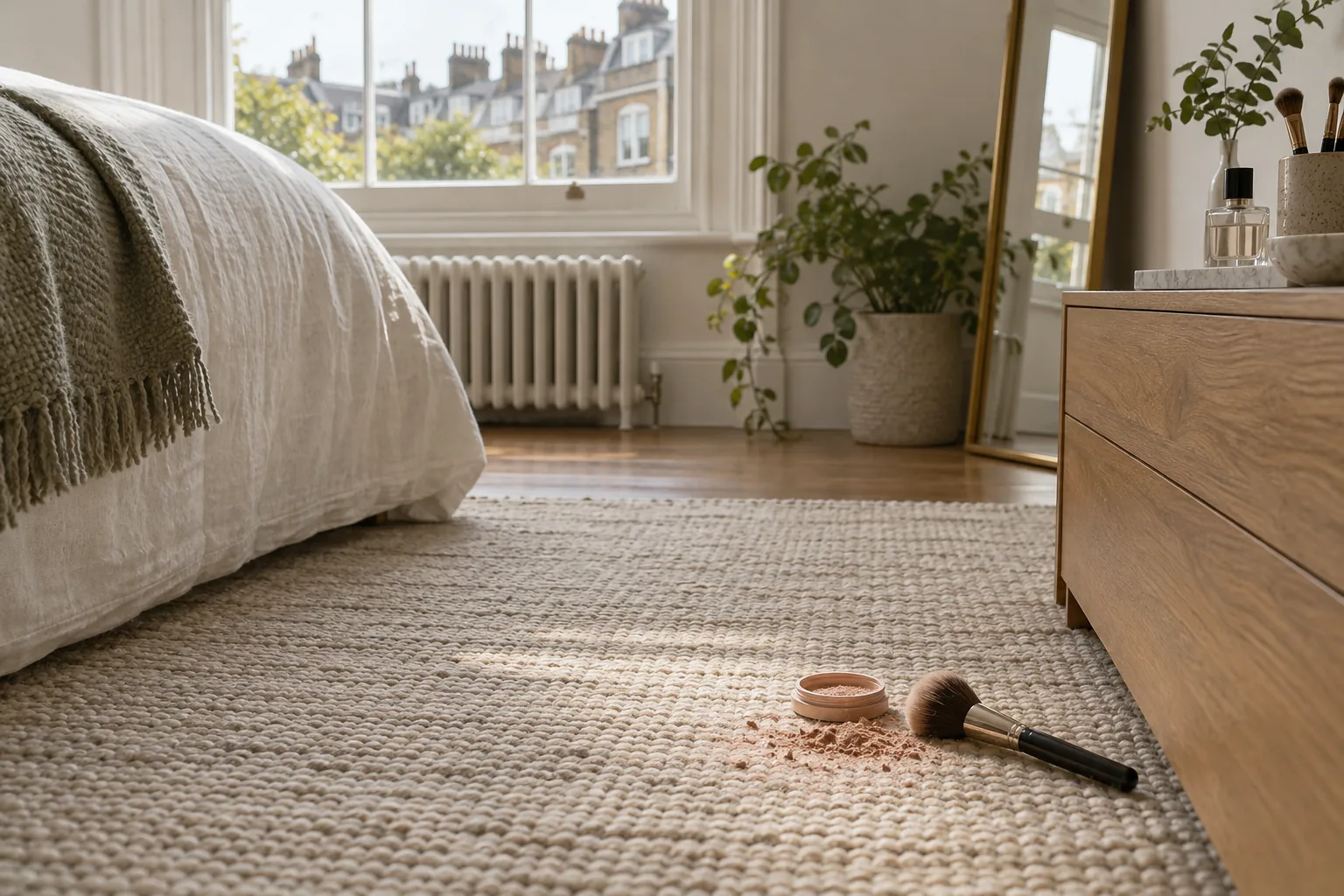
There is no universal make-up remover for rugs. Foundation, blush, mascara and lipstick differ in their mixtures of pigments, oils, waxes and other ingredients. Rug fibres and dyes differ too. The safest first response is deliberately modest: prevent a bigger mark, record the product involved, and stop before a home experiment creates dye loss or a tide line. The Canadian Conservation Institute advises keeping valued textiles away from cosmetics and describes the way oils and moisture can carry soil into absorbent fibres.
Separate loose powder from wet product
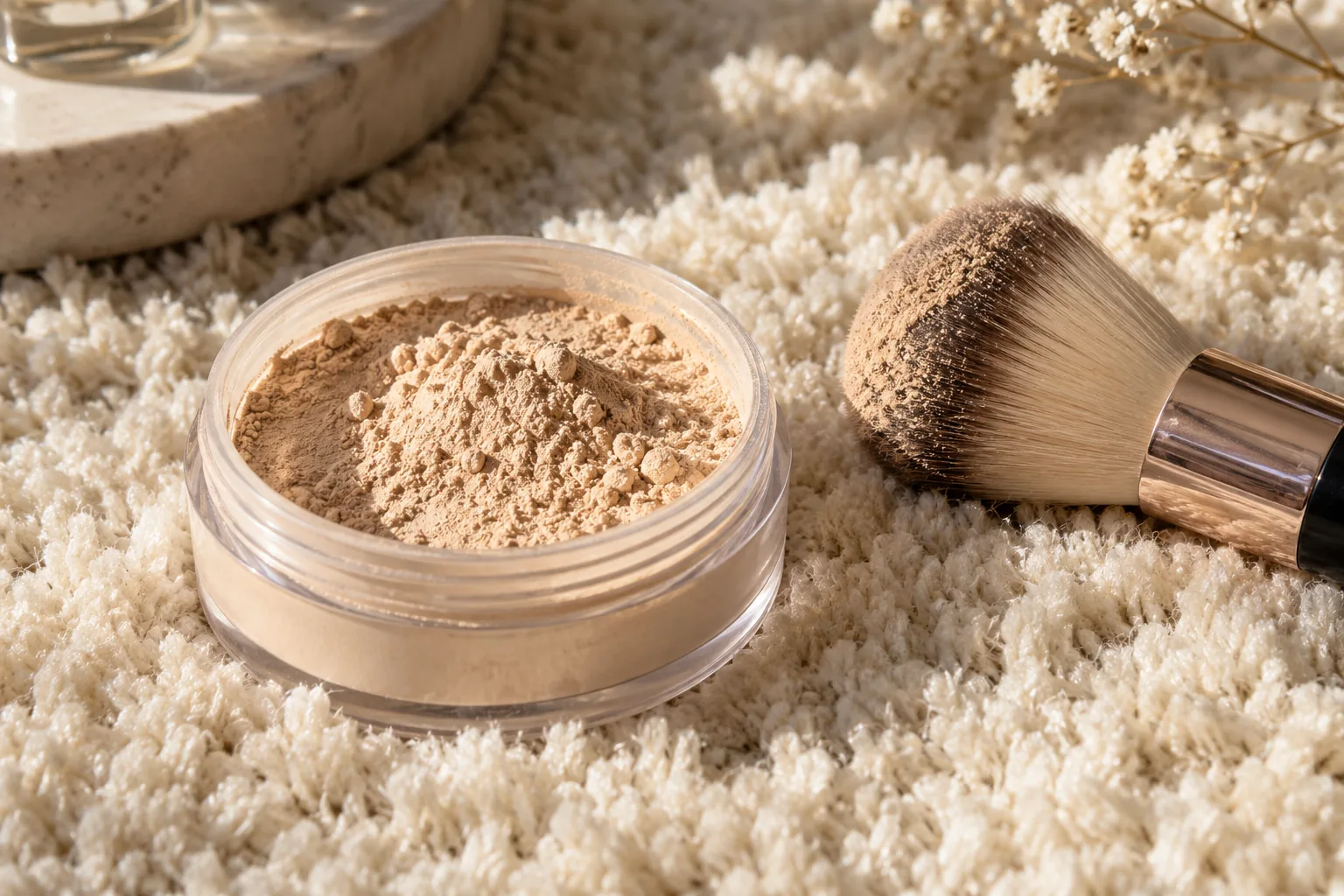
For loose face powder or blush, do not press it with a damp sponge. A powder that appears to be sitting on top may adhere when wetted. Carefully pick up the container and brush without scattering more product. If the rug is sound, a low-suction vacuum without a rotating brush can lift some loose particles. Keep the nozzle moving gently, and do not work repeatedly over fringe or a weak area. Stop if you see yarns lifting or colour spreading.
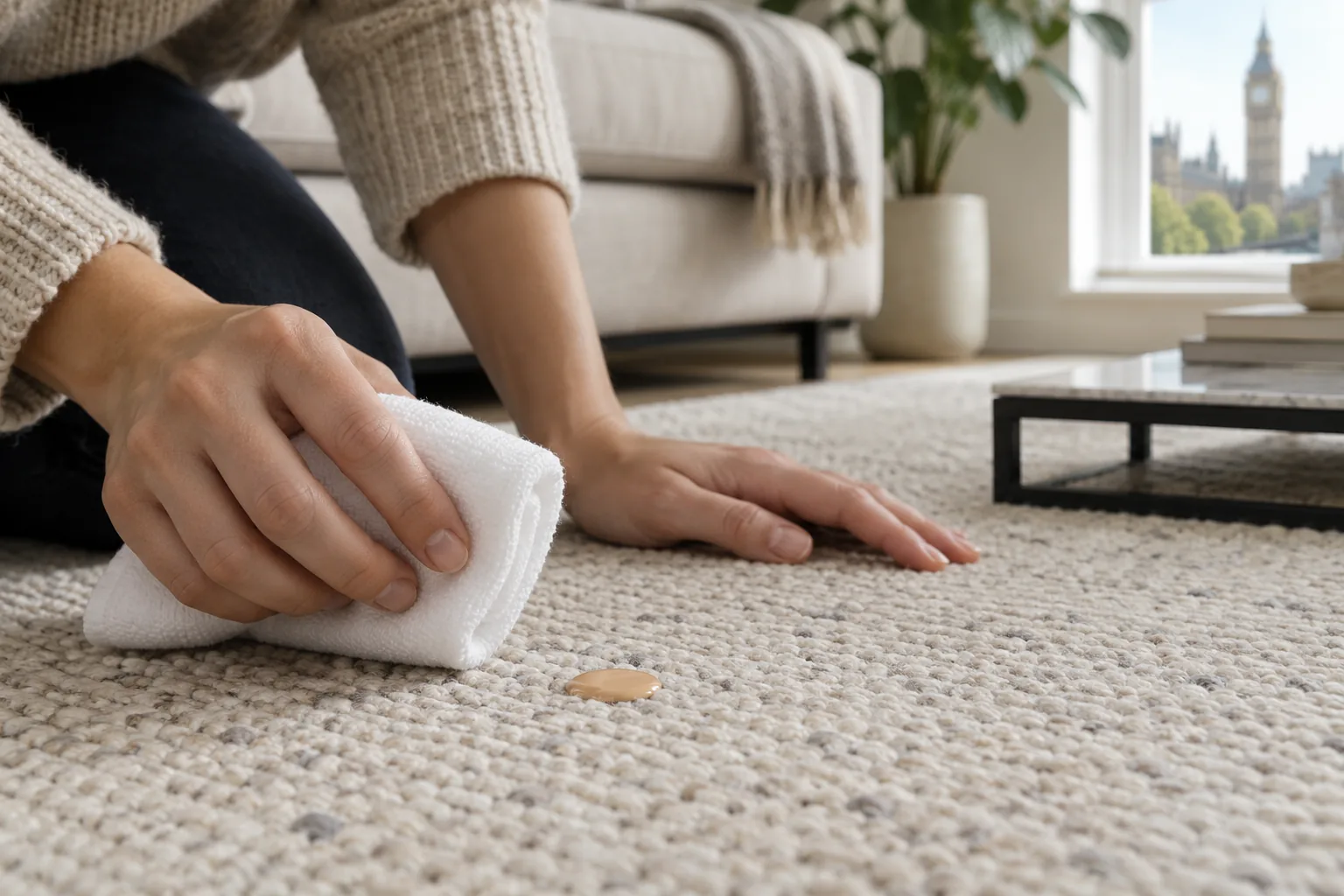
For a blob of liquid foundation or concealer, do not start by vacuuming. Use the edge of a clean, non-sharp implement to lift any excess from above the pile without pushing it sideways. Blot the remaining wet surface gently with a white cloth, changing to a clean part each time. If the cloth shows the rug's own colour rather than only the cosmetic, stop. A coloured tissue or patterned tea towel may transfer its own dye and make the result harder to interpret.
Check the reverse and any pad if a large bottle spilled. A spot on the surface may be only part of the contamination. If moisture has reached the floor, attend to the floor's finish and drying separately. Do not put the rug back over a damp pad or floor, where trapped moisture can create another problem.
Why the product name matters
If the packaging is available, save the exact product name and photograph the ingredient list. You need not become a chemist to do this. Knowing whether the spill was dry mineral powder, long-wear liquid foundation, lip colour or a cleansing oil helps a cleaner choose an assessment route. A water-based label does not prove that plain water will safely remove it from an unknown rug; the pigment and setting ingredients still matter.
Note whether the stain was already dry when discovered, and whether anyone tried wipes, soap or a cleaning spray. A partly treated area may contain two residues: the make-up and the attempted cleaner. That changes the likely outcome. If you have an old photograph of the rug before the incident, it can also help distinguish a new mark from a pre-existing shade variation.
Lighting can mislead. A powder mark may seem invisible when brushed one way and obvious when the pile is turned. Take one photograph in daylight from above and another from a low angle. Avoid rubbing the pile back and forth solely to prove whether the mark remains. On a delicate weave, repeated inspection can itself be abrasive.
Resist the instinct to use face or carpet cleansers
Make-up remover is formulated for skin, not necessarily for wool, silk, viscose, cotton, a synthetic backing or a rug's dyes. Micellar water, oil cleanser and wipes can leave their own residue. Household detergents can create foam that is hard to rinse without wetting the rug more widely. Even if pigment appears to come off onto the cloth, moisture can carry the remainder deeper and leave an outline after drying.
Avoid acetone, alcohol, hairspray and other strong solvents chosen from internet stain lists. Solvent compatibility cannot be assumed for an unknown rug, and some products can affect dyes or backing materials. For a valuable, antique or hand-dyed rug, the cost of colour loss is much greater than a small cosmetic spot. The Canadian Conservation Institute treats wet cleaning as a decision requiring assessment and colourfastness testing for historic textiles; a quick home dab in a hidden corner does not guarantee that every coloured yarn in the spill area is stable.
Do not apply heat to set a cloth dry or to speed the treatment. Heat may alter some fibres and can make an oily or pigmented mark more difficult to address. Put the rug somewhere it can remain undisturbed while you get advice. If you have already applied a cleaner, do not keep adding products in the hope that one will cancel the last.
What a professional assessment can establish
A cleaner can examine the rug's fibre, construction, dyes, backing and the size and depth of the deposit. They can consider controlled treatment and drying rather than relying on a single household recipe. Oil-rich make-up may behave differently from a dry powder, and a stain that reached the foundation may need more than a surface approach. Even professional work cannot guarantee full removal when the pigment has altered or bonded with the fibre.
Our guide to oil on a rug explains why oily residues need special thought. The article on DIY rug cleaning mistakes covers the risk of repeatedly adding chemicals or moisture. For this particular make-up spill, the useful next step is a rug cleaning assessment based on the product and rug, not a generic stain-removal promise.
Prevent another spill without hiding the rug away
Keep brushes and bottles on a stable tray rather than at the edge of a dressing table above the rug. Put a washable protective mat under the place where make-up is applied, and clean brushes away from the rug. Check that caps are tight before carrying cosmetics through the room. These small changes are easier than trying to reverse an oily pigment mark in a dense pile.
If the spill is already there, contact us with photographs of the mark, the rug label and the make-up product. Tell us exactly what you have done so far, including any cleaner used. Honest detail allows a more realistic view of treatment options and helps prevent a minor accident from becoming a larger stain.
Related Rug Cleaning Services
Explore professional cleaning options selected around the fibre, construction and condition of each textile.
Rug Cleaning Near You
View local rug cleaning information, appointment guidance and coverage across popular London districts.
Continue Reading
Read more practical guidance about fibres, stains, cleaning methods, drying and routine rug care.
Send us rug photographs and a few details.
Include the approximate dimensions, material if known, stain information and your London postcode.