
Why Dark Rugs Show Pale Traffic Lanes
A pale strip across a dark rug can look like colour has vanished exactly where people walk. Sometimes cleaning improves the contrast because pale dust, residue or tracked-in material has collected there. In other cases the pile has been abraded, flattened or turned in a new direction, changing how it reflects light. Sunlight can also fade one part of a rug, though its pattern usually follows exposure rather than every footstep. More than one cause may be present.
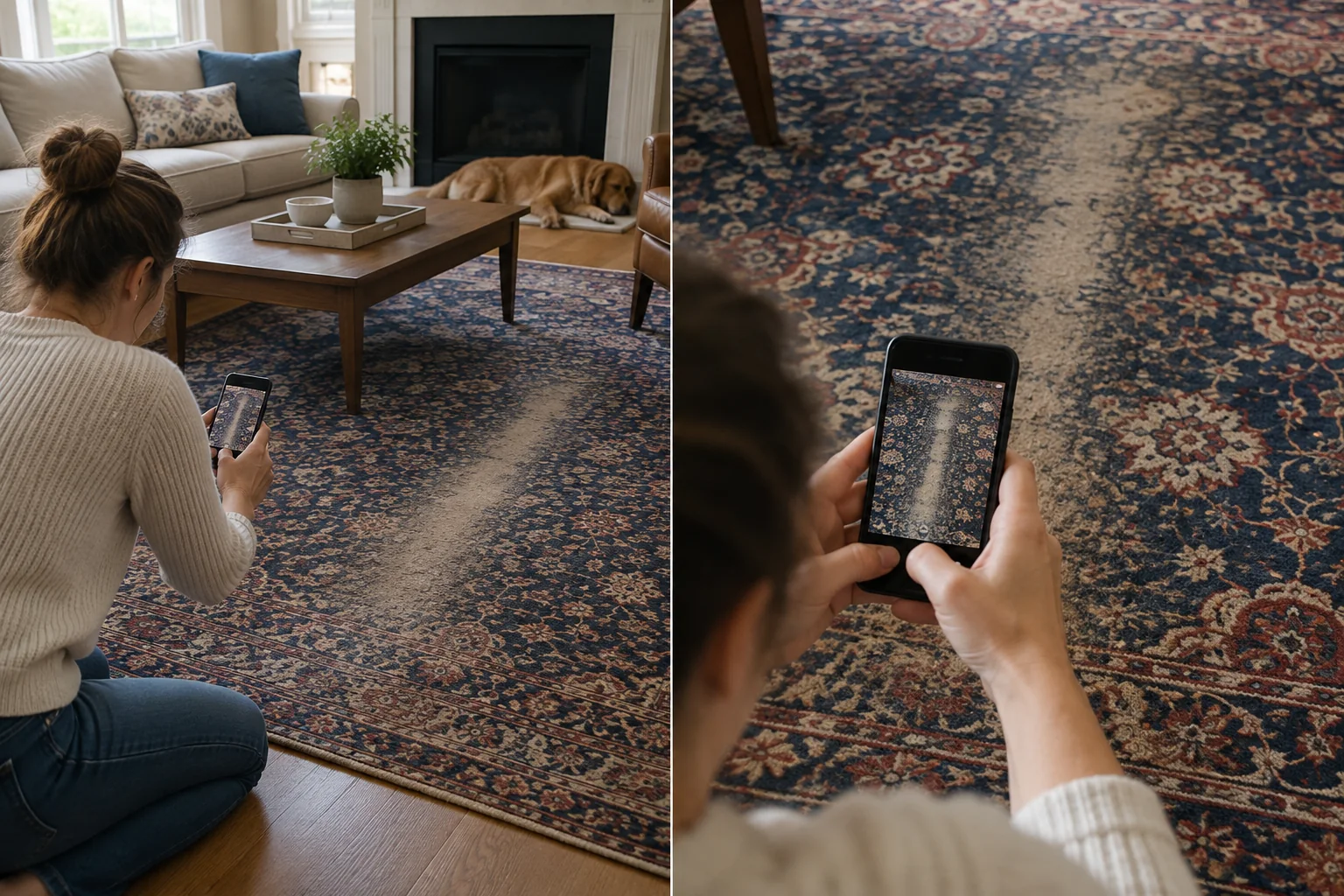
The key is to separate removable soil from changed fibre or dye before promising a full colour return. A cleaner can assess what is in the pile and what has happened to it. The homeowner can help by noting the traffic route, light exposure and when the difference first appeared. This guide offers simple observations that preserve the rug and make that conversation more precise.
Why a walkway can look lighter
Shoes and feet deliver dust, grit and oils to a narrow route. On a dark pile, light-coloured dry soil can make the area look grey. Regular traffic also bends and compresses fibres. Fine grit trapped at the base can abrade them over time, so a path can contain both removable dirt and permanent surface wear. The Canadian Conservation Institute's rug guidance describes wear as a major cause of damage and explains that embedded dirt can act like an abrasive.
The Carpet and Rug Institute's maintenance guidance discusses traffic-lane dulling from soil and abrasion in commercial carpet. A domestic rug is not identical to wall-to-wall commercial carpet, but the distinction is useful: cleaning may remove some soil while leaving worn fibres dull. Do not infer from the contrast alone that a cleaner failed, or that every pale lane is permanent.
Pale lint from other textiles can also settle on a dark rug. A white residue from a past product is another possibility. These are reasons to ask what the surface contains before adding more detergent. A specialist may find that the visible lightness has several layers of cause, with partial improvement the realistic outcome.

Compare under furniture with the walking route
Move a light item carefully to reveal a protected patch, without dragging it across the pile. Compare the colour, pile height and texture with the walkway in even daylight. Is the lane paler but the yarns still full? Is it flatter, rougher or thinner? Can you see the foundation? Photographs from the same direction help a cleaner judge the change more reliably than a close-up of the lane alone.
An area under furniture may also have received less light and less cleaning, so it is not a perfect “original colour” sample. If the whole room receives strong sun except a covered rectangle, that rectangle can look darker even without traffic wear. Note the window position and whether the rug has been rotated. The keeping rugs plush guide gives broader care context, but it cannot identify the exact cause on your rug.
Look at the underside if the rug is easy to lift. A backing full of grit, a powdery underlay or a damp floor can all be relevant. If the rug is fragile, do not force the inspection. Send clear pictures of what you can see safely.
Change your viewing direction
Walk to the opposite side and look again. A directional pile can appear lighter from one end and darker from the other. Foot traffic can change the lay in a route even where the yarn has not lost dye. The Carpet and Rug Institute's maintenance and troubleshooting bulletin distinguishes shading caused by pile direction from actual colour change.
If the pale path becomes dark from the other side, reflection is likely part of the explanation. That does not prove there is no soil or wear; several effects can overlap. If it stays pale from both viewpoints and the fibres feel thin or rough, abrasion or fading may have a larger role. Photograph each direction and label the images. A cleaner can then view the rug under consistent light rather than judge one misleading angle.
Do not brush the lane against the pile to force a dark appearance. Vigorous grooming may remove or break vulnerable yarn and create yet another texture. A small, gentle hand test on a sound area can show pile direction without applying a treatment.

Where fading fits into the picture
Light exposure can change dyes, particularly when a rug sits beside an uncovered window for long periods. A faded area may follow the shape of sunlight, the outline of furniture or one side of the room rather than a central walkway. A pale lane and a sunlit strip can overlap, making the diagnosis less obvious. Record the window orientation and whether curtains or blinds have changed.
Cleaning removes some soils but cannot put lost dye back into the yarn. Nor can it reverse fibre wear. A professional should discuss these limits before an expensive full-rug treatment is presented as a colour restoration. In some cases the clean rug may show the contrast more clearly because surrounding soil no longer masks it. That is a reason for careful pre-clean photographs and realistic expectations.
If the pale area emerged abruptly after a spill or product application, report that timeline. Chemical colour change differs from slow traffic wear and may demand a different assessment. Save the product name and packaging rather than applying a second agent.
What a sensible clean can and cannot do
Routine dry soil removal can limit the grit that contributes to abrasion. Use a vacuum setting suited to the rug's construction; keep powered brushes away from vulnerable pile, edges and fringe. The goal is to remove dry particles without overworking the surface. A deep clean may improve embedded soil, but the method should be selected for fibre, backing and dyes, not simply because the lane looks pale.
Ask a rug-cleaning specialist to identify which part of the contrast appears to be soil, pile lay, wear or colour loss. What visible improvement is realistic, and could the process alter a delicate pile? A small trial may help in some cases, but a hidden-area test cannot show how a whole traffic path will look once dry. The guide to synthetic rug care can be relevant if the fibre is confirmed, yet construction still matters.
Send the label, overall photographs, images from both viewing directions and a close view of protected and trafficked areas through the contact page. Include past cleaning and any product use on the lane. Do not ask for a guarantee that the dark colour will return when the cause has not been established.
Reduce the contrast from future use
An entrance mat can catch some grit before it reaches the rug. Regular appropriate vacuuming removes dry particles before they grind at the base. Rotation, where the rug and room allow it, can distribute traffic and light exposure more evenly. Furniture cups and suitable underlay can reduce local compression and sliding, though neither repairs an already worn pile.
The pale lane is a signal to look closely, not a diagnosis by itself. Record the route and lighting, compare protected pile and view from two directions. Cleaning may restore some appearance where soil is responsible. When abrasion, lasting pile distortion or faded dye is part of the picture, the honest aim is improvement within the rug's physical limits.
Related Rug Cleaning Services
Explore professional cleaning options selected around the fibre, construction and condition of each textile.
Rug Cleaning Near You
View local rug cleaning information, appointment guidance and coverage across popular London districts.
Continue Reading
Read more practical guidance about fibres, stains, cleaning methods, drying and routine rug care.
Send us rug photographs and a few details.
Include the approximate dimensions, material if known, stain information and your London postcode.