
How to Recognise Rug Pile Reversal
A clean rug can appear dark on one side of a soft-edged patch and light on the other. If the pile in those areas leans in different directions, it reflects light differently. This is often called pile reversal, shading or pooling. The appearance can resemble a water mark even though no liquid caused it. Walking to the opposite end of the rug may reverse which patch looks darkest.
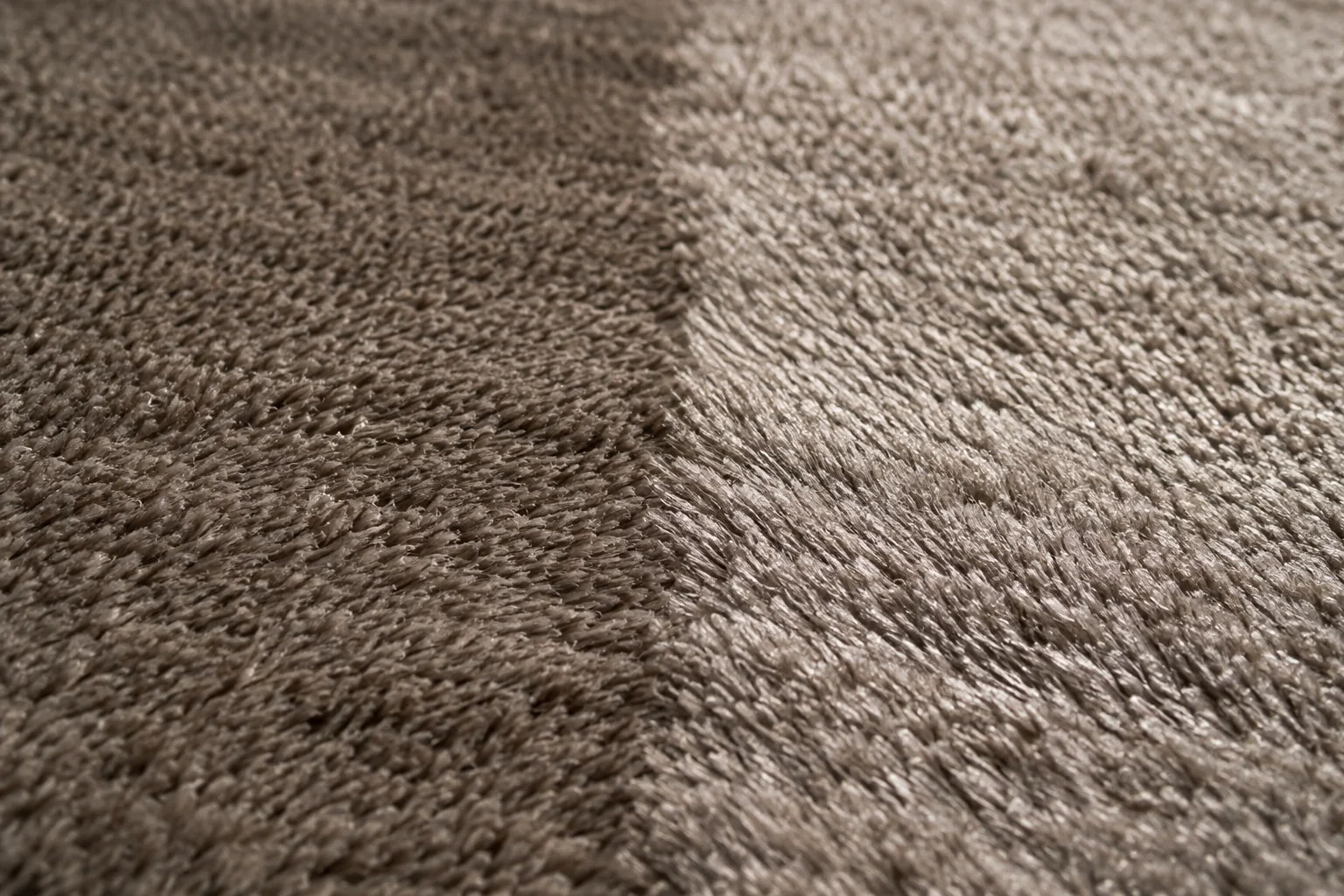
That visual test is useful, but it is not a full diagnosis of every mark. Soil, wear or an actual spill can coexist with directional shading. The practical aim is to identify when the colour itself has probably not changed, so that you do not order stain treatment or apply moisture to an optical effect. This article focuses on the viewing-direction clue and realistic expectations for cleaning.
What changes in the pile
Cut pile yarns stand above the rug's foundation. Light striking the yarn tips and sides returns to your eye differently depending on the direction in which the fibres lean. Where one group lies against the general lay, a patch can look darker or lighter. The surface may still be clean, with no dye missing and no deposited substance. Smooth, dense, reflective piles make this difference easier to see than a busy pattern or coarse loop.
The Carpet and Rug Institute's pile-reversal bulletin explains the optical mechanism and says the condition can appear as though water has been spilled. Its guidance is written for carpet, but the same pile-direction observation is relevant when assessing a smooth cut-pile rug. The bulletin also says established pile reversal is often persistent; brushing or vacuuming may change only the top temporarily.
This differs from ordinary vacuum lines that disappear after another pass or as someone walks across the rug. Pile reversal often forms an irregular boundary that returns after the surface is disturbed. It may develop with traffic and room conditions, but a single cause cannot be confidently assigned to every pattern. Do not assume a dark patch proves a cleaning accident.

Use the two-end viewing check
Stand at one end in even daylight and photograph the full rug. Then stand at the opposite end and take another photograph with similar exposure. If a dark-looking patch becomes light relative to its surroundings, directional reflection is a strong clue. A mark caused solely by missing dye or deposited soil will not usually invert in exactly that way, although lighting and pile movement can complicate the view.
Do not judge under one spotlight or a phone flash alone. Strong side light exaggerates texture; changing the camera's automatic exposure can make two images incomparable. If possible, use the same time of day and keep the phone's brightness settings consistent. Include a wider view so a specialist can see the room light and traffic route.
Lightly stroke an unaffected sound section with the pile and against it to understand the rug's general lay. Avoid aggressive brushing of the disputed patch. A delicate yarn can be abraded while you try to make a visual test more obvious. The Carpet and Rug Institute's troubleshooting bulletin distinguishes shading from an actual change in colour and notes that solid cut-pile styles display it prominently.

“Watermarking” can be a misleading name
The word watermarking is commonly used for pile reversal, but in this context water is not the cause. The WoolSafe Organisation's care guide explicitly calls it an optical effect from local changes in pile lay. This is distinct from a real tide line, where liquid has moved soil or dye and left a deposit at a drying boundary. Both can exist on the same rug.
Ask about the history. Did the pattern gradually appear along a walking route, or did it arise immediately after a drink spill? Does it invert when viewed from the other end? Is the pile stiff, sticky or discoloured on a white cloth? A true spill may leave residue, odour or a sharp boundary. Pile reversal often shows a softer, cloud-like transition. These are clues, not guarantees.
Do not wet a suspected shading patch to “erase the water mark”. If it is pile reversal, water is unnecessary and may create a real mark on a sensitive rug. If there was a known spill, tell the cleaner and let them assess both possibilities. Our article on keeping rugs plush gives routine pile-care context, but cannot make persistent reversal disappear.
Cleaning can address soil, not rewrite every yarn's lay
A rug with pile reversal still collects ordinary dirt and may benefit from appropriate cleaning. That cleaning should be chosen for its fibre, dyes, backing and condition, not as a promise to restore even shading. A cleaner may remove soil that partly masks or exaggerates the contrast. Once the rug dries, the directional patches may still be visible and may seem more obvious against a uniformly clean background.
Avoid buying repeated stain treatments when the visual effect returns. Strong brushing, heat or damp grooming can create texture damage without permanently changing the deeper pile orientation. The CRI bulletin notes that top-of-pile changes from brushing or vacuuming may be temporary. The guide to DIY rug-cleaning mistakes explains why repeated products can add problems. Ask what is realistically removable and what is a characteristic of the surface.
If the apparent patch is a straight traffic path that stays pale from both ends, soil, abrasion and faded colour deserve separate consideration. A clean rug can show shading and wear at once; naming one does not exclude the other.
Ask for a diagnosis before a cosmetic promise
For a lustrous or valuable piece, send a luxury rug-cleaning specialist both end-view photographs, an overall view, label and close view of the pile. State whether there was any spill, previous cleaning or change in room layout. Ask which part of the appearance they attribute to reflection and whether any soil or residue is also present.
An assessment may conclude that routine cleaning is appropriate but the shading will remain. That can be a sound result if the textile is otherwise healthy. For a rare antique or fragile rug, ask whether a textile conservator should inspect it before a treatment intended mainly to change appearance. Use the contact page to share images and ask what outcome the cleaner can responsibly offer.
Let the light tell part of the story
Pile reversal is easiest to recognise by moving around the rug, not by naming a dark patch from one photograph. View it from both ends in steady light, note its history and check whether the pile has residue or physical damage. Where the effect is directional shading, extra chemical cleaning is unlikely to solve it. Where soil or a real spill is also present, a specialist can discuss those separately and set expectations before work begins.
Related Rug Cleaning Services
Explore professional cleaning options selected around the fibre, construction and condition of each textile.
Rug Cleaning Near You
View local rug cleaning information, appointment guidance and coverage across popular London districts.
Continue Reading
Read more practical guidance about fibres, stains, cleaning methods, drying and routine rug care.
Send us rug photographs and a few details.
Include the approximate dimensions, material if known, stain information and your London postcode.