
Bamboo Silk Rugs: What the Name Conceals
“Bamboo silk” sounds like a blend of two familiar natural fibres. On a rug listing, it often refers instead to a glossy man-made cellulose fibre derived from bamboo, commonly viscose or rayon. The word silk may describe its appearance rather than its composition. That distinction matters when you choose a cleaning method, judge a spill or decide what to ask before buying. A rug that looks like silk is not automatically made from silk, and a bamboo source does not tell you how the finished pile will behave.
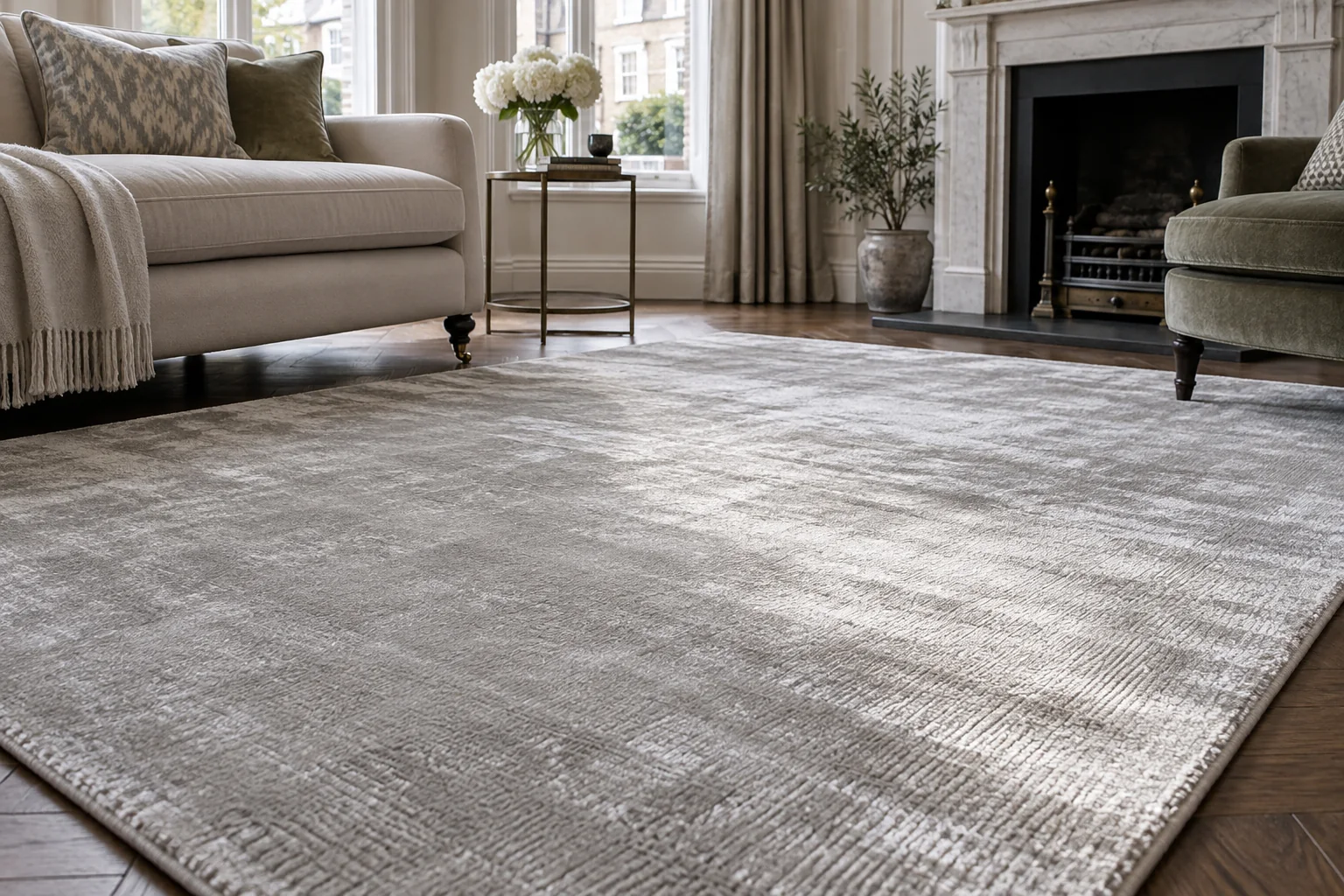
The material name is only the beginning. A rug may combine a viscose face with wool motifs, a cotton foundation, adhesive or a backing cloth. Colour stability and condition can vary across those parts. The practical aim is to identify the actual yarns and construction, then choose care for the most vulnerable element. If the retailer's description is vague, keep that uncertainty visible instead of turning a marketing phrase into a technical cleaning instruction.
Silk-like is a visual description, not a fibre test
The US Federal Trade Commission's bamboo textile guidance explains that textiles made by processing bamboo into rayon or viscose should be identified as rayon or viscose made from bamboo, rather than simply called bamboo. Canadian labelling guidance for bamboo-derived textiles makes a similar distinction between the source plant and the resulting regenerated fibre. These are regulatory explanations from other countries, not a ruling on any particular UK rug listing, but they clarify the material terminology.
Genuine silk is an animal protein fibre. Viscose is regenerated cellulose. Both can have a soft hand and lustre, especially in a cut pile, but their shared appearance does not make their care interchangeable. Nor does a word such as “art silk” establish the precise fibre. A seller may use several trade terms for the same look. Ask for a fibre-content declaration and a care sheet that names the actual pile and foundation materials.
Do not rely on a photograph to identify the yarn. Lighting, pile direction, finishing and image editing can make wool, silk and viscose look similarly reflective. Feeling a corner in a showroom is helpful for deciding whether you like its texture, but it is not a laboratory identification. If a valuable rug has no label, tell a professional that the material is uncertain.

Ask which part of the rug contains bamboo-derived viscose
One design can contain several yarns. A seller might describe the dominant pile, leaving out contrasting motifs, fringe, foundation or backing. Ask whether the stated percentages refer to the face yarn only or to the whole article. The answer matters because water reaching the rug will not stop at the boundary of one decorative colour. A cotton foundation may carry dye; an adhesive-backed tufted rug may have a different vulnerability from a hand-knotted one.
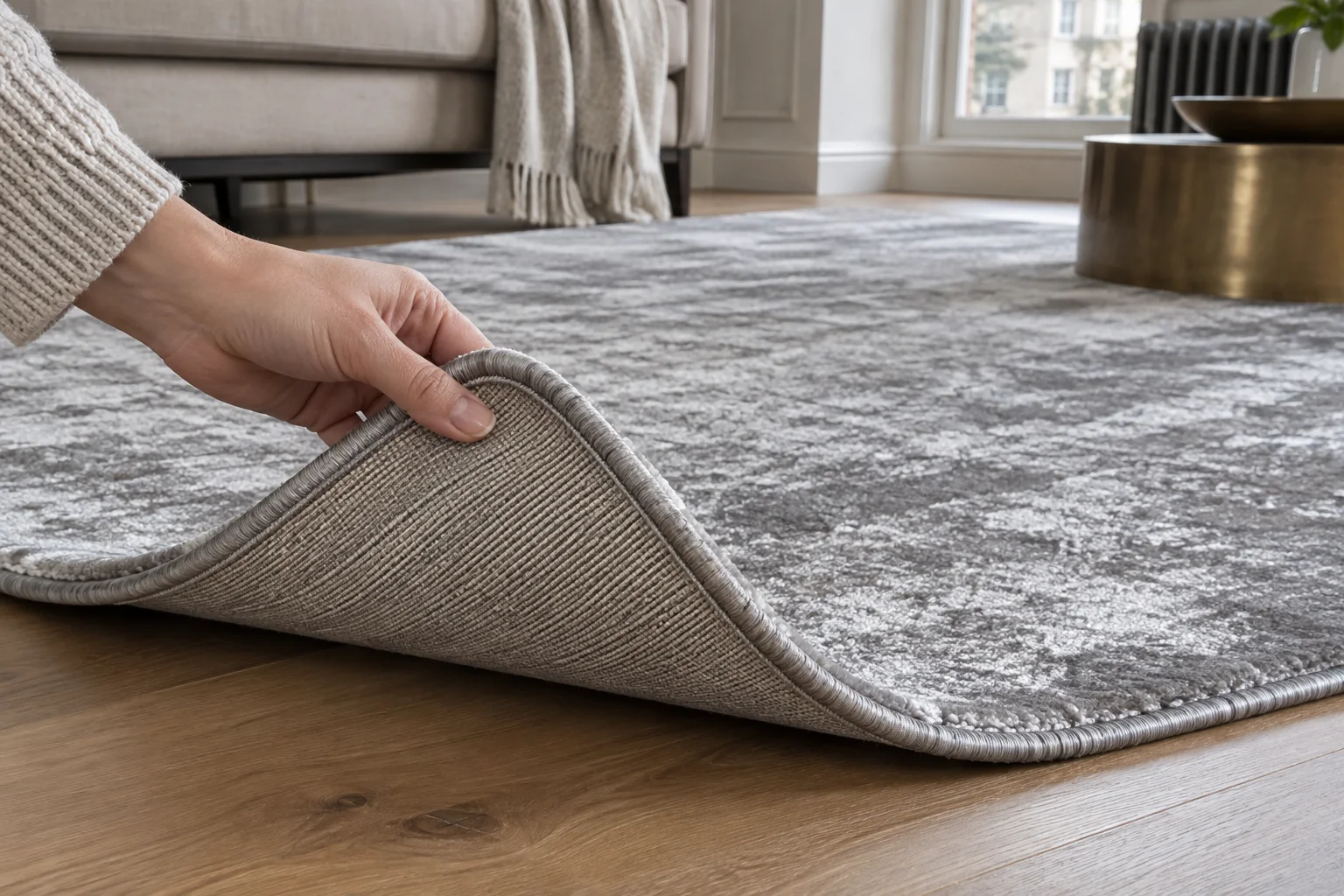
Turn a manageable edge gently to view the reverse, without folding sharply or pulling at a fringe. Look for a woven foundation, applied fabric, loose yarn, powder or repair. Photograph labels on both sides. These observations may guide further questions, but they do not identify a fibre definitively. The site’s guide to silk rugs discusses genuine silk care; use it only after you have checked whether silk is actually present.
If you are buying, request the product specification in writing. Ask whether “bamboo silk” means viscose from bamboo, another regenerated cellulose fibre, a blend containing real silk or simply a visual style. Ask what the seller recommends for liquid spills and whether that advice applies to the rug's backing and dyes. A confident answer should name materials and limits rather than promise that a lustrous rug is easy to wash.
Why moisture can change a lustrous pile
The smooth, directional pile of a glossy rug can look different after it is pressed, rubbed or dampened. Light reflected by fibres leaning one way produces a different shade from light reflected by fibres leaning another. A wet area may also collect soil or dissolved material at its boundary as it dries, leaving a tide line. Dye movement and backing stains are further possibilities. From a photograph alone, a darker patch cannot safely be labelled “just a stain”.
The Canadian Conservation Institute's guidance on textiles lists tide lines, dye movement and structural change among possible consequences of water exposure. It also notes that raised pile can be crushed or distorted. The guide addresses collections, not a particular bamboo-derived rug, so the correct inference is to assess the object before a wet treatment, not to prescribe one universal process.
Compare an affected area in even daylight from two directions. If the shade changes when you change viewpoint, pile lay may be involved. If the boundary stays put, a deposited line or colour change may also be present. This observation helps you describe the problem but does not tell you whether it is fully reversible. Do not brush hard against the pile to try to make it match.
Deal with a spill without enlarging it
For a fresh liquid spill, remove the source and blot gently with a clean, white absorbent cloth. Work without rubbing or dragging the pile. Replace the cloth as it becomes wet. Check whether liquid has passed through to the underlay or floor, and separate those surfaces to dry if you can move the rug safely. Keep a record of the liquid, time, approximate amount and anything already applied.
Resist the urge to wash out a ring by wetting a larger circle. More liquid can move material farther and increase the amount that must dry. Do not use steam, a hot hairdryer, strong detergent or a mixture of stain removers because a product label says it suits “silk-like” carpets. That phrase does not identify the rug's fibre, dye or backing. A small hidden test may reveal immediate dye transfer, yet cannot guarantee that a wider area will dry without a visible line.
If the spill is coloured or oily, or the rug remains damp beneath, seek a specialist assessment promptly. Keep the packaging of any product already used so the cleaner can consider its ingredients. For wider guidance on avoiding well-meant treatment errors, see DIY rug-cleaning mistakes. A valuable rug may justify a particularly conservative response even if the mark is still visible.
Routine care should respect the weakest part
A sound everyday rug can often be kept cleaner by removing dry grit before it is ground into the pile. Choose a gentle vacuum setting appropriate to the rug, keep a rotating brush away from delicate yarns and fringe, and stop if the machine catches fibres. A fragile edge or shedding backing needs assessment before routine vacuuming continues. Do not shake a heavy rug by its fringe or hang it where its weight pulls on one edge.
Keep prolonged direct sun and concentrated heat in mind when placing a lustrous rug. Rotation can even out traffic and light exposure, but first check whether moving furniture or turning the rug will stress a weak foundation. Use suitable underlay to reduce sliding, while checking the floor beneath for moisture and marks. These small inspections give you an early warning of a change in colour, pile or backing.
The name “bamboo” sometimes encourages assumptions about natural resilience or hygiene. Plant origin alone cannot support a claim that the processed rug resists stains, bacteria or moisture. Judge the specific finished article and its care information instead. Even two rugs both sold as bamboo silk may have different pile density, dye systems and construction.
Questions for the cleaner before any full clean
Share photographs of the whole rug, the label, close views of each yarn type, the reverse and any marks. Ask a luxury rug-cleaning specialist how the pile fibre will be verified and how the construction and dyes will be checked. If the rug contains wool or genuine silk as well as viscose, ask how the proposed treatment accounts for each component. A method name such as “dry” or “gentle” is not enough; ask what will actually contact the fibres and how the rug will be dried.
Discuss the result you want. Removing soil may be realistic while restoring perfectly even sheen is not. Ask whether a small trial is useful, what visible change could occur, and whether the cleaner will advise against treatment if risk outweighs likely improvement. For an antique or unusually valuable piece, a textile conservator may be more appropriate. Use the contact page to share the details before agreeing to collection.
Buy and care for the rug described, not the rug imagined
A precise material description makes later care decisions easier. Keep the receipt and specification, photograph the labels and note any seller advice while it is available. If the only description is “bamboo silk”, treat that as an unanswered question about composition. The rug's look may be exactly what you want, but its cleaning plan should rest on the actual fibres, dyes and structure, together with a realistic discussion of what moisture or wear has already changed.
Related Rug Cleaning Services
Explore professional cleaning options selected around the fibre, construction and condition of each textile.
Rug Cleaning Near You
View local rug cleaning information, appointment guidance and coverage across popular London districts.
Continue Reading
Read more practical guidance about fibres, stains, cleaning methods, drying and routine rug care.
Send us rug photographs and a few details.
Include the approximate dimensions, material if known, stain information and your London postcode.