
How to Protect a Silk Rug from Crushing
A chair leg can leave a darker-looking square on a silk rug without spilling a drop. The weight has pressed a small area of pile in a different direction, changing how it reflects light. Sometimes the impression softens when the furniture is moved and the pile relaxes; sometimes abrasion, broken yarn or a long period of pressure leaves a lasting change. The useful response starts with reducing the concentrated load, not with applying water to the mark.
Silk pile is prized for its lustre and fine detail. Those qualities also make changes in direction conspicuous. A rug may look different as you cross the room, even where no damage has occurred. Before treating a furniture mark, establish what you are seeing and whether the yarn is still intact. This guide covers placement, protective supports, movement and what to ask a specialist if an impression persists.
Understand what pressure does to a pile
Pile consists of yarns projecting from a foundation. Viewed one way, a silk surface may look bright; viewed against the lay, darker. A narrow furniture foot presses yarns together and may force them to lean away from their usual direction. The denser the load and the longer it remains in one place, the more noticeable the impression can become. A foot that also moves slightly each time someone sits may abrade the yarn as well as compress it.
The Canadian Conservation Institute's preventive guidance for textiles describes raised pile as prone to crushing and distortion. Its wider discussion of physical forces is a reminder that appearance change and structural damage can occur together. The source addresses heritage textiles in general, so it should guide caution rather than supply a promise that any particular rug will recover.
Look at the mark in good, even daylight from two directions. Does it reverse from light to dark as you move? Does the pile still cover the foundation? Are there missing yarns, a rough edge or a snag where the furniture foot rubbed? A mere change in lay may respond differently from fibre loss. Photograph the area before attempting to alter it, including one wider view showing the furniture position.
Spread the load under each furniture leg
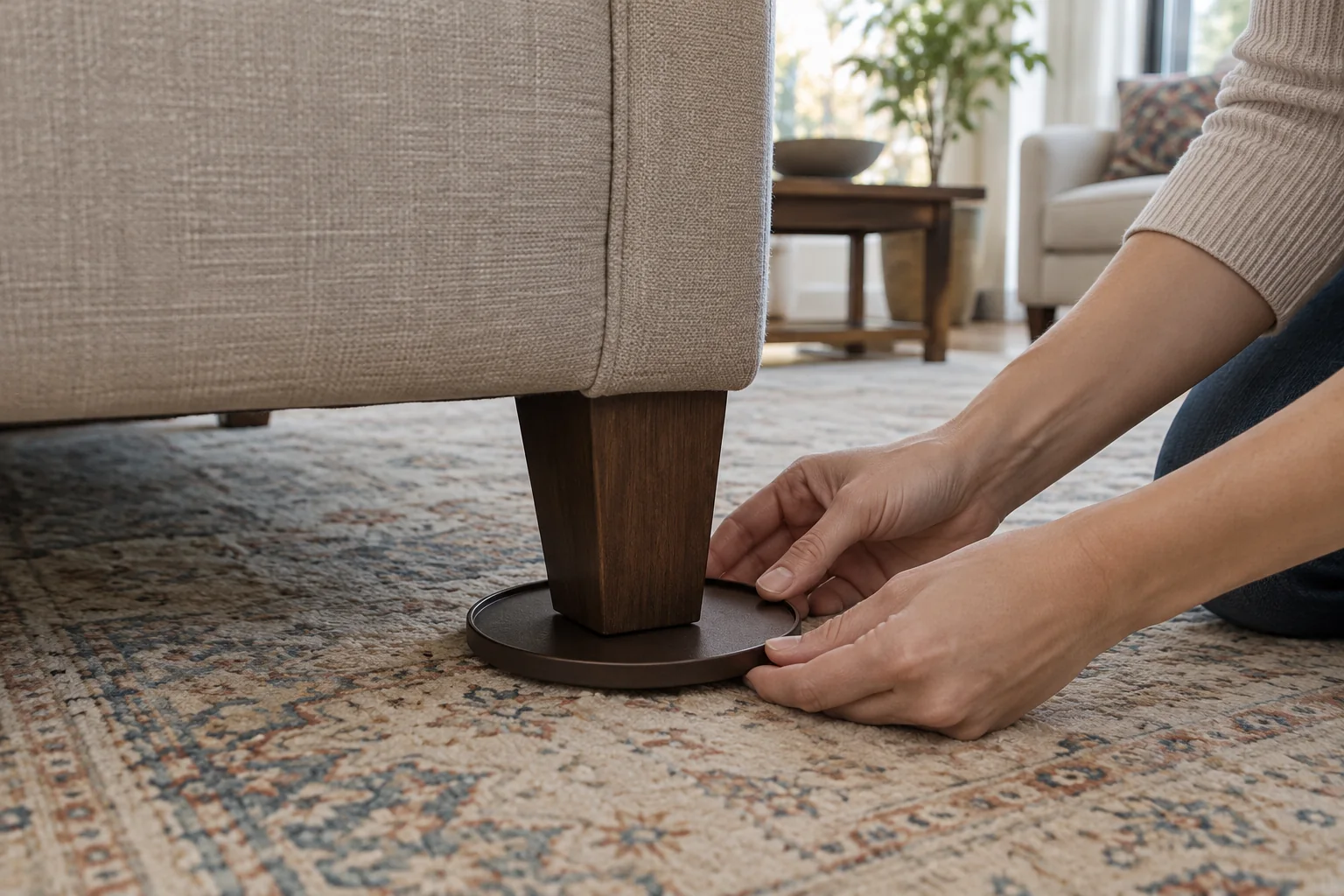
A broad, smooth furniture cup can distribute a leg's weight over a larger area than its original foot. Choose a support suited to the furniture, flooring and rug thickness. It should sit flat, have no sharp rim against the textile and be large enough that the leg does not hang over its edge. A tiny hard disc may make a neat outline but provide little improvement in pressure distribution. If the cup slips or traps grit, it may introduce a new abrasion risk.
Check the base of each leg for exposed staples, rough metal, splinters or a worn glide. Repairing that contact point matters as much as placing a cup below it. A felt pad can help furniture move on a hard floor, but a pad that permits a heavy chair to skate across silk pile may be the wrong choice on a rug. Do not assume every product labelled “rug safe” suits a delicate silk face.
For a sofa, support all legs consistently so one corner does not bear extra weight. Inspect the cups periodically. They can migrate when furniture is moved, collect dust beneath their edges or leave their own outline if forgotten for years. Lift a leg briefly to check the pile rather than dragging the cup across it. If moving the item is heavy or awkward, get help rather than pulling it by the rug.
Place furniture with future movement in mind
A layout that keeps the heaviest furniture entirely off a silk rug is the simplest way to avoid fixed leg impressions, but it may not suit the room. If furniture must overlap, favour broad stable feet and a layout that does not require repeated dragging. Check that doors, drawers and chair movements do not scrape the rug edge. A dining chair that is pulled in and out many times daily is a different risk from a stationary side table.
Rotation can spread traffic and light exposure, but it has limits. Moving an entire seating arrangement every few months may create fresh pressure points rather than remove old ones. If you rotate a rug, lift furniture clear, inspect the existing impressions and make a small record of the new positions. A heavy or fragile rug should be supported as it is moved, not yanked by its fringe. The silk rug care guide covers broader handling concerns.
An underlay can help stop a rug moving on a smooth floor, but it cannot cancel the force of a narrow furniture leg above. Choose underlay compatible with the floor finish and inspect beneath it for moisture, staining or trapped grit. An apparently tidy room can still have a hidden wear point if a cup has shifted or an underlay has creased.
Move the furniture without dragging the pile
Before moving a chair or sofa, clear a route and enlist enough people to lift its weight. Lift vertically until the feet are clear of the rug. Slide a board or suitable furniture mover under the item only when the method will not rub against the silk. Do not use the fringe as a handle, and do not tug the rug out from under a heavy piece. Both actions concentrate force on parts designed for neither lifting nor pulling.
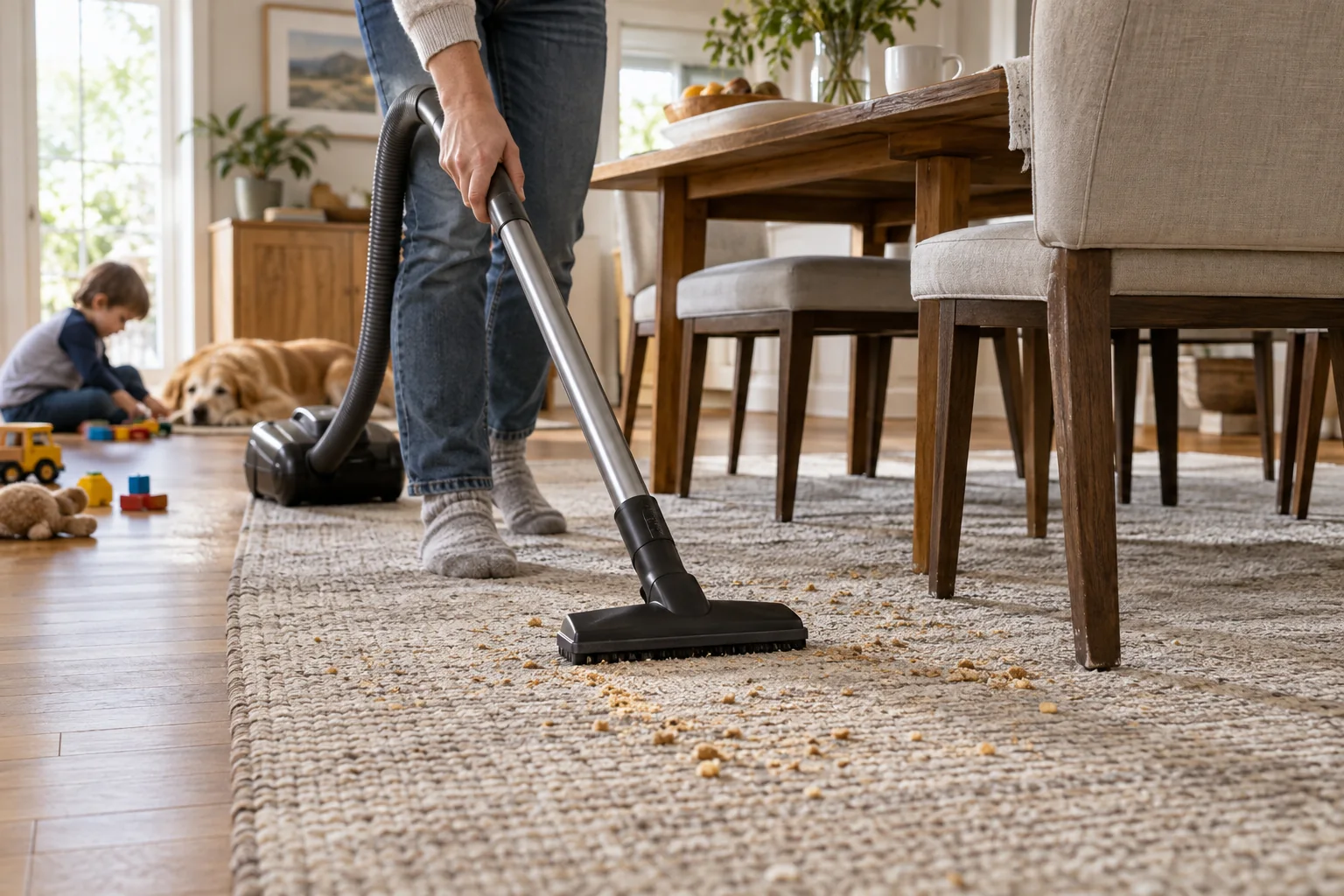
Once the weight is removed, let the area rest. Lightly changing viewing angle can show whether the apparent mark is simply directional. Avoid aggressive brushing, combing or vacuuming against the pile to “raise” it. A stiff tool may catch fine yarns and leave a patch with a different texture. The Canadian Conservation Institute's basic carpet and rug guidance recommends low suction and movement with the pile for vulnerable rugs, while steering users away from a powered brush head.
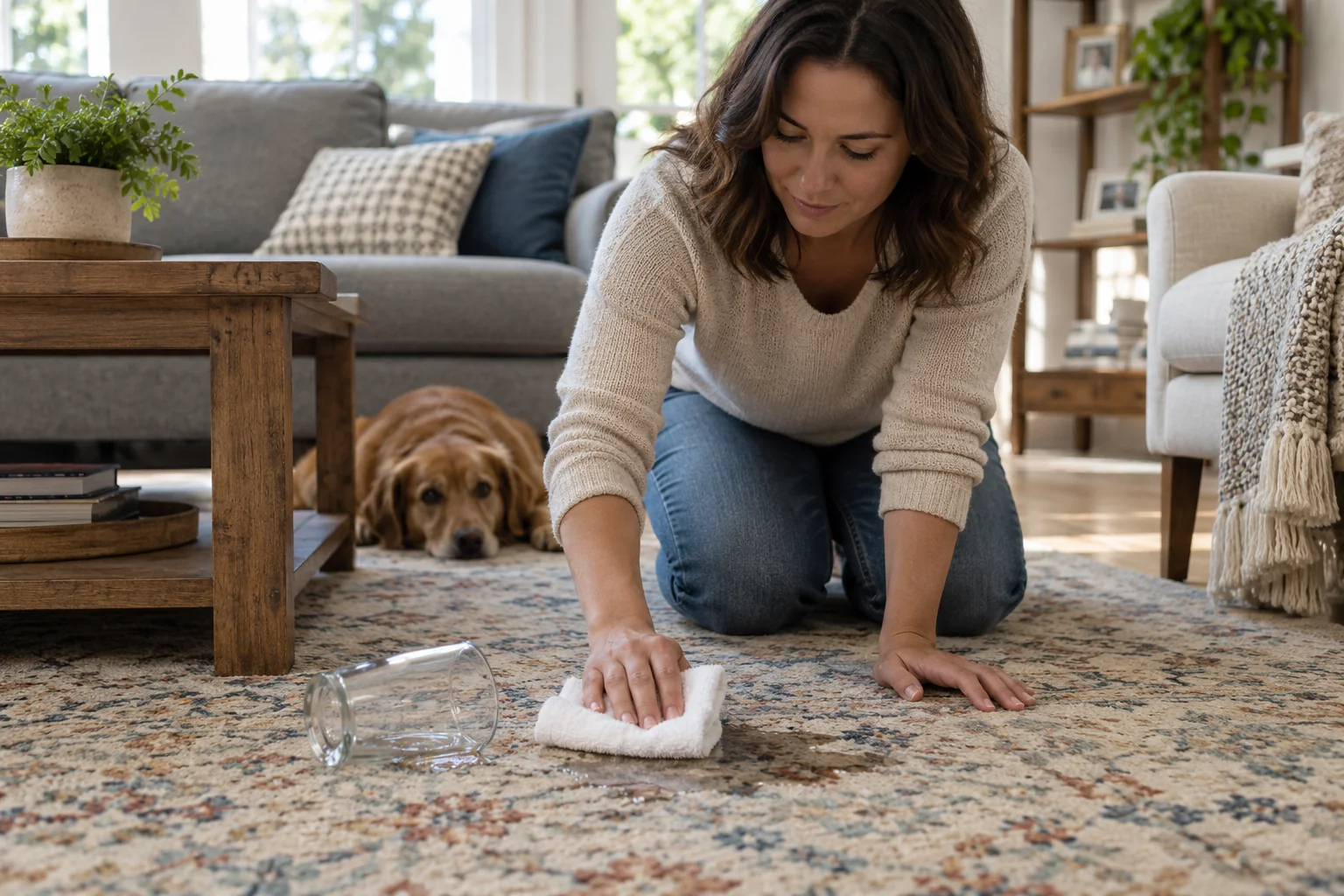
If a rug has already been dampened, wait until it is fully dry before putting furniture back. A broad cup does not solve pressure on wet pile, and a wet backing beneath a leg may dry unevenly. Check the underlay and floor as well. This is particularly important after a spill or an in-home clean where the face feels dry before the construction beneath has finished drying.
Resist quick fixes for an old impression
Online instructions may suggest steam, a hot iron, a hairdryer or ice cubes to lift a dent. Each introduces heat or moisture to an area whose dyes, pile and foundation may not tolerate it. Meltwater can spread beyond the original impression; heat can set other marks or affect a backing. Even if the pile stands temporarily, a new tide line or colour difference can be more visible than the original dent.
Do not pour water over a silk pile because the mark resembles a footprint. It may be a change in reflection rather than removable dirt. A cleaner might be able to improve an impression with controlled techniques, but the result depends on construction, wear and how long the pile was pressed. No home method can replace yarn that has been abraded away. Our guide to keeping rugs plush gives routine care context; a silk rug still needs an individual assessment.
If the mark has an odd colour, a defined liquid boundary or stiffness, document that too. The leg may have pressed a spill or cleaning residue into the pile. A professional should know whether the apparent dent is also a stain. Trying several products before asking for help can obscure the cause and enlarge the affected area.
When to seek a specialist assessment
Ask for an assessment if the impression remains conspicuous after the weight has been removed, if the pile is missing, if yarns are snagged or if the backing is weak. Send photographs from both directions, including a close-up and the furniture foot that made the mark. Note how long the item stood there, whether a cup was used, and whether any moisture or heat was applied. The approximate age and material documentation are also helpful.
A luxury rug-cleaning specialist can distinguish soil removal from pile restoration and explain any limitations before work begins. Ask whether the proposed method addresses the impression itself or only the surrounding dirt. If the rug is antique, unusually valuable or structurally fragile, ask whether a textile conservator should examine it first. A candid answer may recommend improved support and no cosmetic treatment.
Use the contact page to provide photographs before agreeing to collection. An in-person view may still be needed because photographs exaggerate or hide pile direction depending on light. Keep a copy of the initial images so that any result can be judged under similar conditions, not a completely different angle or lamp.
Prevention is the most reliable result
Distribute weight, check contact points and lift furniture when it must move. Inspect the pile as part of ordinary room care, while a faint impression is still easy to connect with its cause. Some shading is a normal visual property of a directional silk surface. Persistent flattening and fibre loss are more serious. Treat those possibilities separately, and you will make better choices than a rushed attempt to erase every change of shade.
Related Rug Cleaning Services
Explore professional cleaning options selected around the fibre, construction and condition of each textile.
Rug Cleaning Near You
View local rug cleaning information, appointment guidance and coverage across popular London districts.
Continue Reading
Read more practical guidance about fibres, stains, cleaning methods, drying and routine rug care.
Send us rug photographs and a few details.
Include the approximate dimensions, material if known, stain information and your London postcode.