
Salt on a Rug in Winter: How to Respond
White grit at the edge of a rug in winter may be pavement salt carried in on shoes. Treat it first as a mixture of dry particles, dampness and street soil, not as a stain that needs immediate soaking. If the crystals are dry, careful removal before adding liquid can prevent them being pushed deeper into the pile. If the area is wet, blot the moisture and let the rug's construction guide the next step.
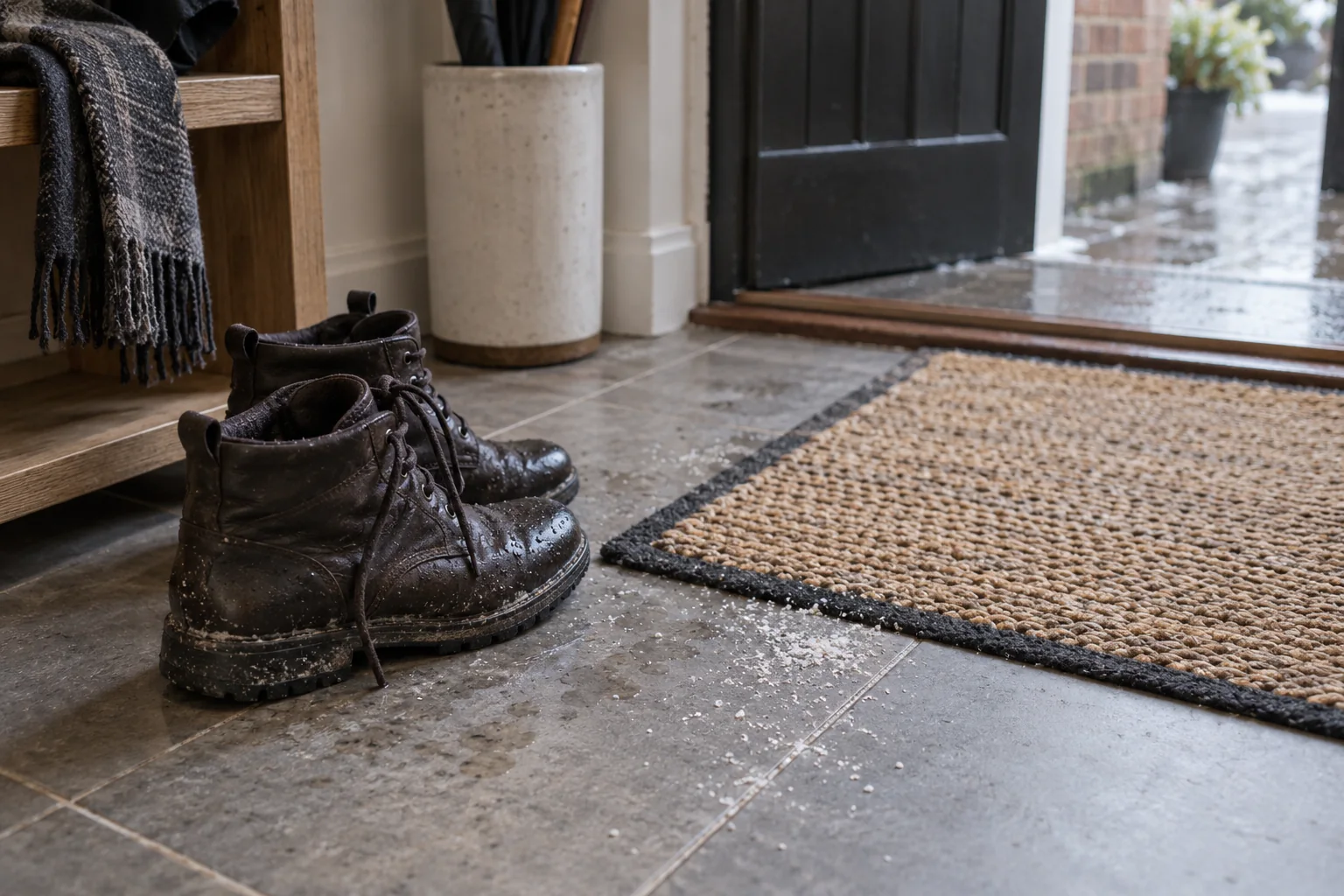
The exact de-icing material and what else came in with it are usually unknown. Road grime may be mixed with the pale residue, and a damp shoe can carry it into the foundation. The aim at home is to stop further tracking, remove loose material without abrasion and avoid creating a larger water mark. Persistent deposits or a delicate rug deserve professional assessment.
Stop new grit at the entrance
Move wet shoes off the rug and put an appropriate entrance mat where they can be wiped. Keep that mat clean; a loaded mat transfers soil rather than collecting it. If the rug is next to an outside door, consider moving it back from the threshold during the saltiest weeks. Check that any separate pad and floor beneath are dry, especially where melting slush has reached an edge.
The Canadian Conservation Institute notes that grit can work down into a rug and abrade fibres near the base. Its broader textile guidance also identifies dust and salt among common solid contaminants. These observations support early dry removal, but they do not mean every pale mark will vacuum away. Salt dissolved in water can move and dry into a new outline.
Inspect the area in good light. Are you seeing loose grains on top, a stiff crust at the ends of the pile, or a pale patch within the yarn? A small gritty deposit calls for a different response from dye loss or an old tide line. Photograph the mark before treatment if it is substantial or valuable. That record helps a cleaner understand whether the area changed after your first dry removal.
Remove loose dry material gently
If the rug is dry, use a vacuum setting suited to its construction to lift loose particles. Avoid a rotating brush on fragile pile or fringe. Work slowly without grinding grit into the yarns. A soft brush may help gather surface particles on a robust flatweave, but do not scrub a delicate or loosely woven rug. If you can lift a small rug safely, inspect and clean the reverse and pad too.
Do not pour water onto a dry salt deposit as the first step. It can dissolve the material and carry it deeper or sideways. The resulting mark may be harder to locate and dry. If you are unsure whether the pale material is actually salt, avoid a chemical treatment based on a guess. Plaster dust, detergent residue and colour loss can look similar from a distance.
Clean the surrounding floor according to its maker's instructions so fresh grit is not walked straight back onto the rug. A wet mop is for a suitable hard floor, not a substitute for assessing the rug. Make sure the floor is dry before the rug returns. Street salts and moisture can also affect some floor finishes, a separate reason to keep the entrance area under observation.
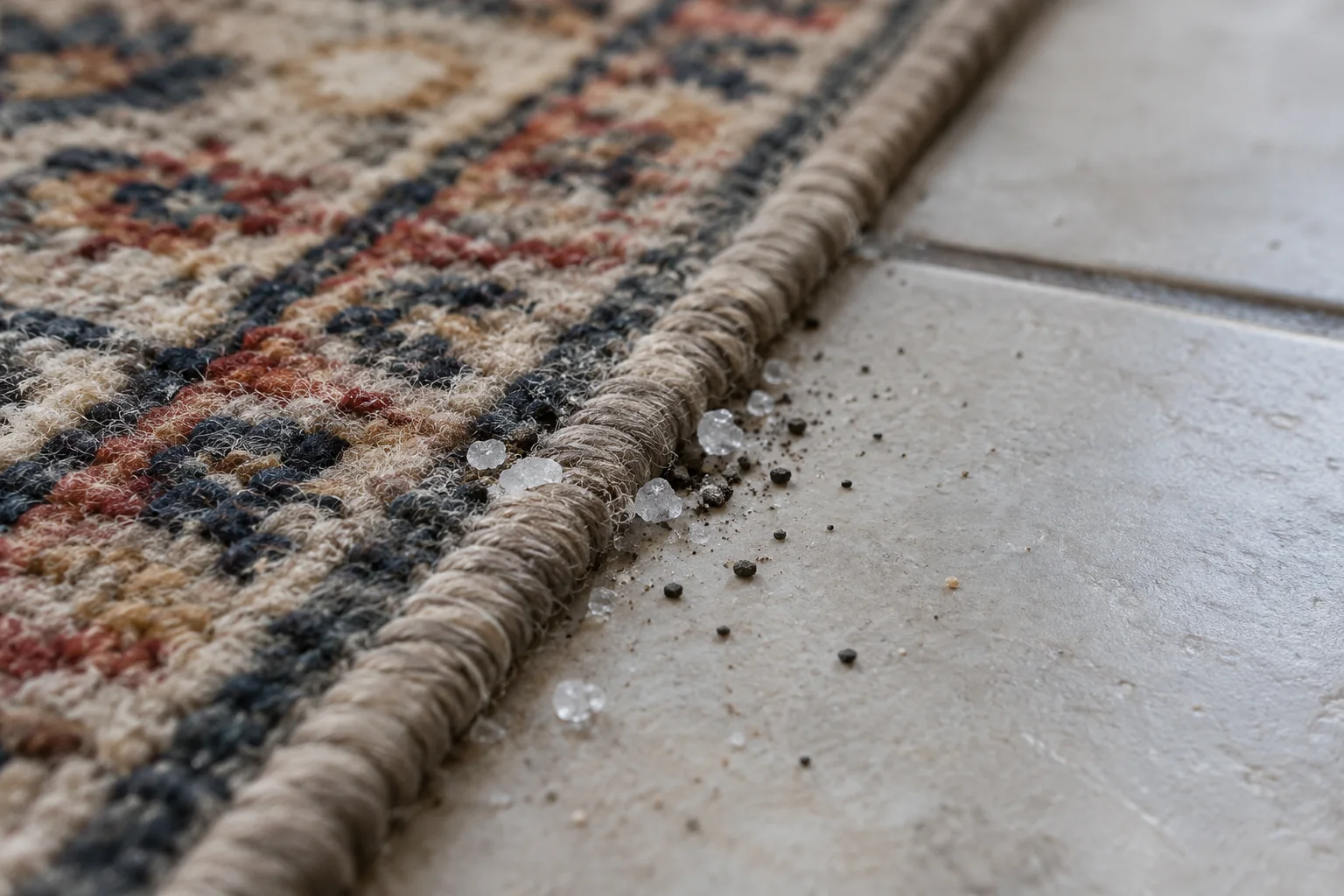
If slush or salty water has soaked in
Blot fresh wetness with clean white absorbent cloth. Do not rub or spread it across the border. Lift an edge if safe and check whether the reverse, underlay and floor are damp. A waterlogged pad can keep the rug wet after the top feels normal. Separate affected layers and allow suitable drying; a large, heavy or fragile rug needs help to move without distortion.
Avoid applying vinegar, shampoo or a concentrated spot cleaner because a white crust looks stubborn. Extra liquid can change dyes, leave residue or create a tide line. The Canadian Conservation Institute's dye-testing guidance shows how cautiously water must be introduced to an important textile. A home test cannot make an unknown rug immune to colour movement across the whole border.
If the mark persists after loose dirt is removed and the rug is dry, seek advice. A professional can assess the fibre, dye stability, salt deposits and any other soil before deciding whether controlled treatment is feasible. Our article on seasonal rug cleaning covers broader entrance-care routines through the year.
Know what cleaning can and cannot correct
A pale area might be removable residue; it might also be damaged dye or a change in pile from abrasive traffic. Cleaning can remove suitable soil, but it cannot guarantee that an altered fibre or lost colour will match the rest of the rug. If the border feels stiff, photographs and a precise description of the winter exposure help a cleaner judge whether a treatment is likely to improve it.
Ask how any proposed method will manage moisture and drying. Treating only the visible white edge may leave material in the backing. On the other hand, a full wash is not automatically appropriate for a rug whose colours or construction are sensitive. Our guide to DIY rug cleaning mistakes explains why repeated spot work can enlarge a problem.
For a valuable or antique rug, avoid trying to brush out a hardened deposit with force. A fragile border and fringe may have little tolerance for friction. A professional rug cleaning assessment can set a realistic goal and identify any material that should be left for a specialist textile conservator.
Make next winter easier
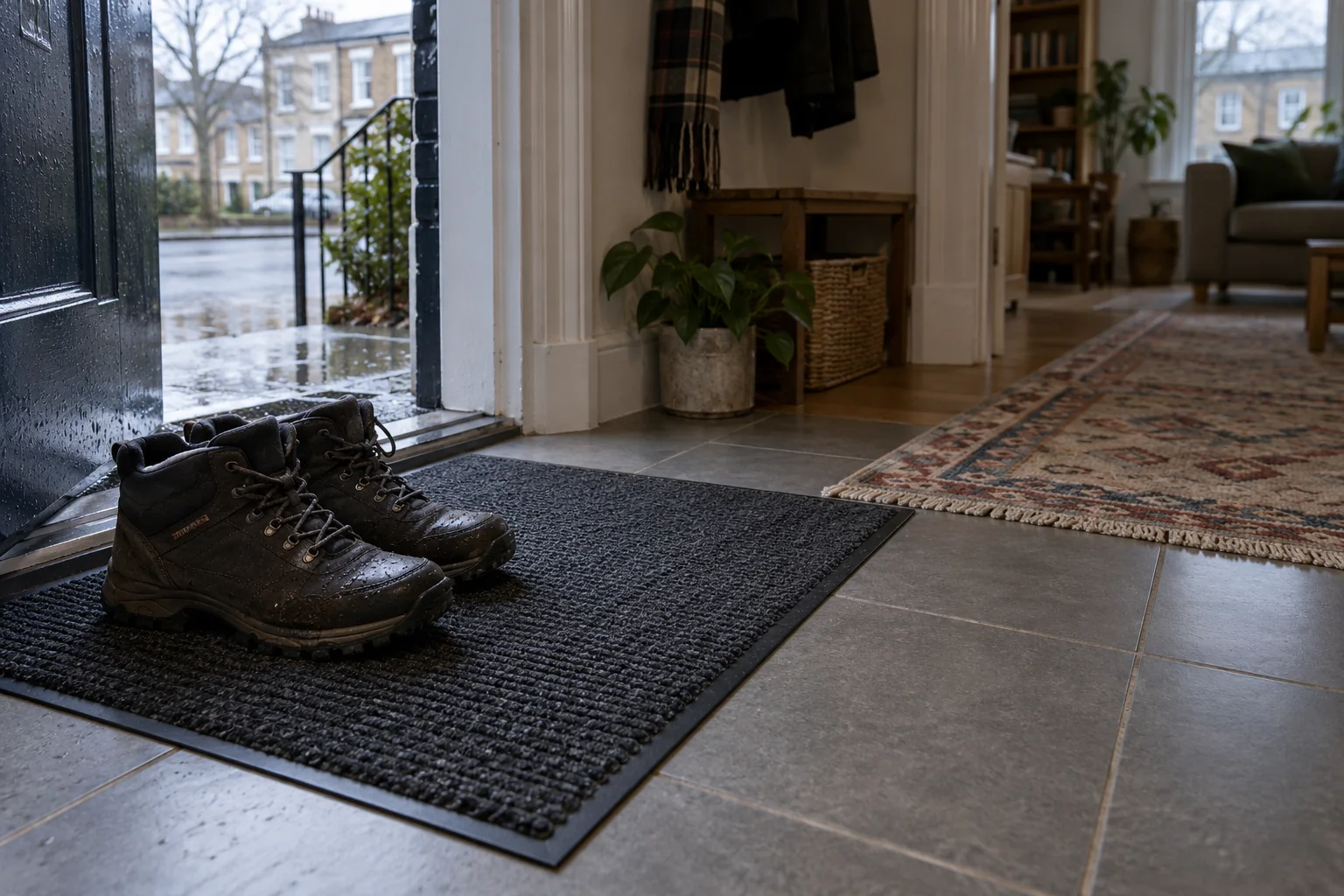
Put a washable or easy-to-clean entrance mat at the point where shoes first enter. Give it enough space to catch grit before anyone steps onto the rug, and replace it if it becomes saturated. Encourage shoes to dry away from the rug. Vacuum dry grit regularly with settings appropriate to the textile, and check the pad and floor after snowy or wet days.
During a prolonged cold spell, look under the mat as well as at its surface. A mat that appears clean may still hold salty moisture against the floor, where it can transfer to the rug when moved. Let the mat dry fully before replacing it, and keep a clear route for wet footwear. This small check is especially useful in a narrow hallway where people repeatedly step from the mat onto the same section of rug.
If you already have a stubborn pale border, contact us with a close photograph, a wider view of the entrance and the rug's care label. Tell us whether the area was wet and what products were used. That information is more useful than a guess about the exact road treatment, and it helps protect the rug from an unnecessarily aggressive clean.
Related Rug Cleaning Services
Explore professional cleaning options selected around the fibre, construction and condition of each textile.
Rug Cleaning Near You
View local rug cleaning information, appointment guidance and coverage across popular London districts.
Continue Reading
Read more practical guidance about fibres, stains, cleaning methods, drying and routine rug care.
Send us rug photographs and a few details.
Include the approximate dimensions, material if known, stain information and your London postcode.