
Sunlight and Rug Fading Beside Windows
A bright window can make a rug look beautiful while gradually changing its colours. The side nearest the glass may pale first, or a rectangle once covered by a coffee table may remain darker than the surrounding pile. This is light exposure, not ordinary dirt. Cleaning can remove suitable soil, but it cannot put lost dye back into fibres. The useful response is to recognise the pattern early and reduce future exposure.

The risk is not limited to a rug in a dramatic patch of direct sun. Daylight entering a room over many hours adds up, and visible light as well as ultraviolet can affect dyes. The Canadian Conservation Institute describes light damage to textiles as cumulative and irreversible. That does not mean every rug will fade at the same speed. Dye chemistry, fibre, window direction, curtains, time of year and furniture layout all change what the rug receives.
Check whether a pale area is actually fading
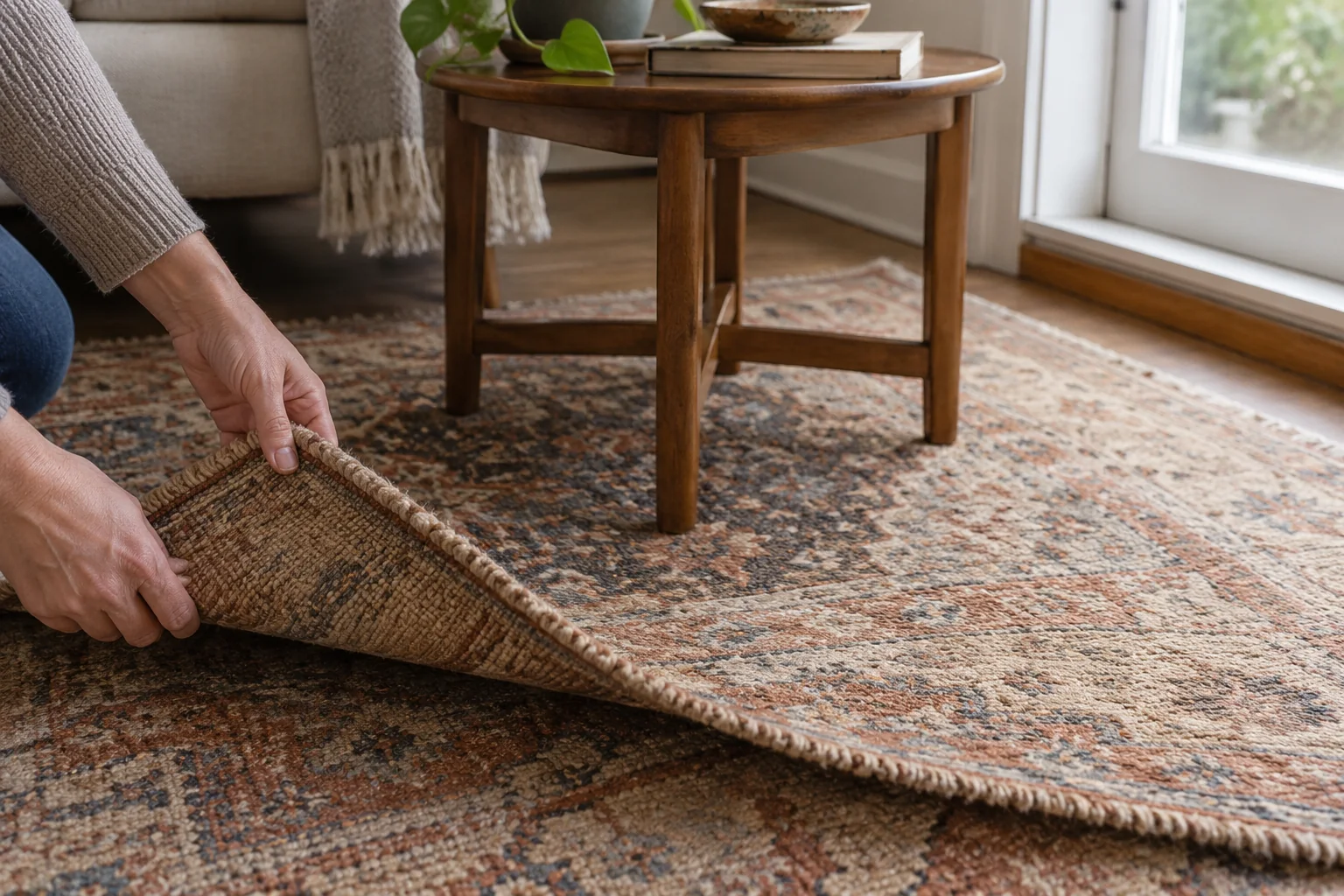
Compare exposed and protected parts of the same colour. Gently lift an edge that normally sits beneath furniture or examine an area that has long been shaded. If the protected section is richer while the window-facing section is consistently paler, light exposure is a plausible cause. Look at several colours; some dyes may change faster than others, leaving a design that looks unbalanced rather than uniformly lighter.
Pile direction can also change how a rug reflects light. View the area from opposite sides and smooth the pile gently with your hand. If the apparent shade changes dramatically with viewing angle, pressure or pile lay may be part of the effect. Soil can dull colour too. Neither observation rules out fading, but it is worth separating before deciding what cleaning can achieve. Photograph the rug in even indirect light for a clearer record.
A line at the edge of a rug, a pale window-shaped zone or a darker footprint beneath a chair may reveal how the room has been used. Do not take a hidden dark patch as proof that a cleaner missed a stain. It may be the rug's earlier colour. For a valuable or antique piece, avoid strong spot treatment to “match” the sections; that could remove more colour or disturb already weakened fibres.
Why the window position matters
Light damage depends on intensity and duration. A low winter sun can reach far into a room; a summer sun may strike a different strip of floor. Moving a rug a little can change the pattern of exposure, but it does not undo earlier change. The Canadian Conservation Institute recommends keeping carpets and rugs out of direct sunlight where possible or covering nearby windows.
Ordinary window glass does not eliminate all light-related fading. Ultraviolet filtering may reduce part of the exposure, but visible light can still alter colours. A curtain, blind or layout change that reduces the duration or intensity of light on the rug can therefore be useful even where glazing has a UV treatment. Ask the window supplier about any film or glazing claims rather than assuming “UV protection” means no fading is possible.
Take account of furniture. A table may shield a central patch while the rest fades, creating a dark silhouette when the table is moved. Rearranging furniture or rotating the rug can distribute exposure more evenly, but a rotation may bring an unfaded area into sunlight. Plan the room to reduce total exposure first; use rotation to limit an obvious one-sided pattern, not as the only defence.
Practical ways to slow further change
Start with the easiest reversible changes. Move the rug away from the strongest beam if room layout permits. Use curtains or blinds during the hours of direct exposure, especially when the room is unoccupied. A light-filtering treatment may help, but choose it for the actual window and be realistic about what it blocks. Keep the rug out of prolonged direct sunlight during drying after a clean as well.
Rotate the rug periodically if its construction and furniture layout permit safe handling. The Canadian Conservation Institute recommends periodic rotation to even out wear; it can also help avoid one edge receiving all the window light, though it does not reduce the rug's total exposure. Lift and move furniture rather than dragging it across the pile. For a large or fragile rug, get help rather than pulling by fringe or corner.
Keep a dated photograph from the same viewpoint and roughly similar light conditions. It can show whether a new shading arrangement is helping over months. A phone camera changes exposure automatically, so treat photos as a broad comparison, not a scientific colour measurement. The goal is to notice a trend early enough to adjust the room.
Cleaning can improve soil, not reverse photochemical change
If a rug is dusty, suitable cleaning may make its remaining colour look clearer. But faded dye has chemically changed or been lost. A wash cannot restore it, and a “brightening” chemical may harm the surviving fibres and dyes. The Canadian Conservation Institute explicitly describes light damage as irreversible. Be wary of any promise that ordinary rug cleaning will make a sun-faded field match the previously shaded area.
Sometimes a pale patch is mixed with soil, wear or residue. A cleaner can assess which part is removable. For a valuable rug, ask about an inspection before deciding on treatment. Our article on antique rug care gives further context on condition and handling. A luxury rug cleaning assessment can consider fibre, dye stability and existing wear without assuming every colour difference is dirt.
Do not attempt to recolour a rug at home to disguise fading. Colour matching across fibres and aged dyes is specialist work, and a spot application can produce a more conspicuous area. If appearance is important, discuss the result you want and the limits of any treatment before authorising it. Prevention is the more reliable tool once light exposure has been identified.

Plan for the rug you have
A modern replaceable rug and a family heirloom may call for different levels of caution. For an especially sensitive textile, consider relocating it to a less exposed room. If the rug must stay by a large window, prioritise shading during the brightest periods and monitor the colour. Keep cleaning decisions separate from light-control decisions: removing soil may be worthwhile, but it will not make the light damage disappear.
Our guide to rug placement and care discusses how changing seasons affect maintenance. If you are uncertain whether a colour change is fading, wear or a removable mark, contact us with photographs taken in even light, including a protected section. We can discuss the cleaning implications and realistic outcome while you adjust the room to slow further fading.
Related Rug Cleaning Services
Explore professional cleaning options selected around the fibre, construction and condition of each textile.
Rug Cleaning Near You
View local rug cleaning information, appointment guidance and coverage across popular London districts.
Continue Reading
Read more practical guidance about fibres, stains, cleaning methods, drying and routine rug care.
Send us rug photographs and a few details.
Include the approximate dimensions, material if known, stain information and your London postcode.