
When Pet Urine Reaches the Rug Backing
A pet accident can look small on the pile while spreading through the rug foundation, a separate pad and the floor. That is why an odour may remain after the visible spot has been wiped clean. The next step is to work out how deep the liquid travelled, not to keep spraying product onto the surface. Prompt blotting helps a fresh accident, but treatment of a deeper deposit may require assessment of every layer and realistic expectations about dye and backing damage.
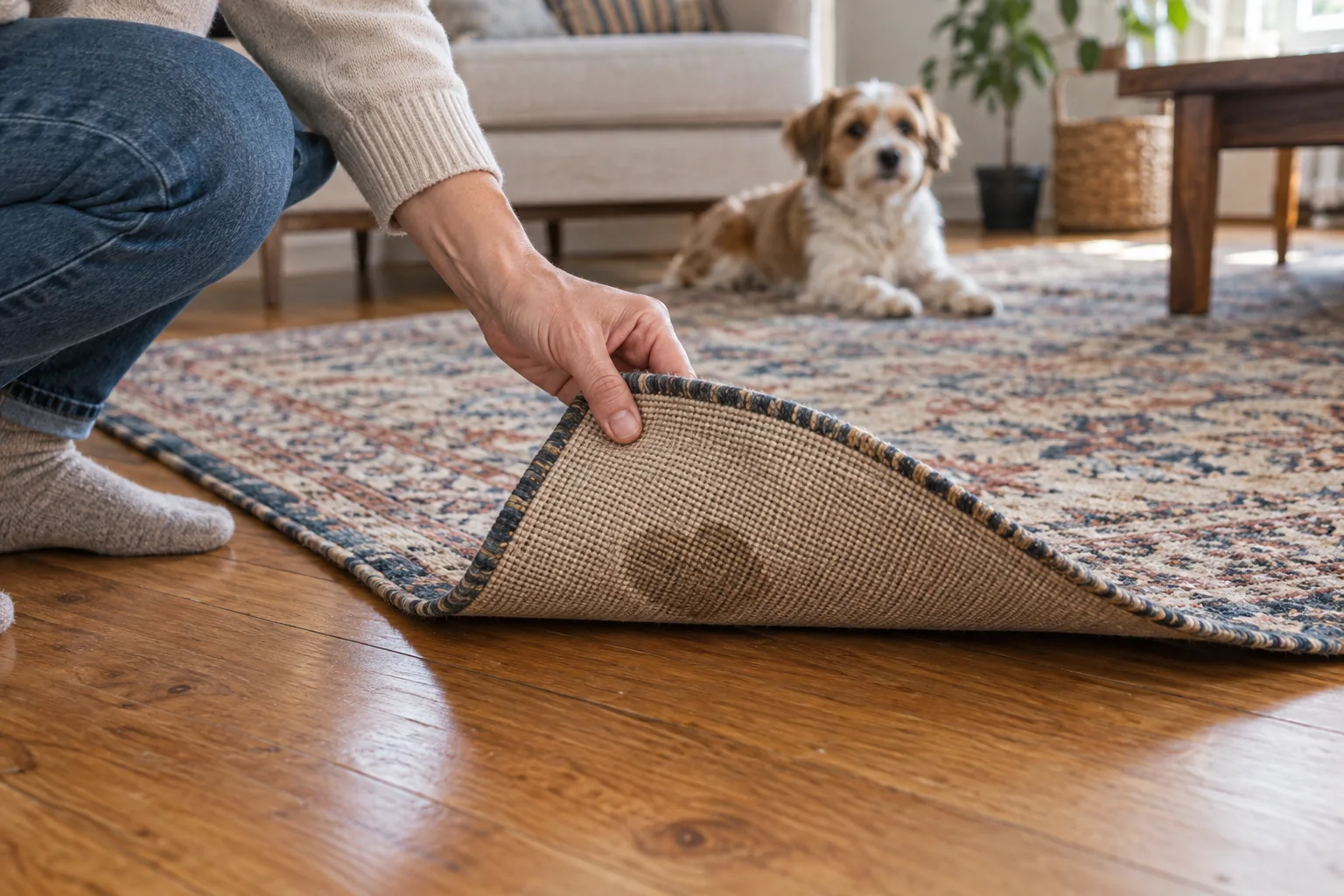
The Carpet and Rug Institute notes that pet urine can affect dyes, weaken backing bonds and leave an odour that returns in humid conditions if the urine is not removed. Its guidance is largely about fitted carpet; a loose decorative rug can contain very different fibres and dyes. Use it to understand the depth problem, then follow the care limits of the actual rug.
Start with a fresh accident
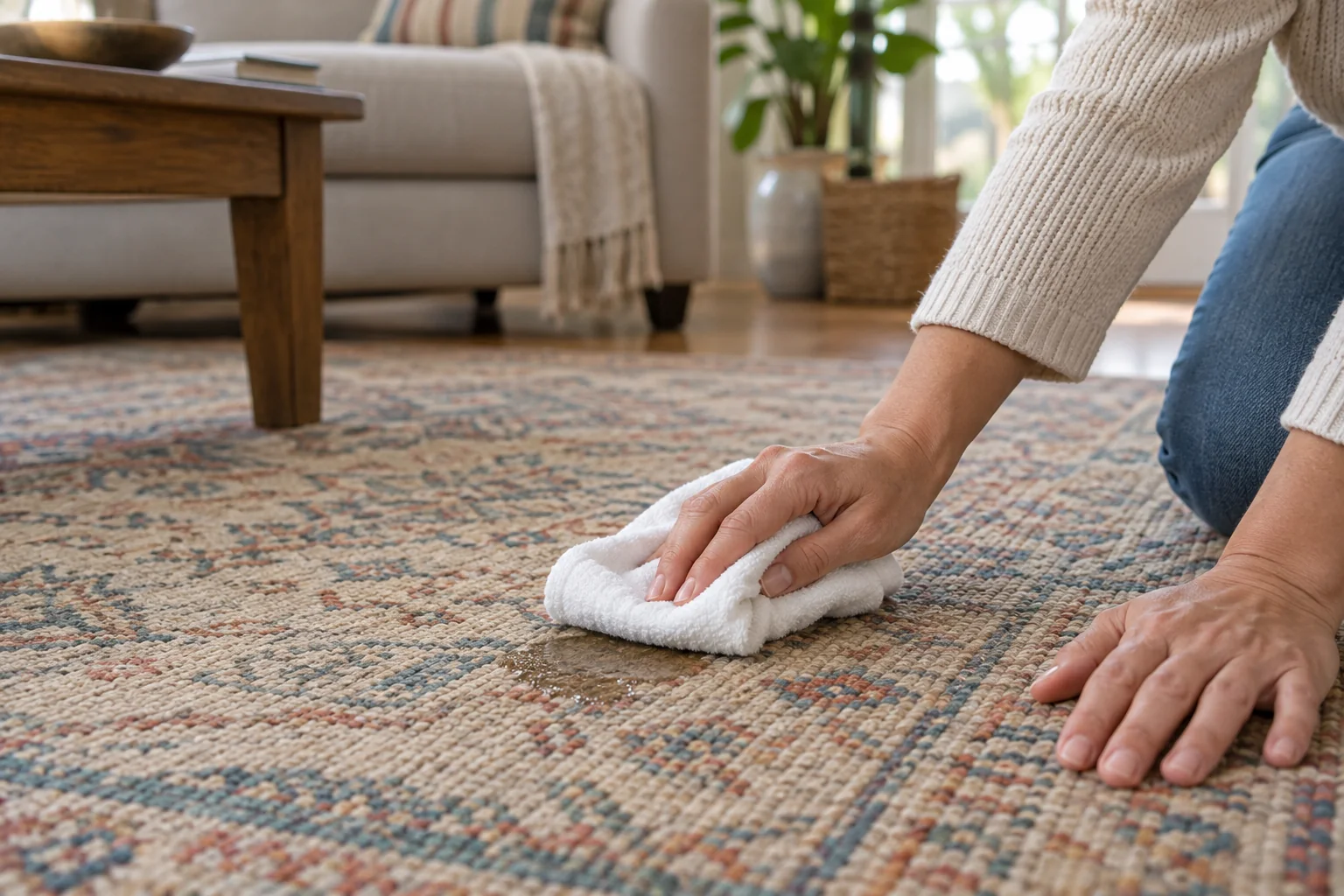
Keep pets and people off the area while you blot visible moisture with plain white absorbent cloth or paper. Press gently and replace the material as it becomes wet. Do not rub the pile, scrub with a brush or push liquid outwards. The Canadian Conservation Institute advises dabbing spills on rugs rather than rubbing, because rubbing can drive material deeper and damage fibres.
Check the label before using any cleaner. If the accident is small and the rug is robust, you may be able to lift an edge to see whether moisture reached the reverse. Use help for a heavy rug; pulling by the fringe can distort it. Check the pad and floor separately. A pad may hold liquid after the pile feels dry. Protect an absorbent floor finish from prolonged contact with a wet rug.
If the urine has reached the underside, do not assume a face-only spot product can follow it safely. Saturating the pile to reach the backing can spread contamination and create drying problems. A cleaner may need a controlled process that addresses the actual depth. Photograph the area and record what product, if any, has already been used. That information helps prevent an incompatible second treatment.
Why the smell can return
Odour-producing material may remain below the visible face. When room humidity rises, the smell can become noticeable again. The Carpet and Rug Institute specifically warns that pet urine odour may recur in high humidity when the source has not been completely removed. This does not prove that the rug is wet on every humid day; it means a dry-feeling surface is not enough evidence that the deposit has gone.
The backing can also change. Some tufted rugs depend on adhesive layers that may weaken after prolonged wetness or aggressive treatment. An old urine area may show a powdery or separating backing, dye change or stiffness. These are material issues as well as odour issues. Cleaning can sometimes reduce a stain and smell without reversing an altered dye or damaged bond.
Look beneath the rug. If the pad or floor carries the odour, cleaning only the rug may leave the room smelling the same when it returns. A flooring specialist may be needed for an affected wood or other porous floor. Do not conceal the floor with a clean rug until the source and moisture are dealt with. Our article on pet urine on a rug covers initial stain response; depth assessment is the extra step when the smell persists.
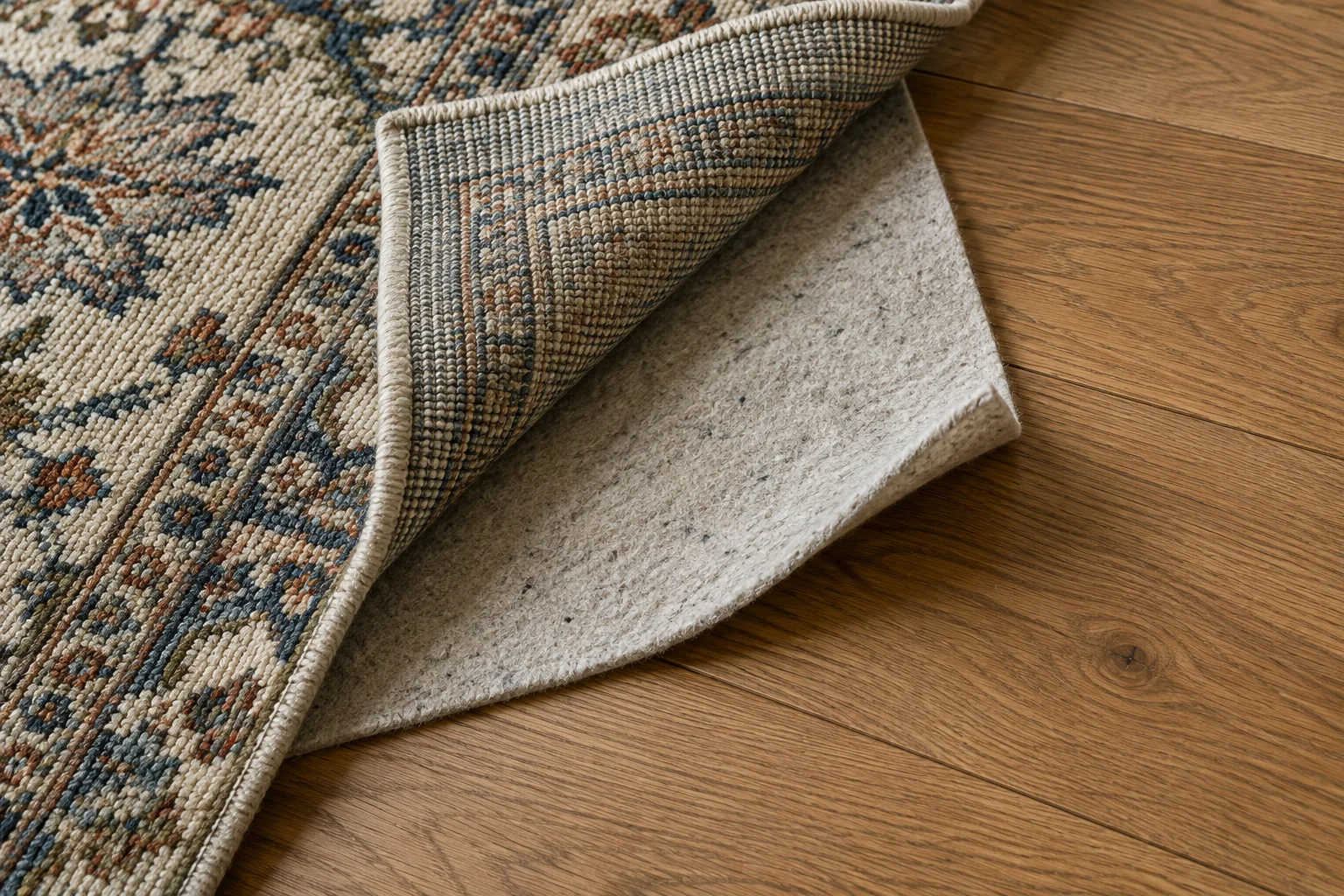
Be cautious with household products
Pet odour removers differ in ingredients and instructions. A product that suits a colourfast synthetic fitted carpet may not suit a wool, silk, viscose or multi-coloured rug. Test according to the rug maker's instructions, and do not apply a large amount just because the smell seems deep. More liquid can move the contamination into wider areas or leave residue. Avoid mixing cleaners or adding fragrance to hide a problem.
Heat is also a poor shortcut. The Carpet and Rug Institute advises against steam treatment for urine spots in its carpet care guidance. For a decorative rug, high heat may additionally affect dyes, fibres and backing. Do not place the rug on a radiator or use a hairdryer to force the spot dry. Drying has to reach the backing and pad without damaging the textile.
Do not judge a treatment immediately after it dries at the surface. Recheck the reverse, pad and floor, then note whether odour returns over the next humid period. If it does, repeated home applications may make a later specialist's job harder. Keep the product bottle or photograph the label so the cleaning history is accurate.
Discuss limits before paying for cleaning
A professional should ask when the accident happened, how many times the area was affected, what the rug is made from, which products were used and whether the pad or floor was wet. They may inspect dye stability and backing condition before recommending washing or local treatment. A badly weakened backing, old dye damage or a deeply affected floor can limit the outcome even with careful work.
Ask how the cleaner will address both sides and manage drying. A claim of guaranteed complete odour removal without examining the item should be treated cautiously. The Carpet and Rug Institute notes that complete odour removal is unlikely if urine remains. A realistic outcome may involve treating the rug and replacing an affected pad; an altered dye may still show after the odour improves.
Repeated accidents change the calculation. Several deposits in the same place can reach a wider area of pad or floor than the visible marks suggest. If you know that a pet has returned to one corner, tell the cleaner instead of showing only the newest spot. Inspect furniture feet and skirting nearby too. Once the rug has been treated, make sure the pet's access and the room layout will not immediately recreate the problem. If the behaviour is new or frequent, a veterinary conversation may be useful for the animal; it is separate from the textile cleaning decision.
Our guide to rug odours explains why identifying the source matters. If the accident area is near a wall or has been repeated, inspect the floor and skirting as well. A professional rug cleaning assessment can help you decide whether treatment is worthwhile for the rug you have.
A practical handover to the cleaner
When you contact us, send photographs of the rug face, reverse, label, pad and floor. Include the date of the accident, whether it was repeated, any products applied and when the odour is strongest. We can discuss the likely depth and appropriate assessment before proposing a method. The best chance of a useful result comes from treating the whole affected area and its surrounding layers, while being honest about changes that cleaning cannot reverse.
Related Rug Cleaning Services
Explore professional cleaning options selected around the fibre, construction and condition of each textile.
Rug Cleaning Near You
View local rug cleaning information, appointment guidance and coverage across popular London districts.
Continue Reading
Read more practical guidance about fibres, stains, cleaning methods, drying and routine rug care.
Send us rug photographs and a few details.
Include the approximate dimensions, material if known, stain information and your London postcode.