
Why a Rug Stain Reappears After Drying
A rug spot that looks better while wet and returns as it dries is frustrating, but it does not point to one cause. Material from the original spill may still be deeper in the pile or backing and move towards the surface with evaporating water. A cleaning product or sugary spill may leave residue that attracts new dirt. In other cases, dye or fibre has changed permanently and the wet surface merely hid the difference for a while. The next step is to observe the timing and shape before adding more water.

Textile fibres can draw liquid along yarns. The Canadian Conservation Institute discusses this capillary movement, often called wicking, in the context of controlled stain treatment. A professional can work to limit movement during treatment; a home spot application may spread liquid sideways or leave a tide line. Understanding that process helps explain why a ring can appear after the surface seemed clean.
Note when the mark returns
Did the mark become visible within the same drying period, or only after several days of walking on the rug? A ring that develops as water evaporates may involve soluble material moving to the drying edge. A patch that gradually becomes grey with traffic can suggest residue attracting new soil. A colour difference that remains stable in size and shape may be a dye or pile change. These are clues, not a home laboratory diagnosis.
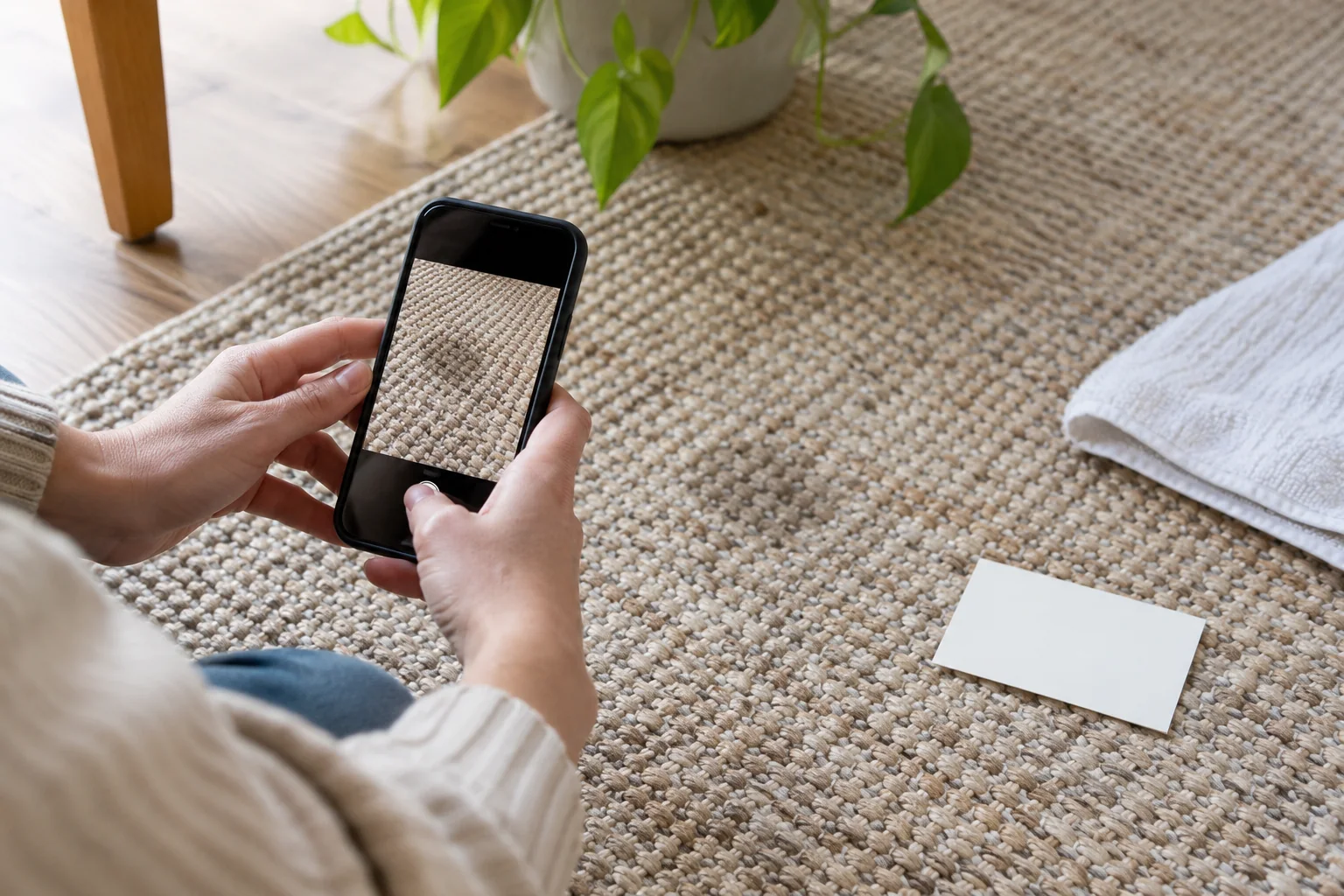
Photograph the spot in even light when it is first treated, as it dries and after it has been walked on. Include a wider view showing its position in the rug. Note what spilled, when, what product was used and whether the reverse became wet. If a cleaner treated the rug, give them that sequence. Avoid judging the result under one bright lamp or from only one viewing direction; pile direction can make a shade look different.
Look at the outline. A narrow halo beyond the original spot, a dark centre or a broad sticky patch point to different possibilities. Check whether colour transfers to a plain white cloth when the area is lightly touched according to the care label; stop if you see dye movement. Do not scrub to “break up” a ring. Abrasion can alter the pile and make the mark permanent even if the original soil was removable.
What may be happening below the visible pile
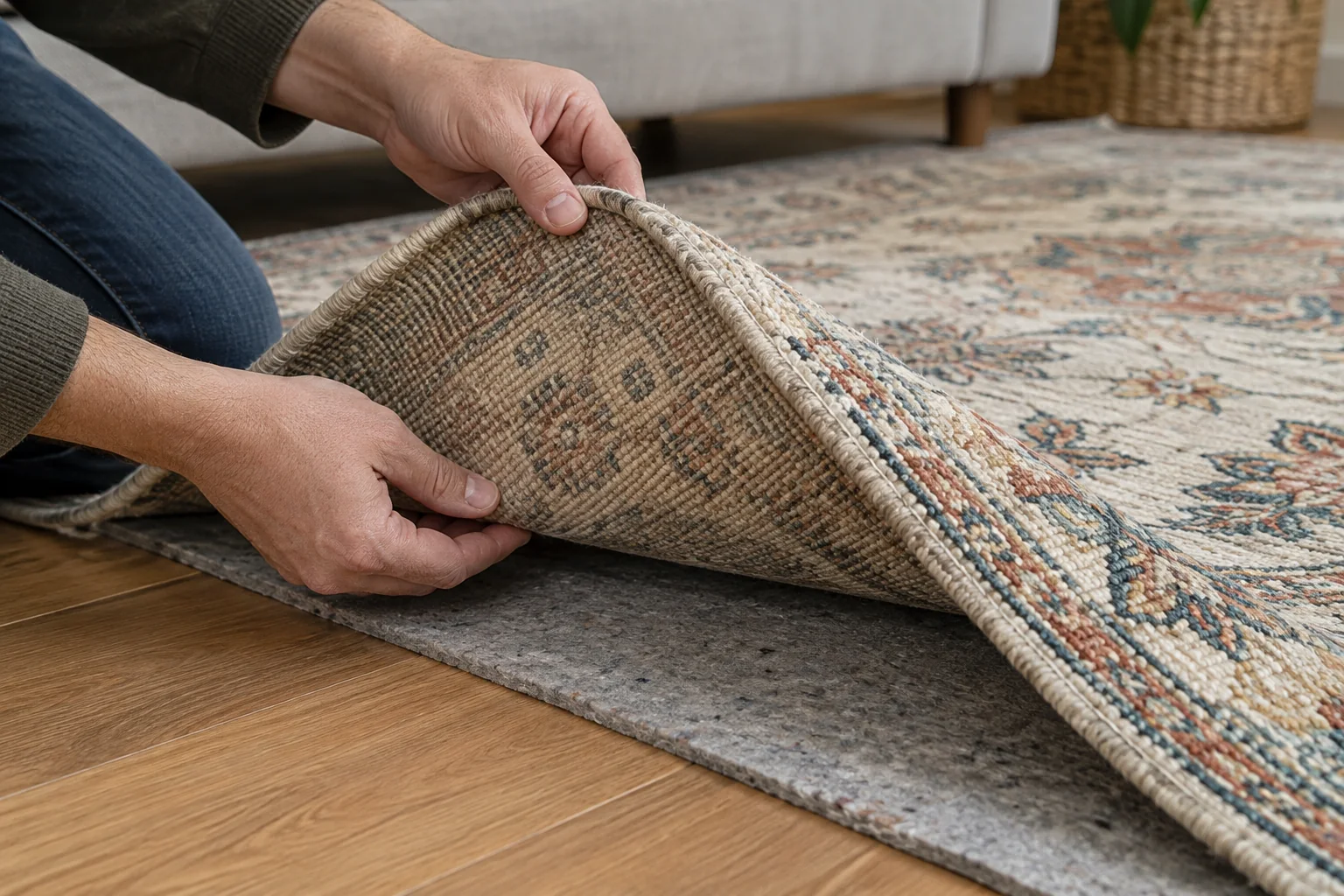
A liquid spill can travel through the face into the foundation or a bonded backing. When the top dries first, moisture and dissolved material below may later migrate upwards or sideways. The visible return can therefore be a delayed sign of deeper contamination. A rug with a separate pad also needs that pad checked; it may hold moisture or a spill even when the rug face is dry.
The Canadian Conservation Institute describes tide lines on wet textiles and the difficulty of reversing water damage. Its discussion of capillary forces is a reminder that small yarns can move liquids beyond the place they were applied. The exact path depends on rug construction, so do not assume that soaking the visible ring will flush it out. More water may enlarge the boundary.
If the spot is near a floorboard joint, check the floor. A damp floor or underlay can re-wet the rug from beneath. A reappearing mark may then reflect a building or moisture problem rather than a cleaning method. Keep the rug separated until the source is understood, especially if there is a musty smell.
Residue can make a clean patch soil again
The Carpet and Rug Institute notes that rapid re-soiling after spot cleaning is often linked to material left by a spill or cleaning solution. A sugary drink, soap or stain remover can dry into a sticky film. Foot traffic then brings dust to the same patch. In this case, the mark may take days to reappear rather than emerging during the first drying period.
Our guide to coffee on a rug discusses immediate blotting for a common coloured spill. Coffee with milk or sugar can leave more than colour behind, and treatment has to consider the full mixture. Tell a cleaner about every ingredient you know, including any cleaner already applied. A clear spill history is more useful than saying only that the rug has a brown stain.
Do not apply another concentrated cleaner on top of the first. Some products can interact, and a larger wet area may take longer to dry. Our article on DIY rug cleaning mistakes covers why repeated home spot work can complicate treatment. If the rug is valuable, delicate or unstable when wet, stop and ask for an assessment.
Some changes are not removable stains
An acidic or alkaline spill, oxidising product, sunlight or friction can change dye or pile texture. When wet, fibres reflect light differently and a pale patch may seem to vanish, then reappear unchanged as it dries. A cleaner may remove remaining soil but cannot guarantee to restore dye already lost. A brown tide line in a cotton foundation may also remain after the initial liquid is gone.
Compare the rug from different angles and against a protected section. Photograph any colour bleeding or crisp line where furniture shielded the pile. Do not try to recolour a small patch with household products. If the colour has changed, further wetting can make the difference worse. A professional can tell you whether the realistic goal is stain reduction, residue removal or simply preventing further damage.
The age of the mark also matters. A spill found immediately leaves more room for controlled removal than one repeatedly wetted, dried and walked on for months. Soil may become attached to fibre, and dye change may have already happened. Tell the cleaner if a previous treatment appeared to work briefly; that detail points to a different investigation from a mark that never changed at all. If furniture or a rug pad covered the area while damp, mention that as well, because hidden drying conditions can alter what remains below the pile.
Decide on the next treatment with evidence
A rug cleaning assessment can examine fibre, dye stability, backing, previous products and the mark's shape. Ask what the cleaner thinks is removable and what cannot be promised. A controlled rinse or extraction may be suitable for one robust rug and unsafe for a weak dyed textile. There is no universal home fix for every returning mark.
When you contact us, send a photograph from the first day if available, a current one, the rug label and a note of every product used. Include whether the stain returned during drying or only with use. That timing will help target the investigation and avoid another cycle of wetting an unknown construction.
Related Rug Cleaning Services
Explore professional cleaning options selected around the fibre, construction and condition of each textile.
Rug Cleaning Near You
View local rug cleaning information, appointment guidance and coverage across popular London districts.
Continue Reading
Read more practical guidance about fibres, stains, cleaning methods, drying and routine rug care.
Send us rug photographs and a few details.
Include the approximate dimensions, material if known, stain information and your London postcode.