1. Locate contact and cleaning priorities within the design
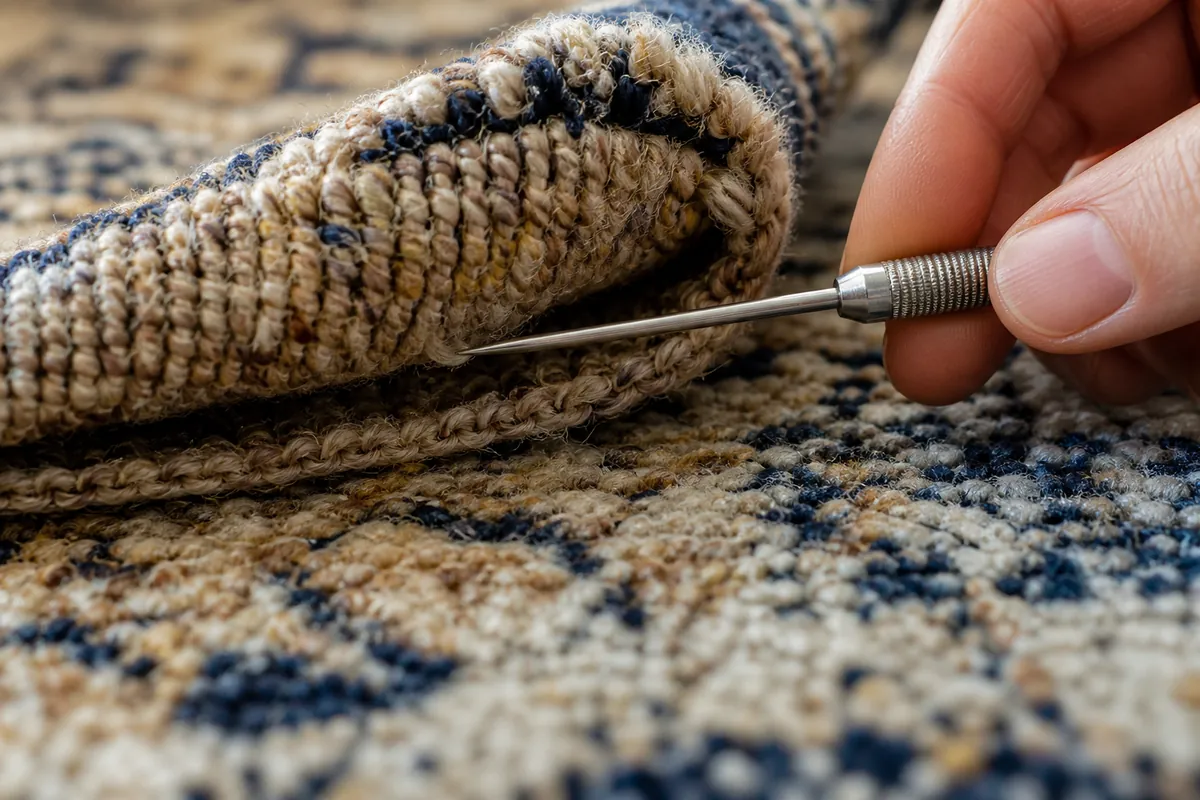
Use an overall rug photograph and reliable size and care information to introduce the seating arrangement. Show the chair’s ordinary position and identify the concern in a closer image. Describe general soil as well as any local incident that matters.
Explain earlier products, repairs and when a texture change was noticed. A line under a chair does not establish one cause by itself. Keep direct observations distinct from a guessed diagnosis based solely on where furniture rests.
2. Agree chair movement and wider access
Describe what can safely move and what other furniture remains. Agree handling before pulling a heavy piece or rug edge, and clear small objects from the proposed working space. A movable chair may be straightforward to clear while the complete rug still has restricted sections elsewhere.
- Show a vulnerable edge near the chair’s movement path.
- Identify a separate mat or another layer under the arrangement.
- Explain when the seating area is needed again.
3. Select cleaning from the combined construction
Inspection considers pile, supporting components, colour response, repairs and strength, with appropriate checks. The selected chemistry, moisture and action should fit those findings rather than the amount of pressure a chair normally applies.
The recommendation should explain the whole-rug route and any restraint near a vulnerable section. A local texture concern remains part of the assessment without becoming a reason to use stronger action than the textile can appropriately receive.
4. Separate local contamination from physical change
Locate spills and earlier applications precisely. Deposits, pressure, wear and colour alteration can contribute differently. Describe what changed after a known event or product rather than repeatedly brushing the chair line to compare it with protected pile.
Agree likely improvement from soil removal. Cleaning cannot reconstruct abraded yarn or guarantee that every furniture-related outline disappears. Keep a repair or restoration request separate where the desired result goes beyond cleaning.
5. Clean through purposeful release and collection
Suitable dry preparation removes accessible loose particles using action appropriate to the textile and connections. Selected local attention follows the histories and findings. Compatible products and controlled working then release remaining soiling for removal across the included rug.
Where a wet process fits, measured application is paired with recovery carrying used solution and loosened dirt away, followed by suitable support and drying. Another system needs its introduced material collected. The cleaning explanation should cover that sequence rather than judge the whole job by whether one compressed section becomes identical to its neighbour.
6. Return chair contact according to the guidance
Explain where the chair will be placed afterwards and any difficulty keeping the contact area clear during the advised stage. Follow readiness instructions for the treatment performed before the chair or a separate covering returns. Explain a practical deadline early rather than moving furniture back as soon as active work ends.
Review initial concerns when advised under comparable light. Keep a lasting texture finding separate from useful broader soil removal. If another change appears later, note timing and contact before adding a product or working the area harder.
7. Make scope and findings practical for the owner
For the quotation, identify the chair-contact concern within the rug’s measurements, access arrangement and wider cleaning priorities. Clarify included local attention, broader work and inspection-dependent decisions. Separate accessory, floor or repair tasks should not be inferred from the seating arrangement.
At handover, understand the equipment and handling advice for daily care. Keep any continuing limitation easy to identify so another caretaker does not assume a cleaner surface means every connection or texture has been restored.
8. Maintain the seating area without repeated force
Use the advised vacuum action, clearing small hard objects and checking the head before routine care. Observe vulnerable edges before moving the chair across them. Record a later spill separately from the existing contact pattern and seek suitable advice before repeating a spot product at the same position.
- Keep chair feet free from caught debris under their own care guidance.
- Share a repaired join’s location with anyone moving the room arrangement.
- Describe a newly caught end before trimming or pulling it.