Make the item recognisable to everyone involved
Introduce the item with a current whole-rug photograph, its measurements and reliable care details. Locate marks in the design and explain known incidents or products. Use a stable item reference if the rug may move rooms before the visit.
Identify who observed earlier events and who can clarify a question. The person organising entry need not diagnose the textile or fill historical gaps. A clear initial aim can cover general soil removal alongside selected attention to a local concern.
Agree the actual route and movement responsibilities
Show how the rug is reached, furniture contact and any section that remains concealed. Confirm who handles agreed movement and what must stay. Clear safe small objects from the equipment approach without changing the rug’s position in a way the attending person cannot explain.
- Give the intermediary the same whole-rug identity reference.
- Mention an entry or room restriction before the appointment.
- Identify who can answer an inspection-dependent practical question.
Select extraction through the rug assessment
The cleaner considers pile, backing, colour response, repairs and strength. Relevant care evidence and appropriate checks support suitable chemistry and equipment action for that construction. Access arrangements support the assessment without selecting the method in advance.
If current findings call for another route or separate advice, understand what is proposed and why. The contact arrangement should let an explained recommendation reach the relevant person, without a shortened message becoming a technical instruction detached from the textile.
Keep incident and condition expectations useful
Locate previous products and known spills, keeping uncertain accounts qualified by their source. Deposits, wear and lost colour can need different aims. Selected attention should have a practical removal purpose based on the current findings.
Cleaning cannot reconstruct missing material or guarantee reversal of every old change. A separate repair or restoration request should remain explicit so the person attending does not have to infer several tasks from one general instruction to improve the rug.
Understand what the cleaning visit performs
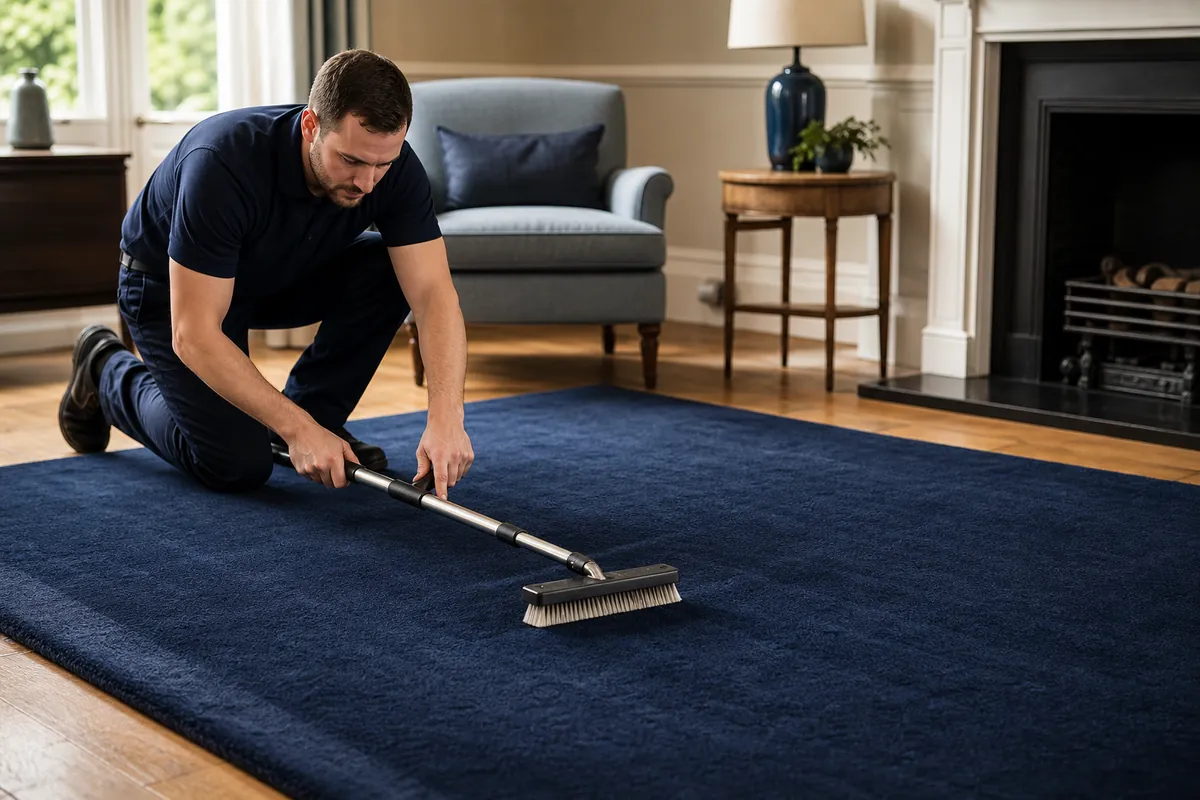
Appropriate dry preparation removes accessible loose particles using action that respects pile and connections. The cleaner selects local work from mark findings and previous applications. Compatible broader cleaning then addresses remaining soil in the agreed rug area.
Where hot-water extraction is selected, controlled solution is delivered through the cleaning tool and suction recovers used liquid with loosened dirt. Managed application, working action and recovery form a connected removal process. The person receiving the service should understand these stages in plain terms, together with any area excluded through access.
Pass practical aftercare directly to its users
Discuss airflow, final placement, furniture and normal room access before work. Follow supplied conditions for traffic, coverings and rolling after treatment. Recovery reduces retained liquid while supporting layers and the room still influence readiness.
Give relevant guidance to whoever restores the arrangement, rather than rely on the entry organiser being present later. Review initial concerns at the recommended stage under comparable light, describing a later change before another product alters the section.
Make the King's Cross proposal and handover coherent
Give the item size, reachable area and priorities for the quotation. Confirm movement responsibilities and decisions awaiting inspection, with additional tasks separately understood. The service agreement should identify the actual rug even where several people help arrange the visit.
At handover, keep findings and care instructions linked to that identity. Share current advice with the person maintaining the room so useful information remains available after the intermediary’s access role is finished.
Keep ongoing care clear after the appointment
Use the recommended vacuum action, lifting small objects and inspecting the attachment under its instructions before routine maintenance. Stop on a catching connection. Keep new incidents identifiable by time and design location so future advice does not depend on reconstructing another chain of messages.
- Give another room caretaker the current rug-specific equipment guidance.
- Add later repairs under the correct item reference.
- Seek guidance before repeating an earlier household spot application.