
What to Do When a Rug Feels Damp Underneath
You lift a rug corner and discover that the underside feels clammy, even though the pile looks and feels dry. Resist the urge to put it back and wait. The moisture may be in the rug, its separate underlay, the floor or more than one of those layers. Until you identify the source, a surface clean is unlikely to solve the problem and can add more water to an already damp assembly.
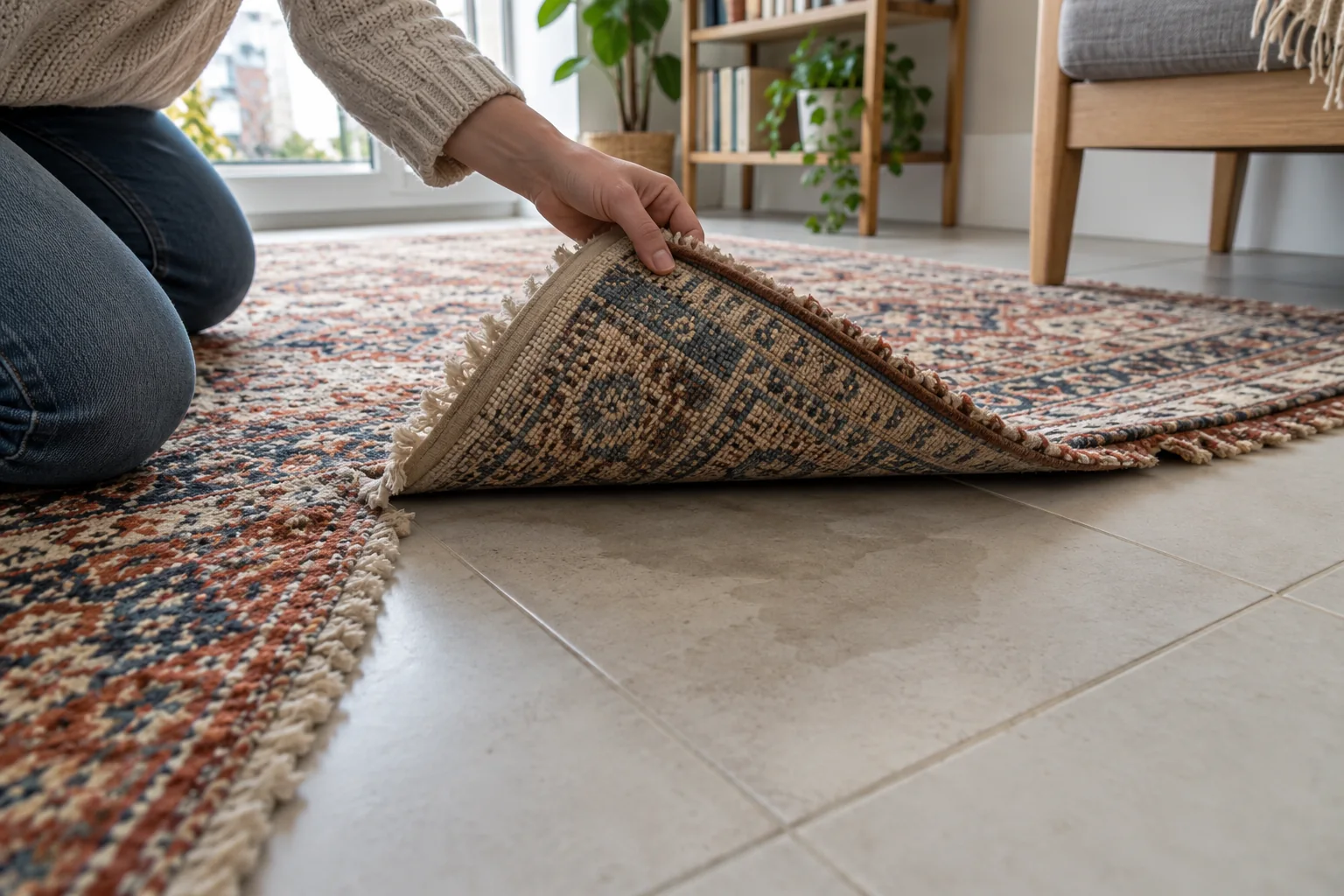
The practical first step is to separate and inspect the layers without damaging the rug. Next, look for a recent spill, a leak, condensation or moisture that has remained after cleaning. You do not need to diagnose the building yourself, but you do need to protect the textile and floor while the cause is investigated. This guide describes a safe sequence and the signs that call for prompt professional help.
Lift the corner carefully and stop the contact
If the rug is light and sound, gently turn back enough of it to see the underside and the floor. Do not pull by a fringe or lift one corner of a large waterlogged rug: saturated fibres and seams may be weak, and the weight can distort the weave. Get help to move a heavy item. If water is near electrical outlets, floor sockets or heating controls, avoid the area and arrange an appropriate electrical check first.
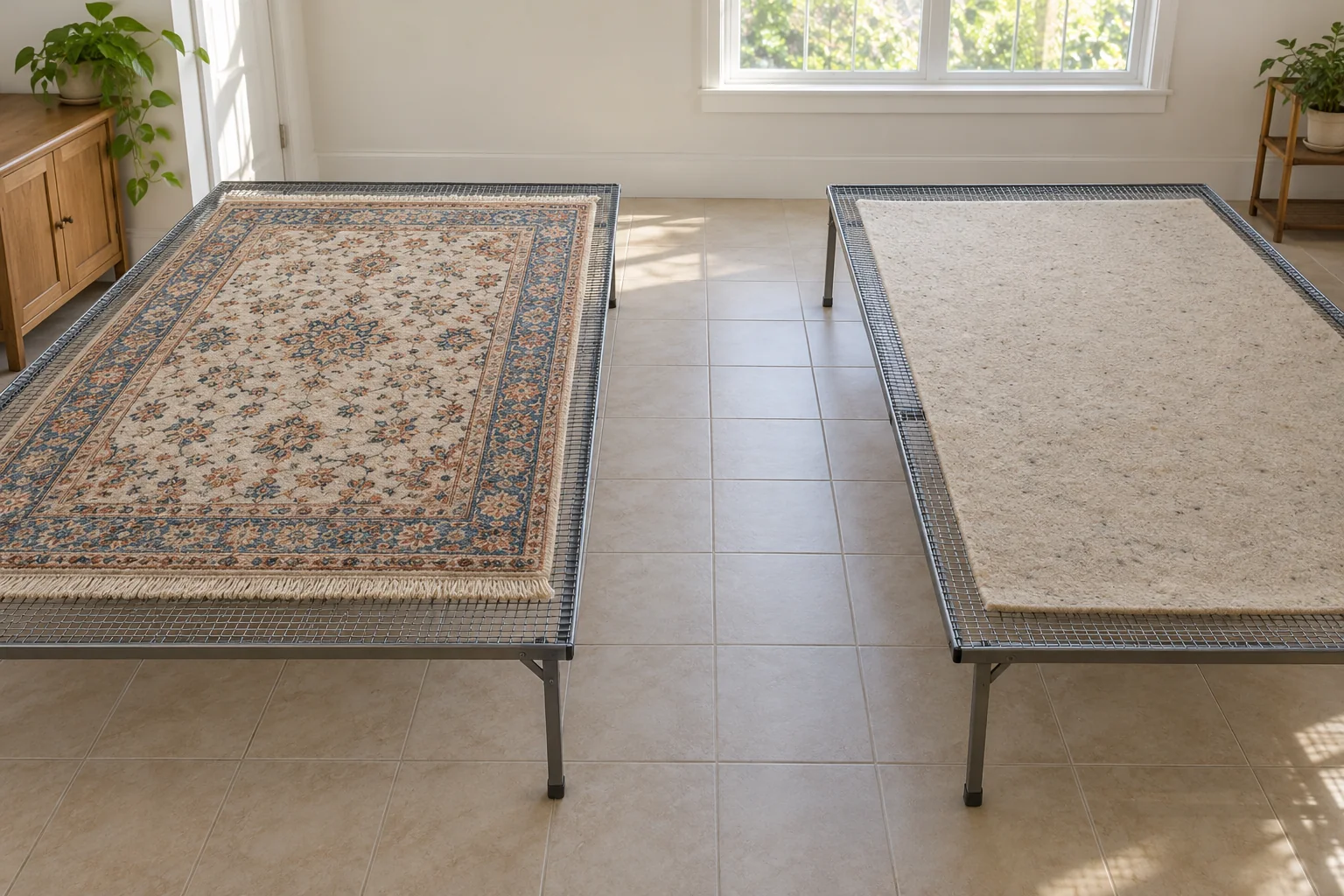
Put a clean, dry barrier in place only if it will not trap moisture against the rug or floor. Often the best immediate arrangement is to keep the rug and pad separated in a space where each can be inspected and dried properly. Do not wrap a damp rug in plastic, roll it tightly or stack it on other textiles. The Canadian Conservation Institute advises that rugs should be clean and dry before rolling for storage; a damp rug needs attention before any storage step.
Photograph what you found before it changes. Capture the pile, reverse, underlay, exact floor patch and any nearby wall or skirting mark. Note when the rug was last cleaned, whether anything was spilled, and whether the moisture appears after rain, cooking or cold nights. These details can help distinguish a single accident from a recurring building issue. Do not delay necessary drying merely to gather a perfect record.
Check each layer, not just the rug face
Begin with the rug reverse. Is it uniformly damp or wet in one defined patch? Does moisture follow an edge, a plant pot footprint or a furniture leg? Are there colour runs, tide marks, loose backing, powdery adhesive or an unusual smell? Then check the separate pad, if present. A pad may hold water after the pile has dried and can pass that water back into the rug or down into the floor.
Inspect the floor without rubbing a delicate finish. Look for a cold wet patch, staining, swollen timber joints, lifting vinyl edges or visible condensation nearby. A rug may have absorbed water from below, not just from a spill above. Government guidance on damp and mould advises tracing all sources of water damage and condensation; wiping the visible surface alone will not prevent a recurrence if the source remains.
Finally, look around the room. Is the patch near a radiator valve, pipe route, bathroom wall, external door, plant pot or window where rain enters? Has a recent cleaning left the room humid? Is the underside damp in several places or only one? These observations do not prove a diagnosis, but they tell a plumber, flooring specialist or building manager where to investigate. If the floor itself is wet, contact the person responsible for the property as well as considering rug care.
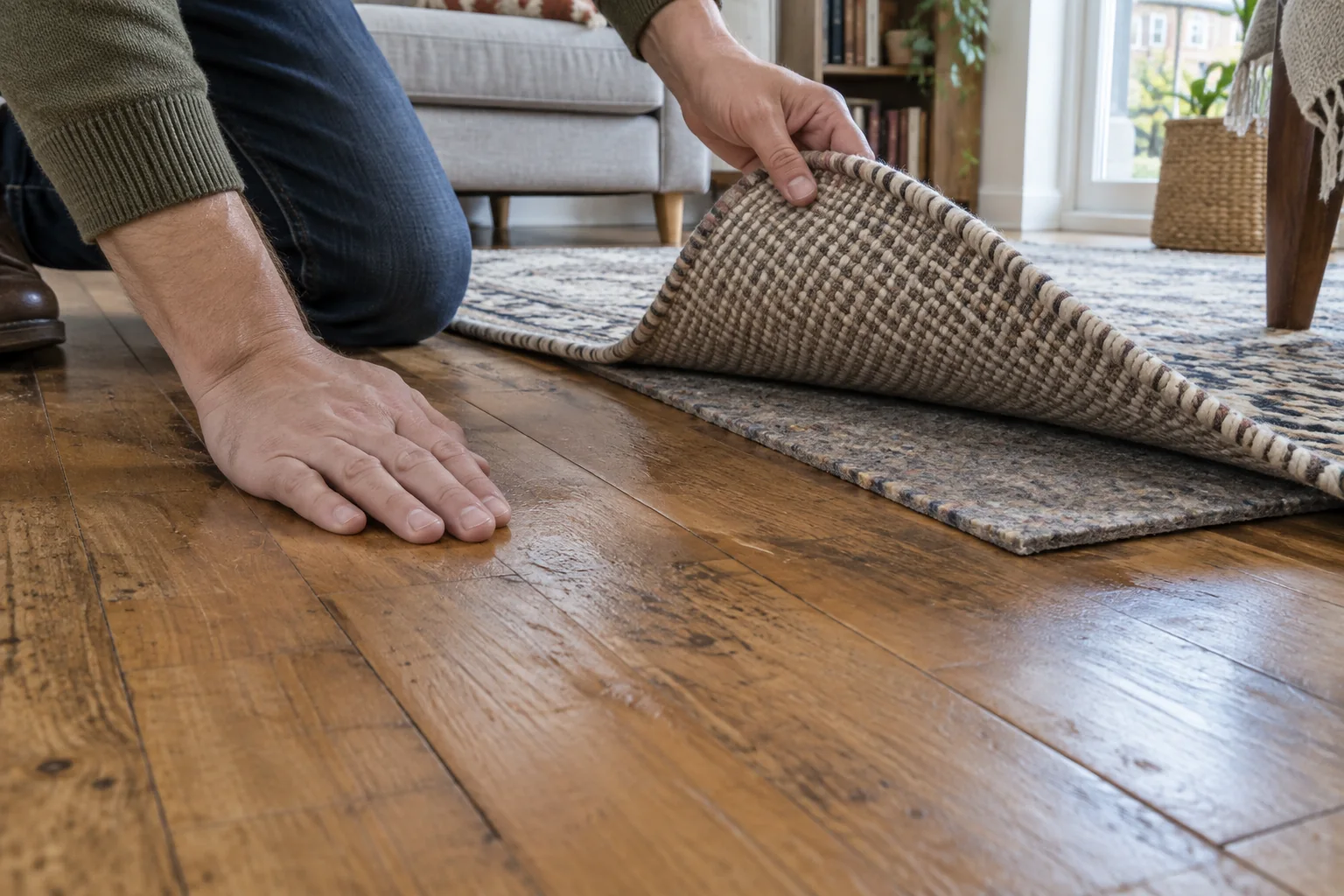
Common causes point to different next steps
A known clean-water spill is the simplest story, but even then the amount and duration matter. Blot fresh liquid from the face, inspect the underside and pad, and separate affected layers. If the liquid came from a leak, stop the leak through the proper trade or building contact. Do not use rug shampoo before the water source is controlled. The US Environmental Protection Agency stresses that carpet backing and padding must dry as well as the carpet itself after water damage.
Condensation is less obvious. Moist room air can meet a cooler floor surface, especially where a dense rug and pad reduce air movement. You may also see moisture at windows, external walls or behind furniture. Better ventilation may help the room, but do not assume condensation without checking for a leak or floor defect. A recurring damp patch deserves a proper inspection because several causes can coexist.
Sometimes the rug was returned to the floor before it had dried throughout after a clean. The surface may feel ready while a thick foundation or bonded backing still contains water. Our guide to rug drying time explains why the reverse must be checked separately. In this case, stop using the rug and discuss drying with the cleaner who treated it; provide the date, method and any product information you have.
An odour or visible growth raises the stakes. Do not diagnose mould by colour alone and do not spread suspected growth by vigorous brushing or vacuuming. Our article on mould on a rug explains why treating the textile and fixing its moisture source are separate jobs. For an item with significant contamination, or a floor that remains wet, get specialist advice promptly.
Drying without creating another problem
The immediate aim is to remove moisture from the room and each affected layer, while preserving the rug's shape and the floor finish. For a small, robust rug, a clean support that allows air to reach both sides may be suitable. Keep a damp rug off bare timber or another absorbent finish. If the rug is large, antique, loosely constructed or heavily wet, ask a professional how to support and move it. Wet textiles can stretch, run or tear when handled carelessly.
Ventilate the room using the building's vents or extractor system as intended. A dehumidifier can reduce room humidity, but its display reading does not certify that a thick rug backing or floor is dry. Avoid high heat directed at one patch; fast, uneven drying can damage vulnerable materials. The Canadian Conservation Institute identifies stretching, dye movement and tide lines among the risks of water damage to textiles.
Check the floor and pad separately at intervals. A dry cloth pressed briefly to an accessible hard surface may reveal remaining surface moisture, but it cannot measure moisture hidden within wood or a subfloor. Do not guess that a floor is dry because it feels warmer. A flooring or restoration professional may need to assess hidden dampness with suitable equipment. Replace a pad only when the floor and rug are ready; if the pad stays damp, smells or breaks down, ask whether it should be discarded.
Know when to escalate
Act promptly if water keeps returning, the floor is soft or discoloured, the rug has a persistent musty smell, the backing is failing, or the spill may be contaminated. Do not try to treat sewage, floodwater or an unknown leak as an ordinary clean-water spill. The response may involve a building professional, insurer or restoration contractor before any rug cleaning decision can be made. Photograph the condition and keep receipts and product details if a claim may be needed.
If you rent, report a recurring damp patch to your landlord or managing agent with the location and photographs. Government guidance says providers should investigate the underlying cause of damp and mould, including leaks, building deficiencies and ventilation. The rug may be affected property, but a rug cleaning appointment cannot repair a hidden pipe or defective building fabric.
For the textile itself, a rug cleaning assessment can establish whether controlled cleaning and drying are feasible and what outcome is realistic. Include photographs of both sides, the pad and the floor when you contact us. State when you first noticed the dampness and whether the floor is still wet. The best result comes from finding the water source, treating the rug according to its construction, and returning it only to a fully dry and suitable surface.
Related Rug Cleaning Services
Explore professional cleaning options selected around the fibre, construction and condition of each textile.
Rug Cleaning Near You
View local rug cleaning information, appointment guidance and coverage across popular London districts.
Continue Reading
Read more practical guidance about fibres, stains, cleaning methods, drying and routine rug care.
Send us rug photographs and a few details.
Include the approximate dimensions, material if known, stain information and your London postcode.