
Dehumidifiers and Rug Drying: Useful Limits
A dehumidifier can remove water vapour from the air around a drying rug. It cannot pull a trapped spill directly out of the rug foundation, prove the backing is dry, or repair a leak beneath the floor. This distinction matters when the pile feels normal but the reverse remains clammy. Use the machine as one part of a drying plan, alongside appropriate water removal, safe support, airflow and inspection of every layer.

The room's humidity display is useful information, but it is not a clearance certificate for the textile. A rug can be damp even while the air beside the machine reads as dry. Equally, a room can be humid for reasons unrelated to the rug. The aim is to understand what the equipment can contribute and where a professional assessment is needed.
First remove the water you can reach
If the rug has suffered a small clean-water spill, blot gently with clean absorbent material and avoid rubbing the liquid deeper into the pile. Inspect the reverse and any separate underlay. If the pad or floor is wet, separate those layers promptly. A dehumidifier deals with moisture in air; liquid water in a thick backing has to evaporate into that air first, and a sealed contact surface obstructs the route.
For a more substantial clean-water incident, controlled extraction may be necessary before a dehumidifier is useful. The US Environmental Protection Agency's guidance on water-damaged carpet combines water removal, lifting carpet and pad, air movement and dehumidification. A loose decorative rug may need a different method because of its dyes, fibres and construction, but the lesson about not ignoring backing and underlay is directly relevant.
Do not treat unknown or contaminated water as a routine spill. Water from sewage, a flood or an unresolved leak needs specialist handling. Photograph the rug and floor, stop the source where safe and contact the relevant building professional. A rug cleaner can assess the textile, but a dehumidifier cannot make contaminated material safe or identify a pipe defect.
Position the equipment to help the room air
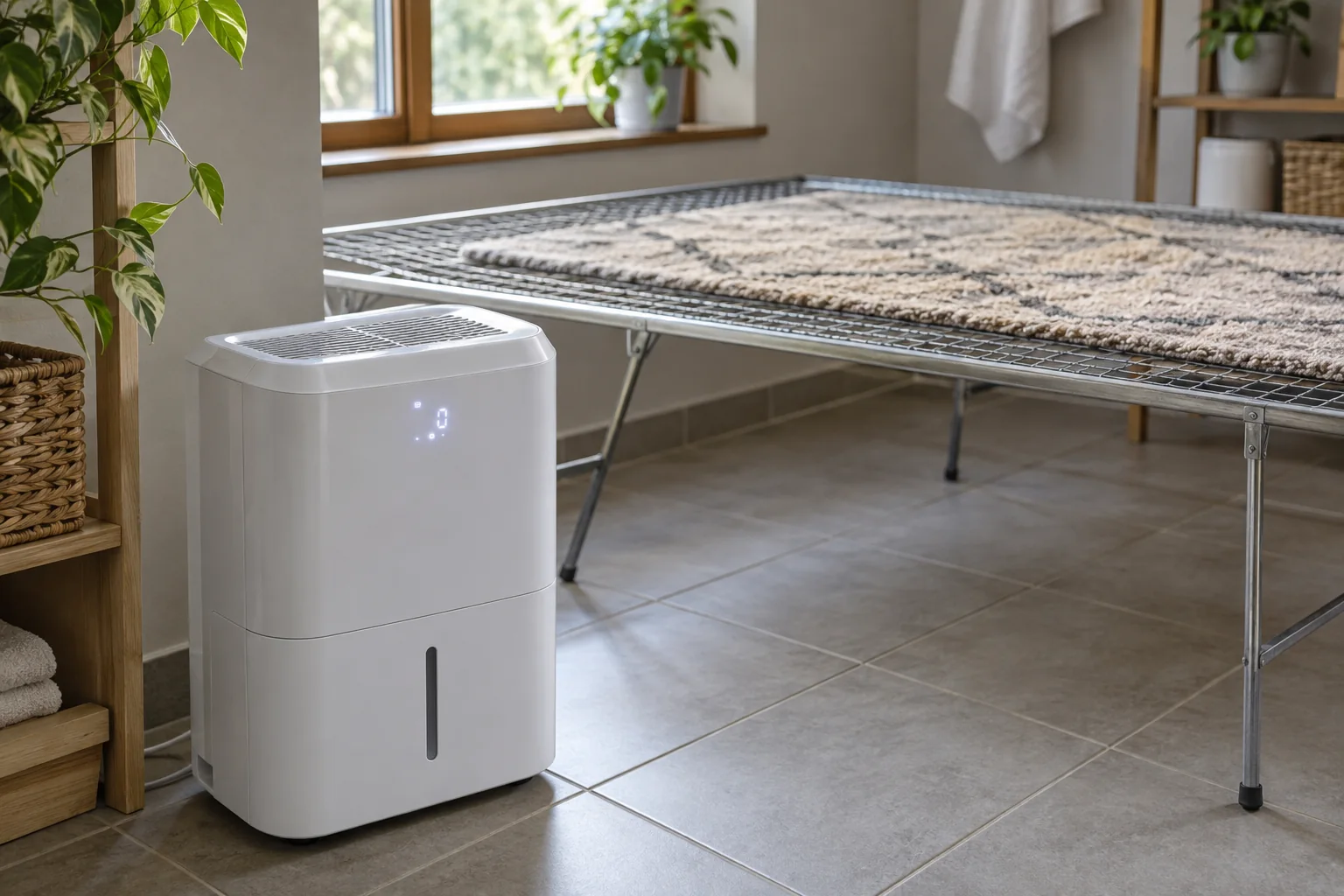
Follow the dehumidifier maker's clearance, electrical and maintenance instructions. Put it on a stable dry surface, keep air inlets and outlets unobstructed, and route the cable away from wet areas. Do not place the machine directly on a damp rug or use an extension arrangement that its instructions prohibit. Empty the tank or check the drain regularly; a full tank may stop water removal while the room still feels warm.
Create a drying arrangement that gives air access to the rug face and reverse without stressing the textile. A small robust rug may be supported on a broad clean mesh surface. Heavy or fragile pieces should not be slung over a narrow bar, where wet weight can stretch the weave. Keep the separate pad away from the rug and inspect the floor. A dehumidifier running beside a rug laid flat over a wet pad cannot reach the moisture sealed between them.
Use the room's ventilation appropriately. The right balance depends on weather and the particular dehumidifier: an open window in very humid conditions may make the machine work harder, while existing ventilation still matters for indoor air quality. Follow the building's ventilation guidance and the equipment instructions rather than sealing the room indefinitely. Avoid aiming intense heat at the rug to force quick surface drying.
Interpret humidity readings carefully
Relative humidity is the amount of water vapour in air relative to what that air can hold at its current temperature. A reading changes when temperature changes even if the amount of water has not changed much. A portable machine's sensor may also be influenced by its position. Note the trend over time and use a separate hygrometer if you need to compare areas, but do not chase a precise number as proof that a rug is ready to use.
The EPA advises keeping indoor humidity below 60% where possible to reduce mould risk, and the Canadian Conservation Institute describes how high humidity and poor circulation favour mould on textiles. Those figures are guidance for an environment, not a drying specification for every rug. A low room reading can coexist with water held in a thick backing or a damp floor. That is why checking the textile remains essential.
Look for condensation at windows, damp skirting, a musty smell or a machine that runs continuously while humidity stays high. These may indicate continuing moisture production, a ventilation problem or a building leak. A local council's damp advice notes that dehumidifiers can help with airborne moisture but do not remove the underlying cause of condensation or damp. Ask the responsible person to investigate a recurring building issue.
Check all the layers before putting the rug back
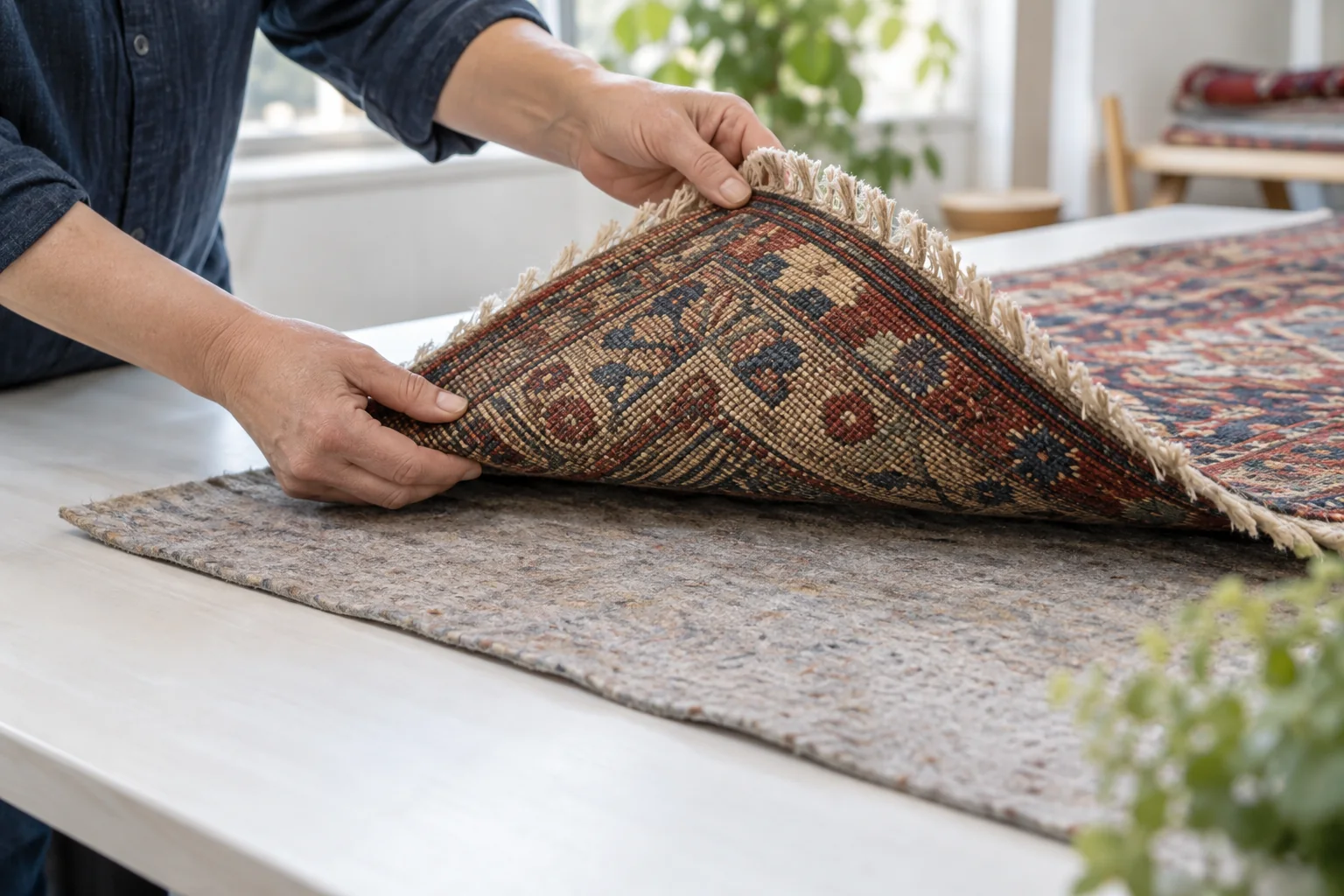
The face, foundation, bonded backing and pad can dry at different rates. Examine the reverse at several points, particularly the centre, a thick edge and the original wet zone. Do not rely on a single fingertip touch or the top of the pile. Look for a cool damp feel, an odour that returns when the rug is moved, colour movement or a backing that feels tacky or crumbly. Our article on rug drying time explains why construction changes the process.
Check the floor separately. Wood, laminate and some other finishes can be damaged by moisture held beneath a rug. If the floor remains marked or damp, leave it uncovered and follow the flooring supplier's advice. Do not replace a wet underlay because the dehumidifier has collected a full tank; the tank total includes moisture from the whole room, not just the rug.
If the rug still smells musty after the visible surfaces seem dry, stop and investigate rather than running the machine for another arbitrary day. Our guide to rug odours explains why an odour may originate in the backing or beneath the rug. Persistent dampness can require a cleaner's assessment and perhaps a building inspection.
When the machine is not enough
Seek help promptly if the rug was heavily soaked, is valuable or fragile, has unstable dyes, or cannot be supported and inspected in your available space. The same applies when moisture returns, mould is suspected or a leak continues. A professional rug cleaning assessment can consider the fibre, dyes, backing and likely drying method. A building or flooring specialist may still be needed for the source below it.
When you contact us, send photographs of the rug face and reverse, label, pad and floor. Tell us what caused the wetness, when it happened, what products were used and what the dehumidifier readings have done over time. The best use of the machine is to support a suitable drying process, while the decision to return the rug rests on the condition of the whole textile and the surface beneath it.
Related Rug Cleaning Services
Explore professional cleaning options selected around the fibre, construction and condition of each textile.
Rug Cleaning Near You
View local rug cleaning information, appointment guidance and coverage across popular London districts.
Continue Reading
Read more practical guidance about fibres, stains, cleaning methods, drying and routine rug care.
Send us rug photographs and a few details.
Include the approximate dimensions, material if known, stain information and your London postcode.