
Plant Pot Water Marks on a Rug
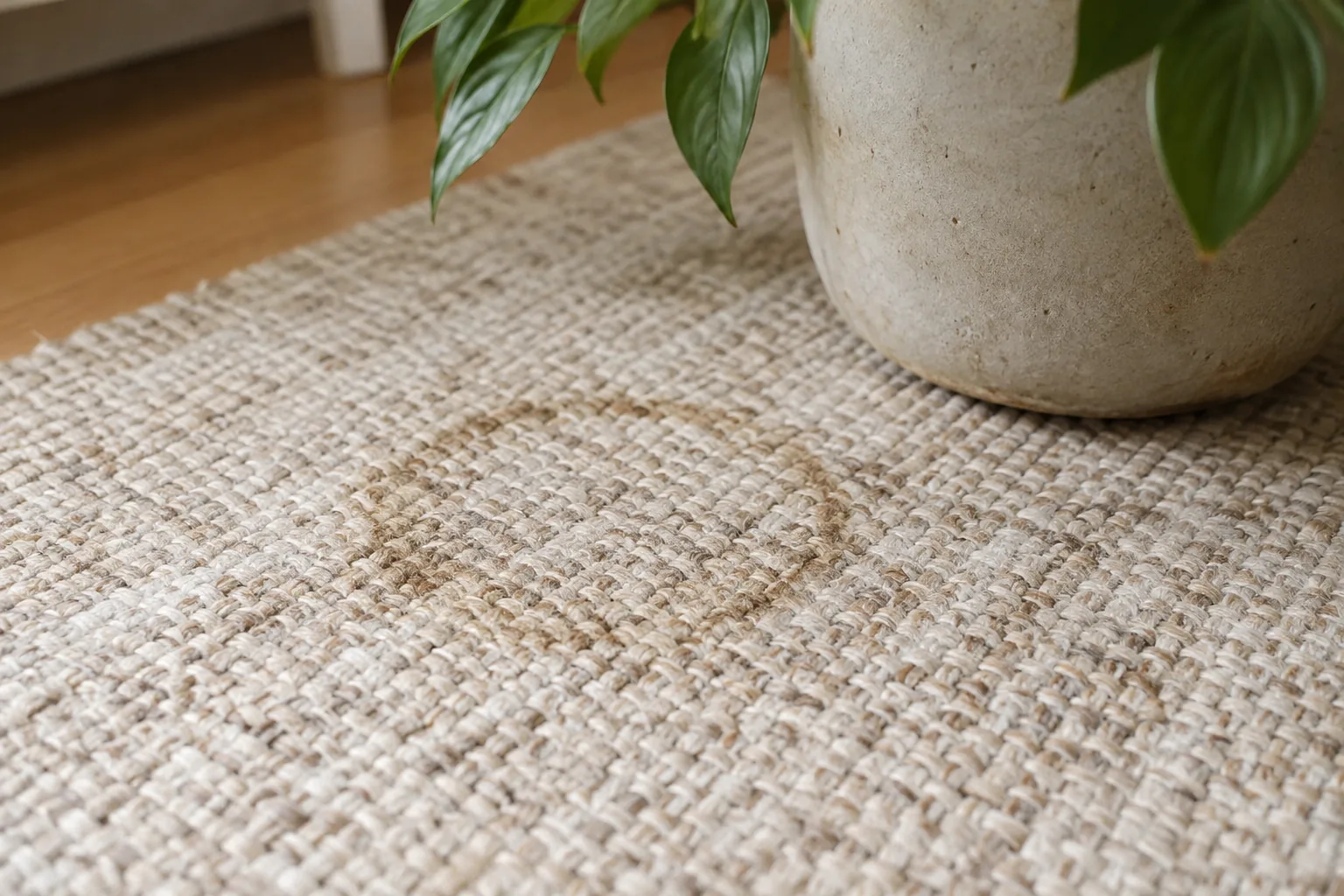
A ring beneath a plant pot is a clue that moisture has sat where the rug could not dry freely. Move the pot and saucer to a safe surface, then check the rug's top, reverse, underlay and floor. Blot any fresh wetness gently with a clean absorbent cloth. Do not pour more water or a stain remover onto the ring until you know whether the mark is still damp, what has transferred, and whether the rug's dyes are stable.

The brown or pale outline may be a simple water tide line, but it may also contain potting soil, fertiliser, minerals from water, a saucer's finish or colour released by the rug itself. The same plant can create different marks after a single overflow and after months of slow seepage. The first task is to stop the source and get all layers dry, because cleaning a surface ring while leaving moisture beneath invites it back.
Find the path the water took
Look at the pot's drainage holes, the saucer and any decorative outer pot. A saucer can overflow during watering, crack, or hold water against its underside. Moisture may run down the outside of a pot and collect at its foot without an obvious spill. If the plant sat directly on the rug, check whether a previously damp patch matches the base exactly or spreads farther along the pile.
Lift the rug edge carefully and inspect the back and pad. Check the floor for trapped moisture or a change to its finish. A rug may feel dry on top while its foundation or underlay is still damp. The Canadian Conservation Institute notes that water exposure can cause textile tide lines, dye movement and changes in shape, while high humidity can encourage mould. These are risks to assess, not proof that a particular ring has mould.
If the area smells musty, is visibly spreading, or the backing is still wet, give priority to drying and a suitable assessment. Our guide to mould on a rug explains why an apparent stain can be part of a wider moisture problem. Avoid enclosing a wet rug in plastic or replacing it over a damp floor.
Record what is changing
Take a photograph before moving the plant and another after the rug is dry. Note the date of the last watering, whether fertiliser was added, and whether the mark appeared suddenly or developed over time. These details help distinguish a new spill from a recurring leak. A ring that returns after ordinary drying suggests a source remains; it does not automatically mean a first cleaner failed.
Examine the boundary in daylight. A tide line may have a narrow darker edge. Soil particles may be visible between yarns. A colour shift may have no raised residue at all. Do not scratch at a hard crust or use a stiff brush to make it disappear. Friction can change the pile's direction and make the circle more noticeable even when some soil is removed.
Dry the rug and what lies beneath it
For a small, recent spill, lift excess liquid with clean white absorbent material using gentle pressure. Change the cloth as it becomes wet. If the pot is heavy, get help moving it so you do not drag it over the rug. Separate a removable pad from the rug if it is safe to do so, and let both sides receive air. Protect the floor according to the flooring maker's advice. Do not place an electrical heater directly against the textile or use high heat to force drying.
If a rug is saturated, large or fragile, moving it can strain the foundation. A specialist may be needed to manage drying without distortion. If water has remained trapped for an unknown period, the issue is not merely the visible circle. You need to establish whether the pad can dry, whether the floor is affected, and whether the rug has developed an odour or structural change.
Once dry, compare the mark with the original photograph. Has the outline stayed the same? Has the yarn gone stiff? Are colours lighter or bleeding into one another? Those observations are more helpful than an untested cleaning recipe. A remaining brown ring may be removable soil, but a pale area caused by lost dye will not become its former colour through cleaning.
Why a quick spot clean can enlarge the ring
It is tempting to spray a circular mark until the centre matches the border. But liquid introduced to the spot can move dissolved material outward, creating a larger tide line as it dries. Fertiliser and potting residues may respond differently from ordinary dust, and an unknown dye may bleed. The Canadian Conservation Institute's rug-care guidance recommends absorbing fresh liquid gently and avoiding rubbing; it advises professional input for important rugs rather than indiscriminate shampooing.
Do not use bleach, vinegar or an alkaline household cleaner merely because the mark is brown. A different chemical may create a second problem. If the ring is old, repeated wet applications may leave the backing damp while the surface briefly appears brighter. Our guide to DIY rug cleaning mistakes explains why adding several products in succession can make diagnosis and controlled treatment harder.
For a valuable, antique or dyed rug, a cleaner should assess the construction and colour stability before choosing a method. A professional rug cleaning assessment can establish whether the visible residue is treatable and what result is realistic. It cannot guarantee reversal of permanent colour change, fibre weakness or damage to the floor beneath.
Prevent the next mark at the plant's base
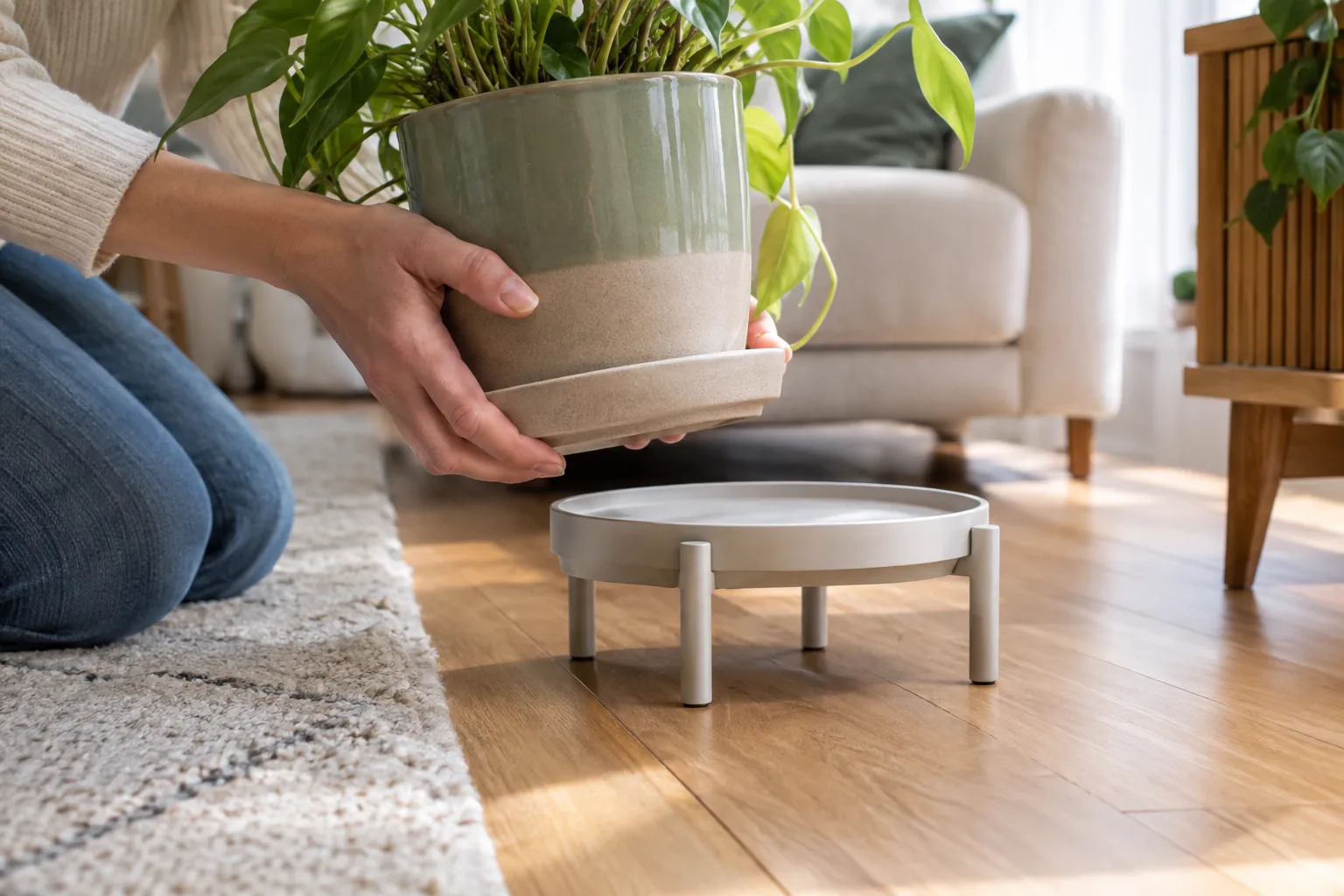
Put plants on a stable, waterproof stand or surface that keeps drainage away from the rug. Do not rely on a thin fabric mat to catch repeated watering. Empty and dry saucers, inspect outer pots for leaks, and lift the pot periodically to check for hidden condensation. If the plant must sit near the rug, leave enough clearance to see and clean the floor around it.
Consider the weight of the watered pot as well as its drainage. A heavy container can compress the pile and make an old ring harder to spot until the furniture is moved. A stand distributes the load and gives you a clear line of sight beneath the plant. Wipe spills from the stand promptly so runoff does not travel to the edge and down onto the textile.
If you notice a ring now, contact us with photographs of the top and reverse, the pot base and any underlay. Include whether fertiliser was used and how long the area may have been damp. A clear account of the moisture source gives the rug a better chance of a careful, limited treatment and helps you prevent the same mark from returning.
Related Rug Cleaning Services
Explore professional cleaning options selected around the fibre, construction and condition of each textile.
Rug Cleaning Near You
View local rug cleaning information, appointment guidance and coverage across popular London districts.
Continue Reading
Read more practical guidance about fibres, stains, cleaning methods, drying and routine rug care.
Send us rug photographs and a few details.
Include the approximate dimensions, material if known, stain information and your London postcode.