
Rug Stains from Metal Furniture Feet
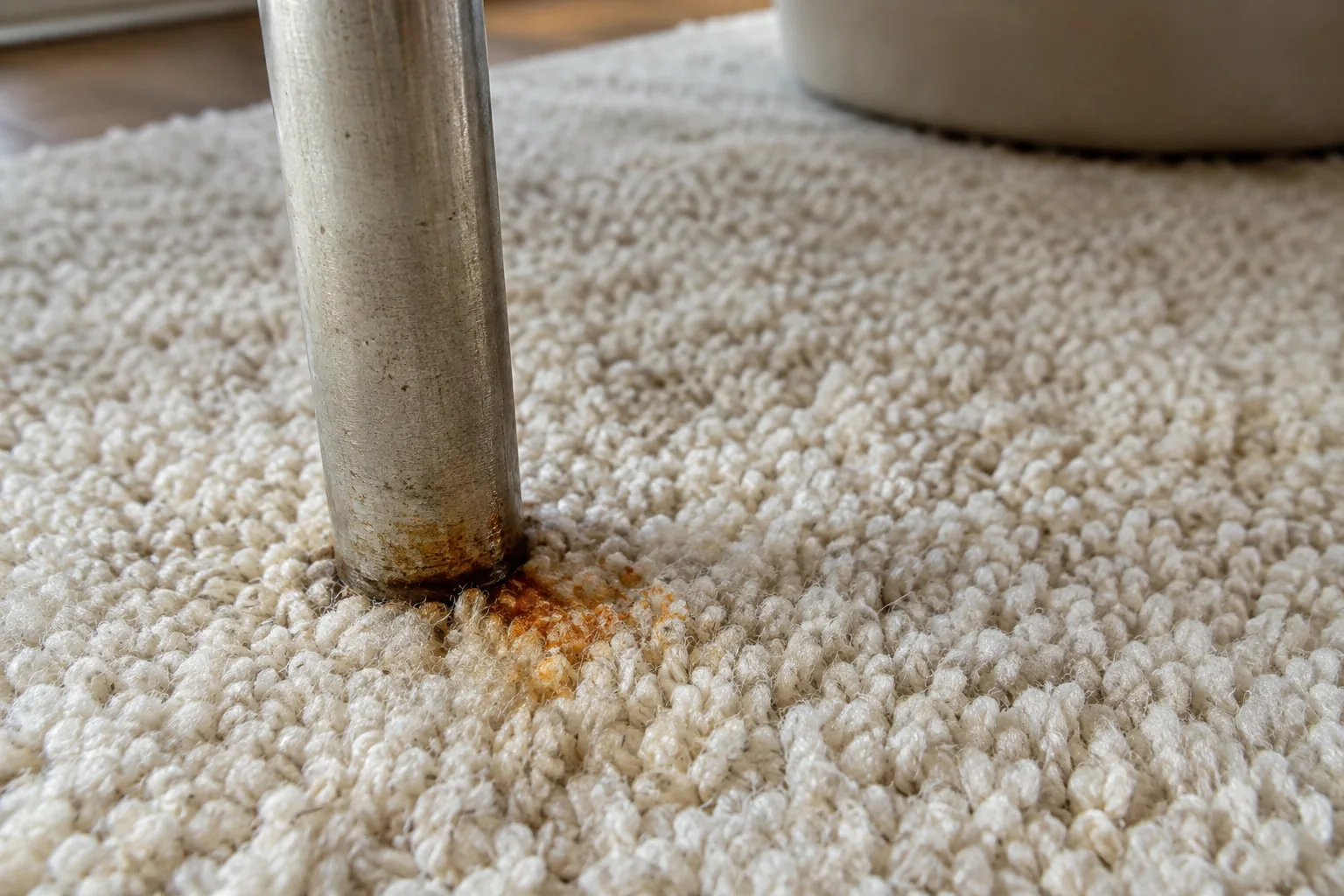
If you find an orange-brown mark beneath a metal table or chair foot, move the furniture safely and look at the foot before treating the rug. A rough, discoloured metal surface and a mark in the matching position suggest corrosion transfer. Keep that source off the rug and let any damp area dry with the rug supported. Do not apply a household rust remover straight away: chemicals intended for hard surfaces can change a rug's dyes or fibres and leave a larger mark.
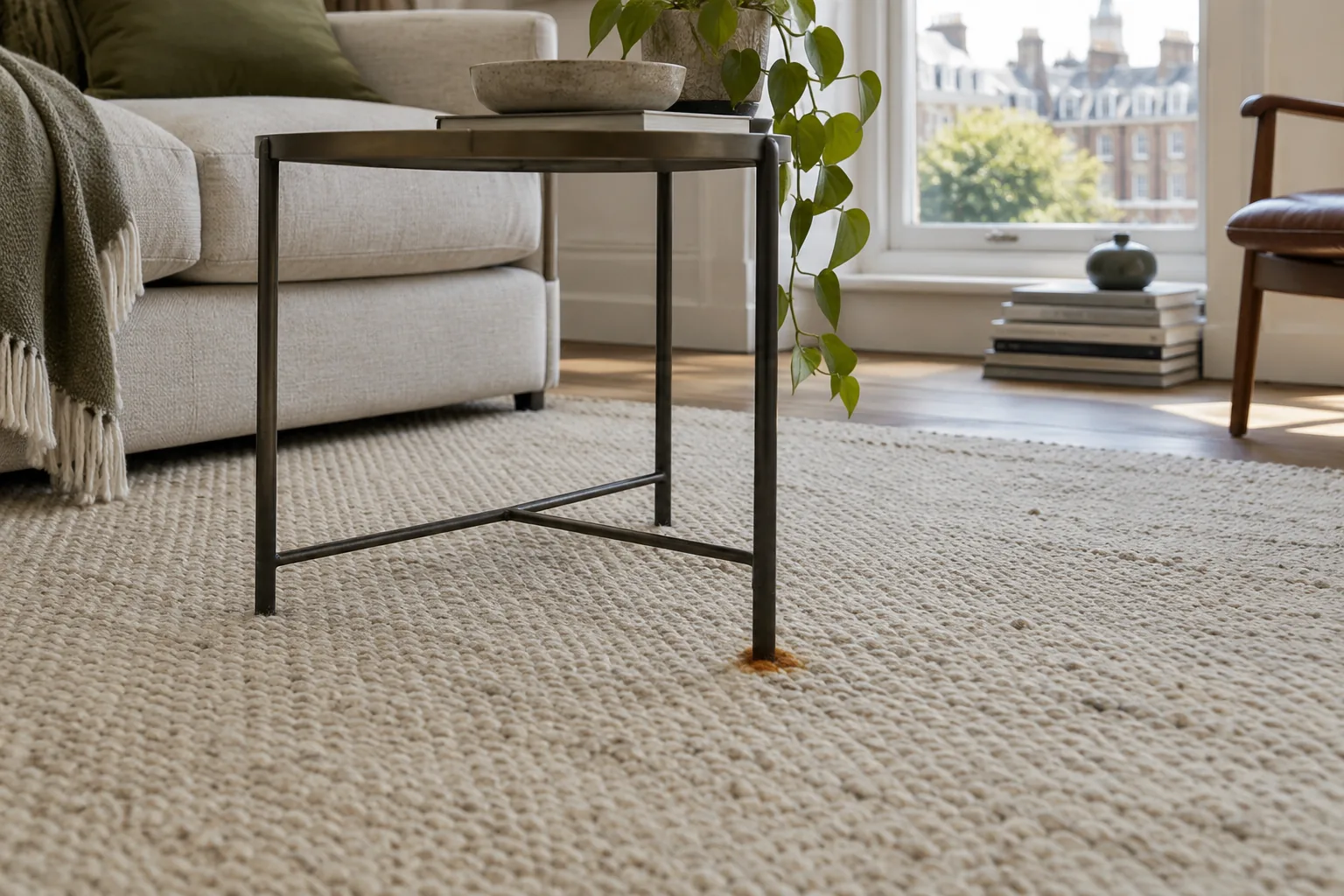
The colour alone cannot prove rust. Wood finish, furniture dye, shoe soil and old spills may resemble it. The practical first steps are the same: prevent further contact, document the location and inspect how far the mark has reached. A rug cleaner can then assess whether soil has settled at the pile tips, moved into the foundation or chemically affected the textile.
Check the foot and its surroundings
Photograph the furniture in place before lifting it. If the piece is heavy, ask someone to help; dragging a narrow metal leg can tear or distort pile. Set the furniture on a clean, non-staining surface and examine the underside. Is the protective cap missing? Is metal exposed, flaky or wet? Has a cup or felt pad trapped moisture rather than protecting the rug? A clean-looking foot may still have a discoloured edge that contacts the yarn under load.
Look for a source of moisture. A recently mopped floor, plant watering, a drink spill or condensation by a window can create the conditions for transfer. Check the rug reverse, underlay and floor beneath the same point. If the pad or floor is damp, address that separately before returning the rug. A tidy surface does not guarantee a dry foundation.
The Canadian Conservation Institute advises that metals which corrode in contact with textiles can stain and degrade them. It also notes that water damage to textiles may include corrosion from metal components. This is why separating the metal from the rug matters even if the visible spot is small. Cleaning the spot while leaving the source in place only invites the mark to recur.
Tell transfer from wear or crushed pile
Metal feet also compress yarns. A dark-looking circle can be a change in pile direction or a dent catching shadows. Examine it in natural light from more than one angle. If the orange colour remains when the pile is viewed from either side, that supports deposited material; if the colour disappears but the texture stays flattened, wear or pressure may dominate. Do not scrape the yarn to test this.
Note whether the mark is powdery, hard, tacky or simply discoloured. A tiny loose particle at the top may be lifted carefully with a low-suction vacuum on a robust rug, without a rotating brush. Stop if fibres catch. A fixed orange stain within the yarn is unlikely to vanish through more vacuuming. Avoid repeated rubbing with a wet cloth: it can drive the colour outward and roughen the pile.
Why rust products are a poor first experiment
Rust removal from a hard tile and from a dyed woven textile are different tasks. An acidic product may dissolve one component of a stain while damaging yarn, changing colour or leaving its own residue. Some rust removers contain ingredients that need controlled application and thorough removal. A rug with a backing, fringe and multiple dyes complicates both parts. A hidden spot test cannot reproduce every coloured yarn or the exact condition of the stained area.
Bleach is no shortcut. An orange mark may become pale while the rug dye is also removed, leaving a permanent patch. Nor should you combine products, such as a rust remover followed by an alkaline carpet shampoo, to chase an incomplete result. The mixture of residues makes later assessment more difficult. If you have already tried a product, save the label and tell the cleaner exactly where it was applied.
Fresh water is not a guaranteed harmless solvent. If the spot sits near a fringe or an old repair, moisture may move dye or loosen soiling at the base. The Canadian Conservation Institute's rug-care advice recommends gently absorbing a fresh liquid, avoiding rubbing and consulting a professional for important rugs. It does not support treating an unidentified orange stain with a generic household chemical.
Stop the same foot marking the rug again
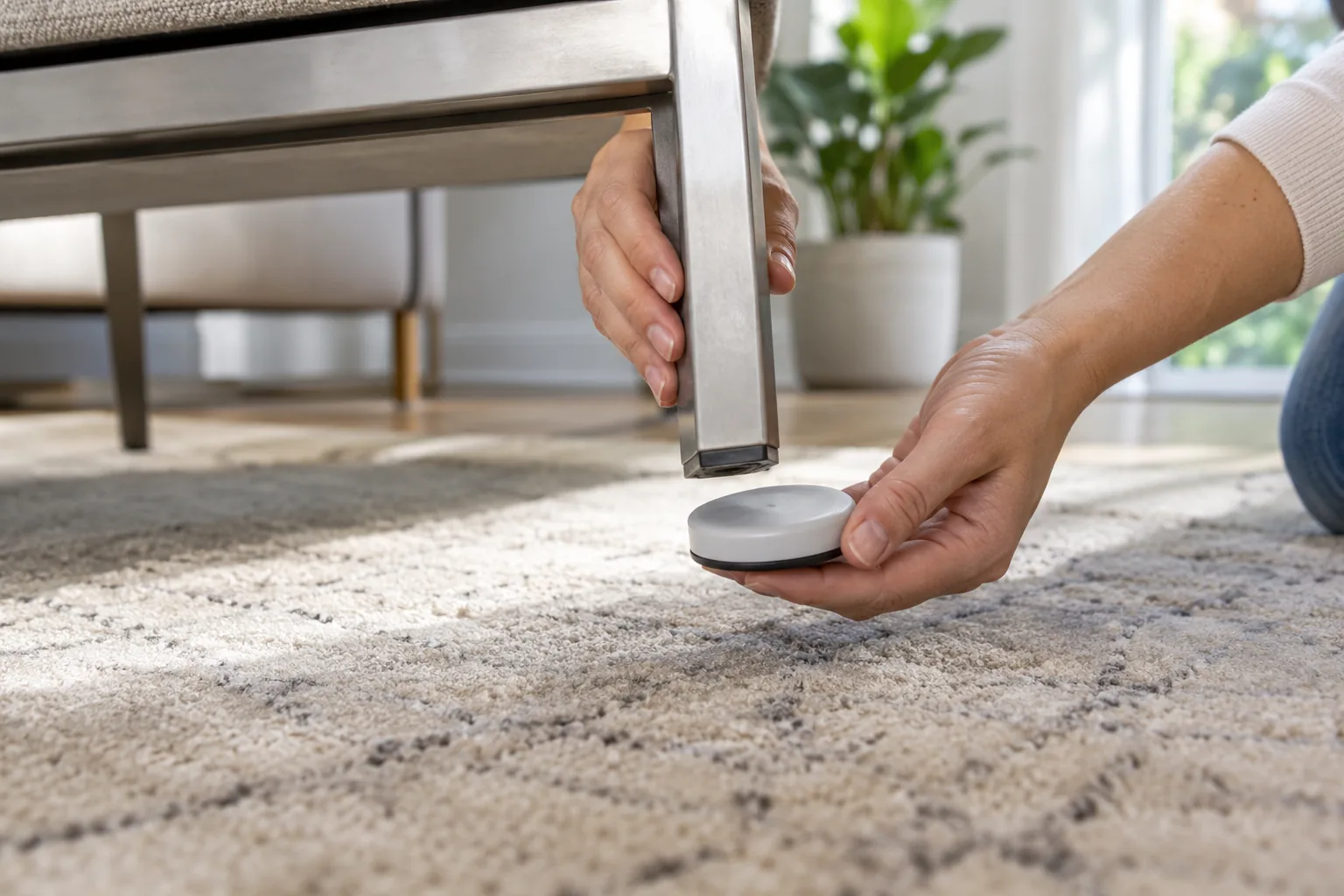
Repair or replace a corroded or damaged foot before putting the furniture back. Choose a clean, stable protector that is compatible with both the furniture and the rug, and check it periodically. The Institute recommends castor cups to spread furniture weight; the chosen cup still needs to be dry, sound and suitable for the floor and rug. Do not use an adhesive patch that can leave residue on the textile.
Move the furniture slightly from time to time, where the room layout allows, to inspect for dampness or a new mark. Clean any floor spill before it reaches the underside of the rug. If the foot is on a separate underlay, check that too. A pad can prevent abrasion but can also conceal trapped moisture when no one looks beneath it.
If several feet have left similar circles, compare their size and colour. A pattern matching every leg may point to the furniture finish or protector material rather than a single rusty foot. A lone mark near a window or plant may suggest a local moisture source. These observations do not diagnose the chemistry, but they help prevent the wrong repair. Replacing one corroded cap will not solve a problem caused by a wet floor or by all four protectors transferring dye.
What a cleaner can realistically assess
A professional rug cleaning assessment can look at the fibre, dyes, construction and source of the mark. The likely method and outcome depend on whether this is loose corrosion material, a set stain, or altered fibre. It may be possible to improve an orange deposit without fully erasing it. Any lost rug dye or damage to the pile will remain a separate issue.
Our article on paint on a rug offers another example of why identifying the transferred material comes before choosing a chemical. The guide to DIY rug cleaning mistakes explains the risks of repeated spot treatments. Those principles apply here, but a rust-coloured mark needs its own examination.
If you want advice, contact us with a close photograph of the spot, a wider view showing the furniture position, and a photograph of the foot itself. Include any cleaning products used and whether the area was damp. This gives the cleaner the best chance to separate a treatable deposit from permanent change and to help you prevent another mark.
Related Rug Cleaning Services
Explore professional cleaning options selected around the fibre, construction and condition of each textile.
Rug Cleaning Near You
View local rug cleaning information, appointment guidance and coverage across popular London districts.
Continue Reading
Read more practical guidance about fibres, stains, cleaning methods, drying and routine rug care.
Send us rug photographs and a few details.
Include the approximate dimensions, material if known, stain information and your London postcode.